

Introduction
You're in a work meeting when your phone buzzes. It's your mom's neighbor, checking in because she noticed the mail piling up again. Sound familiar? That tug-of-war between work and worry is more common than most people admit.
You're not alone. According to the Caregiving in the US 2025 report, seven in 10 working-age family caregivers hold down a job while also caring for a loved one.
Sitting with an elderly parent isn't just showing up. It's companionship, safety monitoring, and light daily support—and how well it goes depends on preparation.
This guide covers how to start, what to prepare, what shapes a good visit, mistakes to avoid, and when professional support makes sense.
Key Takeaways
- Sitting combines companionship, safety checks, and light assistance — not medical care
- Preparation and family coordination determine how smooth your visits go
- Watch for loneliness, hygiene decline, or skipped meals as signals to step up support
- Show up consistently and respect their independence — both matter more than hours logged
- Platforms like Helpr can fill gaps when family caregivers run short on time
How to Sit with Elderly Parents: A Step-by-Step Guide
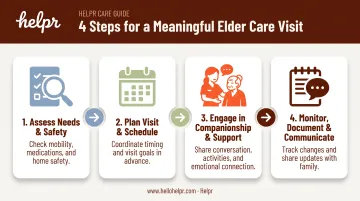
Step 1: Assess Your Parent's Current Needs and Safety
Start by figuring out what your parent actually needs help with, not what you assume they need.
- Observe daily living activities — bathing, dressing, eating, cooking, cleaning, managing medications
- Walk through the home for hazards: poor lighting, loose rugs, cluttered walkways, disorganized pill bottles
- Check in with their doctor or review recent visit notes to understand mobility limits or early cognitive changes
- Include your parent in the conversation — they should weigh in on their own care, not just receive it
Skipping this step means you're guessing. And guessing leads to either overdoing it (which frustrates an independent parent) or missing something important.
Step 2: Plan Your Visit or Sitting Schedule
Once you know the need, build a schedule around it.
Decide whether daily hours or weekly visits make more sense given both your parent's needs and your own job. Then coordinate with siblings using a shared calendar app or even a simple group text thread. That prevents both coverage gaps and confusing overlaps. When family schedules still leave holes, short-term eldercare through a platform like Helpr can cover those hours without last-minute scrambling.
Sketch a loose daily plan covering meals, activities, and errands, but hold it loosely. Some days your dad wants to talk for two hours; other days he's tired and wants quiet. Flexibility matters more than a rigid itinerary.
Step 3: Engage in Meaningful Companionship and Daily Support
Companionship is the heart of sitting. Show up ready to engage, not just occupy the room.
Prioritize conversation, games, walks, or shared hobbies. A National Academies review linked social isolation and loneliness in older adults to a 50% higher risk of dementia, plus roughly 30% higher risk of coronary disease and stroke.
Beyond conversation, help with light non-medical tasks:
- Meal preparation
- Medication reminders (not administration, unless trained)
- Light housekeeping and tidying
- Rides to appointments or simple errands
Shared meals deserve special mention. Research on older adults consistently links eating together with better mood, appetite, and overall well-being compared to eating alone — even a few shared meals a month can improve how they feel day to day.
Step 4: Monitor, Document, and Communicate
Keep it simple: a notebook or shared notes app tracking mood, appetite, and mobility changes works fine. No fancy system required.
Share updates with siblings or other caregivers regularly so care stays consistent no matter who's sitting that week. And know your red flags:
- Falls — even minor ones warrant a doctor call
- Sudden confusion — could signal infection, medication issue, or worse
- Refusal to eat — especially if it persists more than a day or two
- Withdrawal or sharp mood changes — note them and share with their doctor promptly
These aren't things to wait out. They're cues to escalate.
Signs It's Time & What You Need Before You Start
Signs Your Elderly Parent May Need a Sitter or Companion
Three patterns tend to show up before families realize help is needed:
- Loneliness or withdrawal — isolation raises risks of depression and cognitive decline; pullback from friends, hobbies, or calls is an early flag
- Hygiene or home upkeep decline — piled-up dishes, unwashed laundry, or a general "off" feeling in the house often means daily tasks have become too much
- Nutritional concerns — weight loss, skipped meals, or an empty fridge deserve a closer look; malnutrition risk is common in older adults
None of these alone means crisis. Together, or worsening over weeks, they're a signal.
Preparation Checklist Before You Begin
Before your first sitting shift, gather:
- Emergency contacts and doctor information
- A current medication list
- Any documented care preferences your parent has shared
After the logistics, protect your own capacity. Nearly 30% of caregivers are also raising kids (the "sandwich generation"), and two-thirds report moderate-to-high emotional stress—so set limits on your time before burnout sets the limits for you.
Line up backup: a sibling, a neighbor, or a professional backup care option for days you can't be there.
Key Factors That Affect the Quality of Your Caregiving Visits
Not every sitting visit delivers the same value. Four factors separate the ones that help from the ones that fall flat.
| Factor | Why It Matters | Impact on Quality |
|---|---|---|
| Consistency and routine | Predictability lowers anxiety, especially with cognitive decline | Irregular visits can increase confusion or feelings of abandonment |
| Health or cognitive condition | Dementia, mobility limits, or chronic illness change what's safe | Mismatched care leads to frustration or unsafe situations |
| Communication and autonomy | Seniors want independence even while accepting help | Being too directive breeds resentment; too passive misses real needs |
| Family coordination | One person carrying the full load burns out fast | Shared care improves sustainability for everyone |
Quality sitting comes from matching your approach to your parent's condition and personality, then keeping that approach steady over time. Sharing the load, rather than carrying it solo, is what makes that sustainable.
Common Mistakes to Avoid (and How to Fix Them)
Even well-meaning adult children stumble into the same traps.
- Going it alone: Loop in siblings, friends, or backup care services early, before you're exhausted and resentful
- Overriding your parent's preferences: Ask before you assume; treating them as incapable of decisions erodes trust fast
- Missing early warning signs: Keep check-ins consistent so weight loss or hygiene decline can't slide under the radar for weeks
- Skipping the backup plan: Line up coverage for days you can't be there so care gaps never open
The fix for nearly all of these is the same: build redundancy into your care plan before you need it, not after.
Alternatives & Extra Support: Professional Sitters, Companion Care, and Backup Care
Sometimes family bandwidth just isn't enough. Here's what fills the gap.
Professional senior sitters or companions work best when family lives far away or when daily coverage needs to be consistent. Based on CareScout's 2025 national cost data, the median hourly rate for non-medical caregiving sits around $35, though rates vary by region and experience.
Adult day care programs offer structured social activity and give working caregivers respite during business hours. The trade-off: your parent needs to leave home, which not everyone wants.
On-demand backup elder care through platforms like Helpr fills a specific need: flexible, vetted coverage without a long-term contract, often subsidized through an employer benefit.
Helpr's network sitters complete a virtual interview, an FCRA-compliant criminal background check, reference checks, CPR certification, and identity verification before joining the platform.
Practically, this looks like:
- Booking through the app with as little as 3 hours' notice (or up to 3 months ahead)
- A 4-hour minimum per booking, billed in 15-minute increments after that
- Employer-subsidized copays, often as low as $5/hour with a Helpr network provider
- DCFSA-eligible payments, so pre-tax dollars can cover the cost
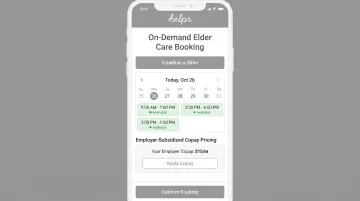
The trade-off is availability depends on whether your employer offers the benefit. For longer-term placements, Helpr also offers concierge-style Care Finder services to source a permanent caregiver, separate from the on-demand app booking.
Rotating support among family and friends is free and familiar but harder to sustain without a formal schedule. That's exactly why Step 2 above matters so much.
Frequently Asked Questions
What is it called when you sit with the elderly?
Elderly sitting, senior sitting, and companion care all describe non-medical support. The focus is companionship, light assistance, and safety monitoring—not clinical care.
How often should an 80-year-old person shower?
Many seniors can manage with showers 2–3 times a week rather than daily, especially when bathing is physically difficult. Individual needs vary, so check with a doctor for hygiene or skin concerns.
What is the difference between a sitter and a caregiver?
Sitters focus on companionship, light tasks, and non-medical supervision. Caregivers typically provide broader hands-on support with daily living activities and often hold certifications like CPR or CNA training.
How much does it cost to hire someone to sit with an elderly parent?
Non-medical senior care often runs about $35 per hour nationally, with local rates varying by region and experience. Daily and overnight options are widely available through agencies and care platforms.
Can family members get paid to sit with an elderly parent?
Some states offer Medicaid-funded self-directed care programs that allow a family member to be hired and paid as a caregiver. Eligibility depends on state rules and a formal needs assessment.
How do I find a trustworthy elderly sitter?
Check references, run background checks, and use licensed agencies or vetted platforms. Helpr network sitters complete interviews, FCRA-compliant background checks, and CPR certification before they are listed.