
Sound familiar? Many families researching care hit this exact wall. Star ratings alone don't reveal caregiver turnover, training quality, or whether the "five-star experience" was real or planted. Choosing based on rating alone can lead to inconsistent caregivers, safety gaps, or money spent on a provider that doesn't fit your parent's needs.
This guide breaks down what companions actually do, how to read reviews critically, what care really costs, and a vetting checklist that catches red flags before you sign anything. We'll also cover an option many families miss entirely: employer-sponsored backup care benefits.
Key Takeaways
- Judge reviews by recency, specificity, and named caregivers—not star ratings alone
- Top agencies stand out on awards, low turnover, transparency, specialty programs, and family-facing tech
- Companion care rates vary by region and shift length; employer-sponsored benefits can offset costs
- Use a short vetting checklist to spot red flags and avoid generic providers early
What Do Senior Home Companions Actually Do?
Senior home companion care is non-medical support, distinct from skilled nursing or hands-on clinical caregiving. It fits families where an adult child is juggling a full-time job and a parent wants to keep living at home rather than move into a facility.
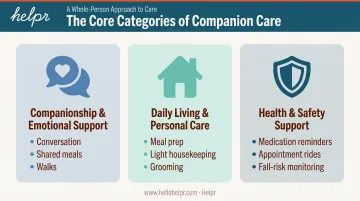
Companionship & Emotional Support
Isolation is a bigger health issue than most families realize. Recent national research on adults ages 50 to 80 found that roughly a third reported feeling isolated or lacking companionship on a regular basis. The CDC links chronic loneliness to higher risk of heart disease, stroke, depression, and even earlier death.
A companion combats that directly: conversation, shared meals, games, walks, and simply having a familiar face show up on a schedule. For many seniors, that consistent company is the difference between decline and staying engaged.
Daily Living & Personal Care Assistance
Companions handle the practical side of staying independent at home. Common tasks include:
- Meal preparation and grocery shopping
- Light housekeeping and laundry
- Grooming and dressing assistance
- Errands and appointment scheduling
- Pet care and light home organization
Companions stick to hands-off help like cooking and errands. They generally don't perform medical tasks like wound care or injections. That work falls under home health aides or skilled nursing.
Health & Safety Support
Companion care also covers everyday safety. Medication reminders, rides to doctor's appointments, and watching for fall risks are standard parts of the job, even though the companion isn't providing clinical treatment.
That mix of practical help and peace of mind is why so many families choose support at home. AARP's 2024 research found that 75% of adults over 50 want to stay in their current homes as they age, and 73% want to remain in their communities. When aging in place depends on the right person showing up, reviews become essential to the decision.
How to Read and Evaluate Senior Home Companion Reviews
A 4.9-star rating tells you almost nothing on its own. What actually matters is recency, volume, and specificity. A review from three years ago describing a caregiver who no longer works there isn't useful. A vague "great service, highly recommend" post is worth less than a review naming a specific caregiver and describing a specific situation.
Five Criteria That Separate Top Agencies From Average Ones
- Client satisfaction awards or certifications — third-party validation, not self-reported
- Caregiver training hours and turnover rates — ask for numbers, not adjectives
- Transparency tools — family portals, published pricing, visible policies
- Specialty programs — dementia care, fall prevention, hospice support
- Technology access — apps or portals that let family members see updates in real time
Turnover Is the Hidden Red Flag
Here's a number most families never think to ask about: caregiver turnover in home care has hovered near 75% a year. Even when that rate improves, it stays high enough to break continuity. The person who cared for your parent last month may be gone this month.
When an agency can show turnover meaningfully below that benchmark, it's a genuine signal of better training, pay, and management — not just a marketing claim.
Spotting Fake or Inflated Reviews
Watch for these patterns:
- Generic praise with no specific caregiver names or incidents
- Clusters of five-star reviews posted within days of each other
- Zero critical or constructive feedback anywhere
- Language that reads like it was written by the marketing team, not a family member
Cross-reference platforms. Check Google, Yelp, Care.com, and award directories like Best of Home Care instead of trusting testimonials only on the agency's site.
Before you sign anything, ask to speak with two current client families. Those conversations usually tell you more than fifty online reviews combined.
What Senior Home Companion Care Costs
Pricing varies more than most families expect. CareScout's 2025 Cost of Care Survey found a national median of $35 an hour for non-medical in-home caregiving, up 3% year over year. At a full-time schedule of 44 hours a week, that adds up to roughly $80,000 annually.
Where you live can change the hourly rate by $10 or more:
| Region | State | Median Hourly Rate |
|---|---|---|
| Midwest | Minnesota | $44 |
| Midwest | Iowa | $41 |
| Midwest | Ohio | $34 |
| Coastal | Washington | $45 |
| Coastal | California | $40 |
| Coastal | New York | $35 |
Beyond the base hourly rate, expect these variables to move your total cost:
- Shift-length minimums: many agencies require 4-hour minimum bookings
- Weekend and overnight premiums: often 10-20% above standard rates
- Package discounts: recurring weekly hours usually cost less per hour than one-off visits
Paying for Companion Care
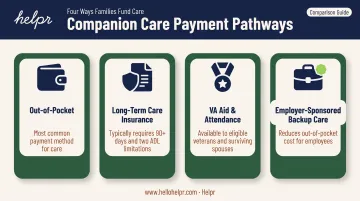
Families typically cover costs through a mix of:
- Out-of-pocket payment: the most common approach
- Long-term care insurance: many policies require help with at least two daily living activities for 90+ days
- VA Aid & Attendance: monthly pension support for eligible veterans who need daily assistance
- Employer-sponsored backup care benefits: workplace benefits that subsidize companion care, often at a fraction of the private rate
Before you lock in a private-pay budget, check whether your employer offers backup care. Those benefits can sharply lower what your family pays out of pocket.
Vetting Checklist: Smart Questions to Ask Before Hiring
Before signing with any agency, ask these questions directly:
- What's your caregiver turnover rate? High turnover breaks continuity of care. Ask how they retain staff and what their rate has been over the past year.
- Can I see a sample family communication portal or daily-note template? You’re checking that you’ll get clear, regular updates—not just a promise of transparency.
- What's your backup staffing process? Ask specifically what happens if a caregiver calls in sick.
- How many training hours does a new companion complete before their first shift? Follow up on ongoing continuing education too.
- What background checks and credentials do you verify? Confirm screening yourself, including any state registries or certifications that apply—don’t rely on the agency’s word alone.
One more step families often skip: involve the whole family in reviewing the shortlist. Matching a companion's personality and interests to your parent's preferences matters as much as credentials on paper.
Beyond Independent Hiring: How Employer Benefits Add a Layer of Vetted Care
If you're doing all this vetting while also working a full-time job, you're not alone. Millions of adult children now sit in the "sandwich generation" — raising kids and caring for aging parents at the same time, often with little bandwidth left for hours of agency research.
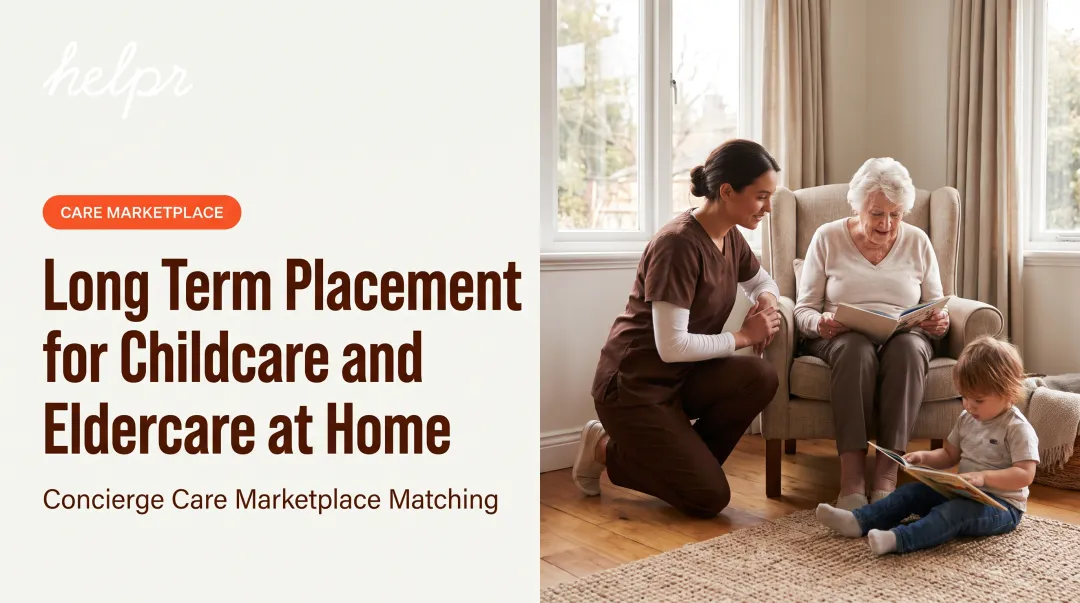
This is where employer-provided care benefits change the equation. Helpr, for example, operates a global backup care platform that gives employees access to pre-vetted senior care companions alongside childcare support, removing much of the independent legwork.
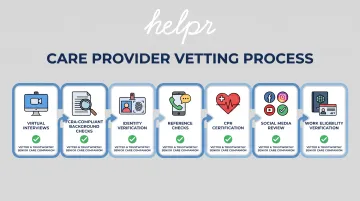
Helpr's screening process for care providers includes:
- Virtual interviews to assess reliability and qualifications
- FCRA-compliant criminal background checks
- Identity verification for fraud prevention
- Reference checks with all provided contacts
- Current CPR certification requirements
- Social media review for professional conduct
- U.S. work eligibility verification
For quick, short-term needs, employees book through Helpr's on-demand network, often at a small copay while the employer covers the rest.
For longer-term placement, a dedicated Care Finder specialist sources and vets companions one-on-one, at no cost to the employee in many benefit configurations. Many plans also allow DCFSA pre-tax dollars to cover eldercare and companion services, not just childcare.
Before starting an independent search, check with your HR or benefits team. Subsidized, pre-screened companion care may already be sitting inside your benefits package, unused.
Frequently Asked Questions
What is the difference between a companion and a caregiver?
A companion provides social support, light housekeeping, and errands: hands-off help. A caregiver provides hands-on personal or medical support, like bathing, feeding, or mobility assistance.
How much does it cost to hire a senior home companion?
National median rates run around $35 an hour, though this varies by region and shift length. Coastal states like Washington and California tend to run higher than Midwest states like Ohio or Missouri.
What is a senior care companion?
A senior care companion offers non-medical support focused on emotional connection, daily living help, and light household tasks, not clinical or hands-on medical care.
How can I verify if senior home companion reviews are trustworthy?
Cross-check reviews across Google, Yelp, and Care.com rather than relying on one source. Look for specific details, not generic praise, and ask to speak directly with current client families.
What questions should I ask before hiring a home companion agency?
Ask about caregiver turnover rate, training hours completed before a first shift, and what the backup staffing process looks like if a caregiver is unavailable.
Does health insurance or employee benefits cover companion care costs?
Traditional health insurance rarely covers non-medical companion care. Employer-sponsored backup care benefits and DCFSA-integrated payment options increasingly do, covering both childcare and eldercare services.