
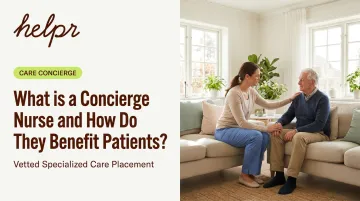
That shift creates a real problem for family caregivers. Many are also full-time employees, trying to coordinate specialized medical support for an aging parent, a post-surgical recovery, or a chronic illness, all while working a 9-to-5 job.
This guide breaks down what a concierge nurse actually is, what services they provide, and how this care model benefits patients and the families supporting them.
Key Takeaways
- Concierge nurses provide direct-pay, personalized medical care without insurance approval delays.
- Services range from post-op wound care to elder advocacy and lactation support.
- Continuity of care can reduce hospital readmissions.
- Ideal for surgical recovery, aging-in-place seniors, new parents, and chronically ill travelers.
- Non-medical platforms like Helpr fill everyday caregiving gaps a nurse doesn't cover.
What Is a Concierge Nurse?
A concierge nurse is a licensed registered nurse, nurse practitioner, or LPN who provides personalized medical care outside the traditional insurance-driven hospital or clinic system. Instead of billing insurance for each visit, patients or families pay directly, through a subscription, retainer, or fee-for-service arrangement, for dedicated, on-demand access to that nurse.
This is different from the bedside nurse you'd meet during a hospital stay. A hospital nurse typically manages several patients at once on a fixed shift. A concierge nurse works independently, focuses on one client at a time, and travels to wherever the patient is, whether that's home, a hotel, an office, or even while traveling abroad.
Scope of practice depends on licensure. RNs handle skilled nursing tasks like wound care and medication management. Nurse practitioners, depending on the state's practice authority, can also diagnose conditions and prescribe medications within a concierge arrangement.
Demand for this kind of personalized care isn't a passing trend. The U.S. population aged 65 and older reached 55.8 million in 2020, up 38.6% from 2010, and that growth is pushing more families toward flexible, in-home clinical support.
How Concierge Nursing Works in Practice
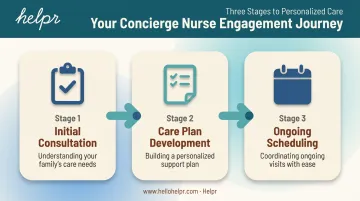
Engaging a concierge nurse typically follows a straightforward sequence:
- Initial consultation: the nurse assesses the patient's condition, home environment, and family caregiving capacity.
- Care plan development: the nurse builds a personalized plan around the patient's actual needs, not a fixed insurance visit allowance.
- Ongoing scheduling: the nurse adjusts visits or check-ins as the patient's condition evolves, rather than locking into a rigid weekly cap.
Unlike Medicaid-regulated private-duty nursing, which often requires prior authorization and state-specific medical-necessity rules, private-pay concierge arrangements are governed by contract terms between the family and the nurse or agency.
What Services Do Concierge Nurses Provide?
Concierge nurses cover a wide range of clinical needs, often spanning multiple life stages and health situations.
- Post-operative recovery support: wound assessment, dressing changes, pain management, mobility assistance, and monitoring for surgical complications at home.
- Chronic disease management: medication oversight, vital sign monitoring, insulin administration, and coordination for conditions like diabetes or cardiac disease.
- Elder care navigation and advocacy: medication reconciliation, home safety assessments, and representing the patient's interests during physician visits or hospital stays.
- Specialized wellness services: IV hydration and vitamin infusions performed under proper physician orders and nursing supervision.
- Maternal and newborn support: lactation consulting, postpartum recovery care, and newborn health checks at home.
- Travel health and medical escort services: supervised care for patients with mobility challenges or unstable chronic conditions who need to travel.
Each of these falls within the nurse's licensed scope.
Licensure requirements apply regardless of setting. A concierge nurse practices within the same legal boundaries as any other nurse — only the location and delivery model differ.
Concierge Nursing vs. Traditional Home Health Care
Families often confuse concierge nursing with Medicare-certified home health, but the two models operate under very different rules.
| Comparison Point | Concierge/Private-Duty Nursing | Medicare-Certified Home Health |
|---|---|---|
| Payment | Private-pay, contract-based | Insurance-billed, $0 for eligible beneficiaries |
| Eligibility | Set by the family or provider agreement | Requires homebound status and qualifying skilled need |
| Visit length | Extended shifts, sometimes 4-12+ hours | Typically under 8 hours/day, 28 hours/week |
| Scheduling | Flexible, family-driven | Fixed, based on care plan authorization |
| Relationship | One dedicated nurse, ongoing | May rotate between agency staff |
The core difference comes down to two things: payment structure and personalization. Home health visits are often brief and task-focused, built around checking a box on a care plan. Concierge nurses can spend extended, uninterrupted time with a patient, which makes it easier to catch subtle health changes before they become emergencies.
Top Benefits of Concierge Nursing for Patients and Families
The advantages of this care model go beyond convenience. They translate into measurable health outcomes and real relief for exhausted caregivers.
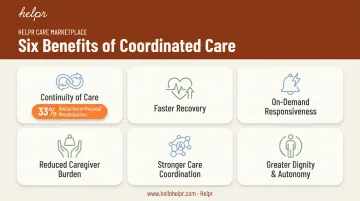
- Continuity of care that catches problems early. A 2025 review of nine trials found that consistent nurse oversight reduced hospital readmissions by 33% when care continued beyond 12 weeks.
- Faster, more comfortable recovery. Healing in a familiar environment tends to lower patient anxiety and stress compared to an unfamiliar clinical setting.
- On-demand responsiveness. No waiting rooms, no scheduling backlogs, no insurance pre-authorization delays.
- Reduced burden on family caregivers. The nurse handles complex medical tasks, freeing family members to focus on emotional support instead of clinical responsibilities.
- Stronger care coordination. Concierge nurses liaise directly with physicians and specialists, closing communication gaps between appointments.
- Greater dignity and autonomy. Patients who want to age in place or recover at home, rather than in a facility, get to do so with clinical support close at hand.
These benefits compound. A family that isn't scrambling to manage medication schedules or track symptoms has more bandwidth for the parts of caregiving that actually require a family member: presence and comfort.
Who Benefits Most From Concierge Nursing?
Concierge nursing isn't the right fit for every situation, but it solves specific, recurring problems for four groups.
- Patients recovering from surgery get skilled follow-up care without an extended hospital stay, including wound checks and mobility support at home.
- Older adults aging in place form one of the largest groups turning to this model, since 75% of Americans aged 50 and older want to remain in their current home. Concierge nurses provide the medication oversight and advocacy that would otherwise require facility-level care.
- New parents needing lactation support, newborn assessments, or postpartum recovery guidance often find a concierge nurse fills the gap between hospital discharge and the six-week OB checkup.
- People managing complex chronic illness or frequent travel need consistent, mobile clinical support that doesn't disappear when they leave home.
How to Choose the Right Concierge Nurse for Your Family
Not every concierge nurse or agency operates the same way. A few checks upfront can save families from a mismatch later.
- Verify licensing and liability insurance. Confirm the nurse's RN, NP, or LPN license is active and matches the patient's specific needs, such as wound care, IV therapy, or geriatric certification.
- Ask about physician coordination. A good concierge nurse communicates directly with existing doctors and specialists rather than operating in isolation.
- Confirm availability and backup coverage. Ask what happens if your primary nurse is sick or unavailable during a critical window.
Concierge nursing covers the medical side of care, but that's rarely the whole picture. Many working caregivers also need everyday support, like companionship, transportation to appointments, or last-minute coverage when a regular caregiver falls through.
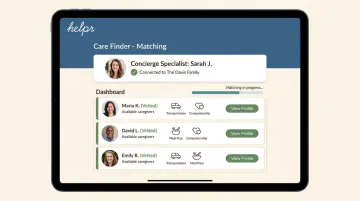
This is where a platform like Helpr complements a concierge nursing arrangement rather than competing with it. Helpr's Care Finder service connects families with a dedicated concierge specialist who sources vetted, non-medical caregivers for tasks like meal preparation, transportation, and companionship.
For employees managing an aging parent's care alongside a full-time job, employer-sponsored backup care through Helpr fills the scheduling gaps a clinical nurse doesn't cover. The family isn't left without support the moment the nurse's shift ends.
Frequently Asked Questions
What is a concierge nurse?
A concierge nurse is a licensed RN, NP, or LPN who provides personalized, direct-pay medical care outside traditional hospital or clinic settings, usually in the patient's home.
How is concierge nursing different from home health care?
Home health care is typically insurance-driven with strict eligibility limits and visit caps. Concierge nursing is privately funded, more flexible, and scheduled around the patient's actual needs.
How much does concierge nursing typically cost?
Costs vary widely based on service type, location, and how often care is needed. Pricing is private-pay rather than a fixed, standardized rate.
Does insurance cover concierge nursing services?
Concierge nursing is usually paid out-of-pocket or through long-term care insurance. Traditional health insurance and Medicare typically don't cover private-duty nursing services.
What situations call for hiring a concierge nurse?
Common scenarios include post-surgical recovery, chronic illness management, elder care advocacy, and postpartum support for new parents.
How can I find a qualified concierge nurse for my family?
Check licensing and liability insurance, ask physicians for referrals, and review the nurse's specialty experience against your specific care needs before hiring.