
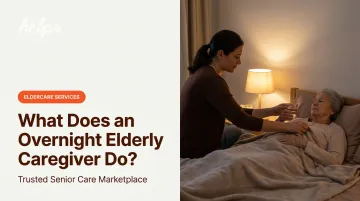
If this sounds familiar, you're not alone. Many families spend nights bracing for a phone call that never comes, then wake up exhausted anyway. That nightly worry is often what pushes families toward professional overnight care.
An overnight elderly caregiver is a specialized form of home care focused entirely on the hours between evening and morning. It's different from daytime companion or personal care, which handles meals, errands, and daytime activities. This guide breaks down exactly what overnight caregivers do, the types of overnight care available, warning signs it might be time to consider it, and what it typically costs.
Key Takeaways
- Overnight caregivers provide safety supervision, personal care, and emotional support.
- Two models exist: awake care (alert all night) and sleep care (rests, responds when needed).
- Falls, wandering, and confusion are top nighttime risks driving families to seek help.
- Costs vary by location and caregiver type; employer-sponsored backup care can lower out-of-pocket costs.
What Is an Overnight Elderly Caregiver?
An overnight caregiver is a trained professional who arrives at a senior's home in the evening and stays through the night, providing supervision, hands-on assistance, and reassurance until morning. Think of it as extending the safety net that exists during daytime hours into the hours when things tend to go wrong.
Nighttime is genuinely riskier for older adults. Bedrooms are dark, reaction times slow down, and medications taken earlier in the day can cause grogginess or dizziness.
Older adults also naturally sleep lighter and wake more frequently during the night, according to the National Institute on Aging. Dementia can add wandering, yelling, or disorientation into the mix, making steady overnight supervision especially valuable.
Falls are a serious concern at any hour. More than 14 million adults age 65 and older, or roughly 1 in 4, report a fall each year, and about 37% of those falls result in an injury requiring medical treatment, according to CDC data on older adult falls.
While there's no official nighttime-specific fall statistic, the combination of poor lighting, grogginess, and slower reflexes makes overnight hours a logical focus for supervision.
One important clarification: standard overnight caregiving is non-medical. It covers activities of daily living, not clinical procedures like injections or wound care. If a senior needs skilled nursing overnight, that requires a separate, licensed provider.
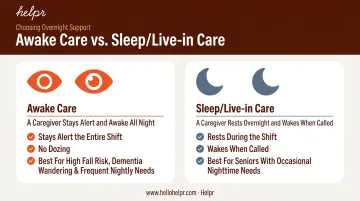
Awake Care vs. Sleep Care
Not every senior needs the same level of overnight coverage. The industry generally splits overnight care into two models.
Awake care means the caregiver stays alert and active for the entire shift, with no napping or dozing off. This fits seniors who:
- Have a high fall risk or need frequent repositioning
- Experience dementia-related wandering
- Require assistance multiple times per night
Sleep or live-in care means the caregiver rests during the shift but wakes to help when called on. This model suits seniors who mostly sleep through the night with only occasional needs.
Federal labor guidelines shape how this works: a caregiver on a shift under 24 hours must generally be paid for the whole shift even if sleep is permitted. Longer live-in arrangements may exclude a limited block of sleep hours, but only under specific conditions, including private quarters, a signed agreement, and genuinely uninterrupted rest.
The right fit depends on an honest look at the senior's mobility, cognitive status, and medical history, ideally with input from a care coordinator who can help match the level of supervision to actual risk instead of guessing.
Core Duties and Responsibilities of an Overnight Caregiver
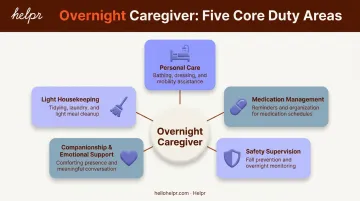
Overnight caregiver duties are highly individualized, but they generally fall into five buckets: personal care, medication management, safety supervision, companionship, and light household tasks.
Personal Care and Bedtime/Morning Routines
Bathroom trips are among the most common (and most dangerous) moments of the night. Poor lighting combined with drowsiness is a recipe for falls, which is why caregivers assist with:
- Toileting and incontinence care
- Safe transfers to and from bed
- Nighttime bathroom trips, with a hand ready if needed
Caregivers also handle bedtime routines (helping into pajamas, oral hygiene) and morning routines (dressing, grooming), preserving dignity and keeping the day-to-night transition consistent.
Medication Management and Safety Supervision
Nighttime and early-morning medication timing matters, especially for conditions like Parkinson's or diabetes where missed or mistimed doses can cause real problems. Caregivers make sure scheduled medications are taken correctly, watch for adverse reactions, and know when a situation calls for a family call versus emergency services.
Safety supervision matters just as much overnight. For seniors with dementia or Alzheimer's, wandering is a genuine hazard, so caregivers secure exits, monitor movement, and gently redirect a confused senior back to bed rather than allowing them to wander unsupervised. This category also covers mobility assistance: repositioning to prevent bedsores and helping with safe transfers in and out of bed.
Companionship, Emotional Support, and Light Housekeeping
A senior who wakes disoriented at 3 a.m. often just needs a calm, familiar presence to settle back down. The caregiver's simple presence reduces nighttime anxiety and loneliness, which matters more than people expect. Fear and confusion in the dark can escalate quickly without someone there to reassure.
Caregivers also handle light housekeeping secondary to direct care: clearing walkways of trip hazards, locking doors, checking windows, and light tidying. These tasks always come second to the senior's actual care needs, but they contribute to a safer environment overall.
Signs Your Loved One May Need Overnight Care
Some warning signs are hard to ignore once you start paying attention:
- Repeated falls or near-falls during the night
- Wandering, especially in a senior with dementia
- Increased confusion after dark (often called sundowning)
- Frequent bathroom trips that require assistance
- Difficulty getting out of bed safely without help
There's also a quieter warning sign: you. Family caregivers who try to cover nights themselves often end up chronically sleep-deprived.
This isn't a minor inconvenience: a CDC analysis found that 36.7% of caregivers age 45 and older reported fewer than 7 hours of sleep, and many also reported poor mental and physical health during that same period, according to CDC research on family caregiving. Sleep-deprived caregiving isn't sustainable, and it doesn't serve the senior well either.
Beyond your own exhaustion, a sudden shift in nighttime behavior, particularly after a hospital stay, fall, or new diagnosis, often becomes the trigger point that pushes families to seek professional overnight support instead of continuing to white-knuckle it alone.
Overnight Care vs. Live-In vs. 24-Hour Care
These terms get used interchangeably, but they mean different things.
| Care Type | Coverage | Caregiver Presence |
|---|---|---|
| Overnight care | Nighttime hours only | Caregiver leaves in the morning |
| Live-in care | Multiple consecutive days | One caregiver resides in the home |
| 24-hour care | Continuous, day and night | Rotating caregivers in shifts |
Overnight care is the narrowest option, built for households that only need nighttime support. Live-in care extends further: one caregiver stays in the home across multiple days, balancing day and night duties with built-in rest periods. 24-hour care goes a step beyond, rotating caregivers in shifts so someone is always awake and alert.
The key is matching the care type to actual risk level. Over-committing to 24-hour care when a senior only needs occasional nighttime help wastes money. Under-committing when someone needs constant supervision creates real safety gaps. Care consulting services, like Helpr's, can help pinpoint the right fit before you commit to a schedule.
How Much Does Overnight Care Cost — and How Employers Can Help
Overnight care is typically billed one of three ways:
- Hourly rate: billed per hour actually worked, common for shorter overnight shifts
- Flat overnight rate: a fixed price covering the entire overnight period regardless of hours worked
- Live-in weekly/monthly rate: bundled pricing for extended in-home stays The 2025 national median hourly rate for non-medical caregiving was $35, up from $34 in 2024, according to CareScout's 2025 Cost of Care Survey. There's no single published national benchmark specifically for overnight shifts, since pricing shifts based on location, caregiver experience, whether you use an agency or independent hire, and how the shift is structured.
One thing worth clarifying upfront with any provider: federal wage rules around sleep-time deductions for live-in caregivers can affect billing.
- Shifts under 24 hours generally must be paid in full, even when the caregiver sleeps
- Longer live-in arrangements can exclude a capped block of sleep hours only under specific conditions Ask providers to spell out their billing structure before signing anything.
Employer benefits can make a real difference here. Helpr's global backup care platform works with companies that offer family care as an employee benefit, connecting families with vetted overnight and elder caregivers through a use-based, subsidized pricing model. Instead of every family researching, vetting, and negotiating rates independently, Helpr's Care Finder concierge service handles sourcing and screening. Because pricing is subsidized by the employer and tied to actual usage, families often pay far less than they would sourcing care on their own.
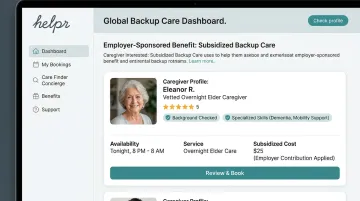
Helpr also supports longer-term needs beyond short-term overnight bookings. Through its Core Care Services and Direct Hire framework, families can pursue live-in or extended elder care placements when a senior's needs go beyond occasional overnight support. A dedicated care specialist helps source and vet arrangements suited to that longer time horizon.
Frequently Asked Questions
How much does an overnight elderly caregiver cost?
Rates commonly follow hourly pricing based on location and experience. Flat overnight rates may apply for set shifts, while live-in arrangements are billed differently. Get local quotes for the most accurate picture.
Does Medicare pay for overnight caregivers?
Traditional Medicare generally does not cover non-medical overnight caregiving. Some Medicare Advantage plans, long-term care insurance, Medicaid waivers, or VA benefits may help offset costs depending on eligibility.
Are overnight caregivers allowed to sleep?
It depends on the care type. Awake care requires the caregiver to stay alert the entire shift, while sleep or live-in care allows scheduled rest as long as the caregiver can respond when needed.
What's the difference between overnight care and live-in care?
Overnight care covers only nighttime hours, with the caregiver leaving in the morning. Live-in caregivers reside in the home across consecutive days, providing both day and night support.
How many hours does a typical overnight caregiver shift last?
Most overnight shifts run approximately 8 to 12 hours, though this varies based on family needs and whether the arrangement is hourly or live-in.
Can overnight caregivers assist with medical tasks like injections or wound care?
No. Standard overnight caregivers provide non-medical support only. Families needing clinical tasks like injections or wound care should arrange a licensed skilled nurse instead.