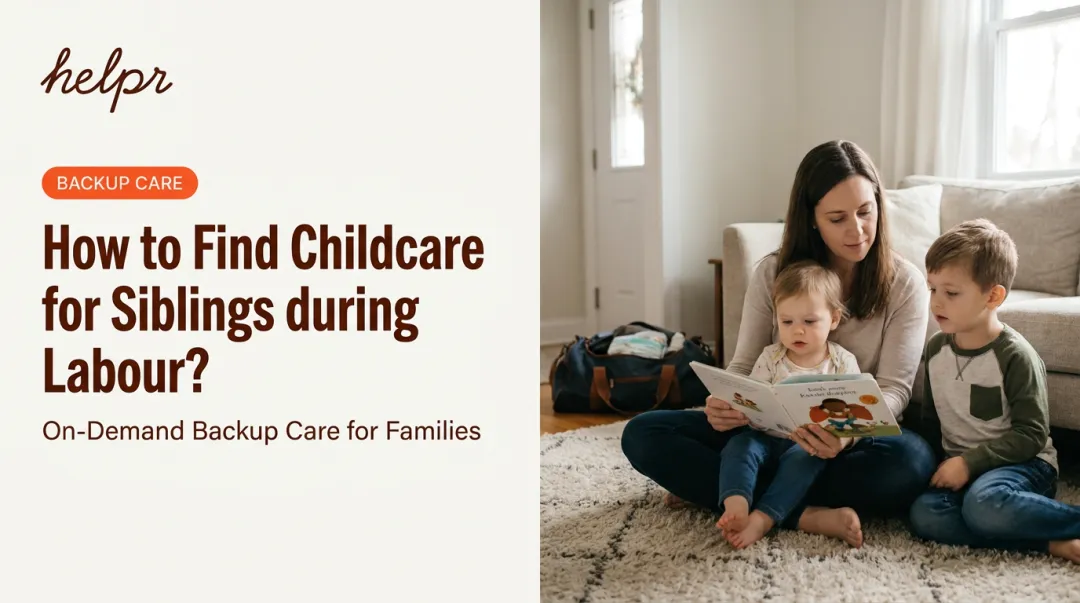

Every working parent knows this moment. That cold-stomach feeling when the childcare plan collapses and the workday hasn't even started. It's not a personal failure. It's a structural gap that millions of families hit every year — and the difference between chaos and calm almost always comes down to preparation.
Research from ReadyNation found that 58% of working parents of young children missed a full workday due to childcare problems in a single three-month period. That's not a rare edge case. That's a routine disruption with real professional consequences.
This guide covers what backup nanny care is, your fastest options when plans fall apart today, and how to build a system that keeps one sick-nanny text from derailing your entire week.
Key Takeaways
- Most working parents will face a childcare breakdown — preparation is the only reliable defense
- Five immediate options exist when care falls through, from on-demand apps to drop-in centers
- A Plan A/B/C framework means you're never starting from scratch during a care emergency
- Many employers already offer subsidized backup care — check your benefits before you need them
- Pre-vetting caregivers before a crisis is what turns a chaotic morning into a manageable one
Why Your Backup Plan Matters More Than You Think
Most parents treat backup care as something to figure out when it happens. That approach guarantees a chaotic morning every time.
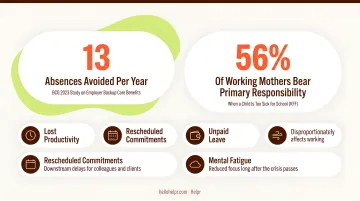
That chaos carries a real professional price tag. The cost of an unplanned childcare gap isn't just one missed meeting. It's the emergency PTO burned on a Tuesday, the client call rescheduled at the last minute, the mental load that lingers through the afternoon even after you've found a solution. According to a 2023 BCG study, employers with backup care benefits saw employees avoid up to 13 absences per year — a figure that illustrates just how often these disruptions accumulate.
The compounding effect is what makes this genuinely expensive:
- Lost productivity during the scramble, even if you technically "make it work"
- Rescheduled commitments that create downstream delays for colleagues and clients
- Unpaid leave disproportionately affects mothers — KFF data shows that 56% of working mothers bear primary responsibility when a child is too sick for school, and over half of those absences are unpaid
- Mental fatigue that reduces focus long after the care crisis is resolved
The parents who handle disruptions with minimal professional impact aren't luckier. They've already made the calls, pre-vetted the sitters, and know exactly who to contact at 7 a.m. Having that network in place before you need it is what separates a stressful hour from a derailed day.
Common Scenarios When Childcare Falls Through
Understanding why care fails helps you prepare for the right scenarios. Most disruptions fall into three categories:
1. Your caregiver calls in sick or has a personal emergency This is the most common and least predictable trigger. Even the most reliable nanny gets sick. The problem isn't the absence — it's having no pre-planned alternative ready to activate.
2. Your child is too ill for daycare or group care Most centers have strict illness policies requiring children with fever, vomiting, or certain symptoms to stay home. This eliminates the drop-off option entirely and puts the full care burden back on the parent.
3. Scheduled closures that conflict with your work calendar School holidays, teacher workdays, and center training days are predictable — yet they still catch parents unprepared. These are the most preventable disruptions.
Those three scenarios are manageable on their own. The harder situations involve compounding failures: your partner is traveling and your nanny is sick, or you're mildly unwell while still responsible for full childcare. These combinations eliminate most obvious fallbacks and expose gaps in a shallow backup plan.
Last-minute searching is genuinely difficult. There's time pressure, a shortage of pre-vetted options, and the real emotional weight of leaving a young child with someone your child has never met. That's exactly what a backup care plan solves — and why building one before you need it matters.
5 Immediate Options When You Need a Backup Nanny Fast
On-Demand Care Apps and Platforms
On-demand care apps let you submit a care request and get matched with vetted local providers, sometimes within hours. Many of these platforms run annual background checks on their caregivers and manually review each profile before caregivers can accept bookings.
What to look for when choosing one:
- Background check policies (who runs them, how often)
- Parent reviews and caregiver ratings
- Network size in your specific city
- Cancellation and refund terms
Honest limitation: same-day availability isn't guaranteed, particularly in smaller markets. These platforms work best when you're registered before a crisis.
Your Personal Sitter Bench
For same-day emergencies, nothing beats a personal bench: 4–6 trusted individuals with flexible schedules who are willing to take last-minute calls. Think graduate students, actors between gigs, teachers' aides on school breaks, or retired neighbors.
Build this network through:
- Parent Facebook groups and neighborhood apps
- Your regular nanny's personal circle (she likely knows other caregivers)
- School parent networks and parent referrals
The goal is depth. Two backup sitters is too few. If both are unavailable simultaneously, you're back to zero.
Friends, Family, and Reciprocity Networks
Friends and family bring real advantages: built-in trust, familiarity with your child, and often no cost. The problem is that goodwill doesn't scale. Unavailability during work hours, inconsistency, and the unspoken debt of informal arrangements can erode these relationships fast.
A care-swap with one or two nearby families — where you each cover the other's emergencies — works far better. Agree on terms in advance: which days, what notice, how you'll keep it balanced.
Drop-In Daycare Centers
Some licensed centers accept drop-in spots with same-day notice when spots are open. The critical step: pre-register before you need it.
Research one or two licensed drop-in centers now, complete their enrollment forms, and note their hours. When a real emergency hits, you want to be making a phone call — not filling out paperwork.
Nanny Staffing Agencies Offering Emergency Placement
Agencies differ from apps in one important way: they handle pre-screening and professional vetting before caregivers enter their roster. For multi-day gaps — like a nanny recovering from illness for an entire week — an agency can provide multi-day temporary placement that most apps can't sustain.
Expect placement or service fees that vary by market. Recent cost-of-care data lists approximately $21.88/hour as a benchmark babysitter rate for one child, though emergency placement and agency rates will differ. Confirm pricing directly with any agency before a crisis, so you're not negotiating costs at 7:30 a.m.
How to Build a Multi-Layered Backup Childcare Plan
The Plan A / Plan B / Plan C Framework
One backup option leaves you exposed. Build three viable tiers instead:
- Plan A: Your personal sitter bench (fastest, most trusted)
- Plan B: A pre-registered drop-in center or on-demand app
- Plan C: A family member, neighbor reciprocity swap, or employer-sponsored care benefit
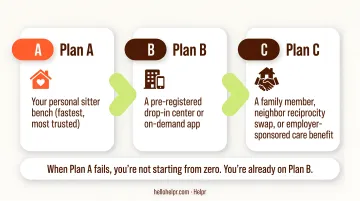
When Plan A fails, you're not starting from zero. You're already on Plan B.
Pre-Vet Before You Need Anyone
For Plan B to actually work, those options need to be ready before you need them. Background checks, a short trial session, and a basic orientation with your child should happen during a calm weekend afternoon — not 30 minutes before a critical call.
Prepare a care information packet that any backup caregiver can reference immediately:
- Daily routine and nap schedule
- Feeding schedule and portion sizes
- Allergies and any medical information
- Emergency contacts (pediatrician, secondary parent, trusted neighbor)
- House rules and location of first aid supplies
A caregiver who walks in with a clear briefing document is less anxious — and your child picks up on that calm.
Loop In Your Regular Nanny
Your primary caregiver should know who you might call in their absence. This reduces confusion on the rare occasion they have advance notice and can provide a warm handoff — sharing notes on your child's mood, what they've eaten, or anything relevant to that morning.
Revisit Every Six Months
Sitter availability changes. Students graduate, neighbors move, agencies update their rosters, and your child's needs evolve. Treat the backup plan as a living document, not a one-time setup. A quick review every six months should cover:
- Updating contact numbers for each tier
- Confirming who's still available and willing
- Checking that your care information packet reflects current routines
- Verifying any employer-sponsored care benefits haven't changed
Employer-Sponsored Backup Care: The Smarter Long-Term Solution
What It Is and Why It Matters
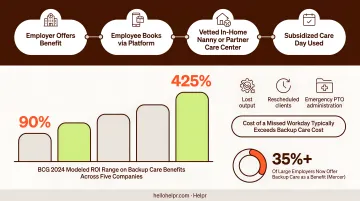
Many companies now offer backup childcare as an employee benefit, accessed through a third-party platform. Employees receive a set number of subsidized care days per year and can access vetted in-home nannies or partner care centers at little or no out-of-pocket cost.
From the employer's perspective, this benefit is a straightforward calculation. BCG's 2024 research found that modeled ROI on backup care benefits ranged from 90% to 425% across five companies. The cost of a single missed workday — lost output, rescheduled clients, emergency PTO administration — typically exceeds the per-use cost of a backup care benefit many times over. Mercer's survey data confirms that over a third of large employers now offer backup care as a benefit.
What to Ask Your HR Department
Many employees have access to backup care and don't know it. If you haven't checked recently, ask:
- Does our company offer a backup care benefit, and am I eligible?
- How many subsidized care days do I receive per year?
- What is my co-pay per use, if any?
- Can I book in-home care, center-based care, or both?
- How far in advance must I request care?
Where Helpr Fits In
Helpr is a global backup care platform built specifically for enterprises. Through the Helpr app, employees connect with vetted providers for:
- In-home backup care and center-based options
- Specialized care needs beyond standard childcare
- Flexible access via the patented "My Choice" technology — whether employees are at a corporate headquarters or working remotely abroad
The platform operates across 150+ countries, making it a viable option for organizations with globally distributed workforces — a segment most traditional backup care providers don't serve consistently. HR teams at companies including DraftKings, Lionsgate, Crocs Inc., and Skanska have adopted Helpr as a benefit designed to ensure every employee, regardless of role or location, has reliable care when their plans fall through. Learn more at hellohelpr.com.
How to Prepare Your Child for a Last-Minute Care Change
Sudden transitions can unsettle young children, particularly toddlers and preschoolers who rely on routine and familiar faces. The American Academy of Pediatrics identifies separation anxiety as a normal developmental response — but the way you handle the transition significantly affects how your child experiences it.
Frame the change in age-appropriate language. Something like: "A new helper friend is coming today while [nanny's name] gets some rest." Simple, calm, and honest.
Practical steps that help:
- Pack a comfort item — a favorite stuffed animal or blanket provides continuity when everything else feels different
- Overlap briefly with the backup caregiver if timing allows, so your child can warm up before you leave
- Share a written or voice-note summary of the morning's mood, any relevant details, and how your child has been feeling
For the parent leaving: give yourself permission to walk out the door. Vetted, experienced caregivers are trained for exactly this situation. A calm, confident goodbye reassures your child far more than a prolonged, anxious one. Keep it brief, keep it warm, and trust the professional you've already chosen.
Frequently Asked Questions
What is backup care?
Backup care is alternative childcare used when a family's regular nanny, sitter, or daycare is unexpectedly unavailable — due to caregiver illness, facility closures, or last-minute work conflicts. It can be arranged through a personal network, a drop-in center, or an employer-sponsored care benefit.
How do I find a backup nanny on short notice?
Contact your regular nanny's trusted contacts, use a vetted on-demand care app where you're already registered, or call a nanny agency that handles emergency placements. The key is having these options lined up in advance — same-day searches from scratch are far less reliable.
Does my employer offer backup childcare benefits?
Check your HR department or employee benefits portal. Many companies partner with backup care platforms to offer subsidized in-home or center-based care days — a benefit that frequently goes unused simply because employees aren't aware it exists. It takes one email to find out.
How much does backup nanny care typically cost?
Costs vary by source. On-demand apps charge a platform fee plus an hourly caregiver rate; industry data reports babysitter rates averaging around $21.88/hour for one child. Agency and emergency placement rates vary by market. Employer-sponsored backup care may have no cost or a small co-pay per use.
What should I prepare for a backup nanny?
Keep a ready-made care packet with your child's daily routine, feeding schedule, allergy information, emergency contacts, and house rules. A caregiver with clear written instructions can step in smoothly — no lengthy briefing needed during an already stressful morning.