Care Finder Elder Care Navigation
1:1 support from a dedicated care consultant sourcing and vetting in-home support, respite, and longer-term arrangements, including in a location the employee does not live in.

Elder care is the care category employers fund last and lose the most experienced people over. The employee affected is typically in their forties or fifties, senior enough to be expensive to replace, and the trigger is usually sudden: a fall, a diagnosis, a hospital discharge with no plan attached. They then spend working weeks on the phone to home care providers in a town they do not live in, and eventually reduce hours or leave, rarely naming elder care as the reason. This is a program design page for that problem. The decisions are specific. Whether your dependent care eligibility covers parents and parents-in-law at all, since childcare-derived definitions usually do not. Whether allocations recognise that elder care is often continuous rather than episodic. Whether care can be arranged in a location where the employee does not live, which is the normal case. And whether the benefit includes navigation, because the binding constraint in elder care is almost never money, it is not knowing what good looks like. Delivery runs through Care Finder elder care navigation, where a dedicated care consultant provides 1:1 support sourcing and vetting in-home support, respite, and longer-term arrangements. Funding flows through Care Funds, paid via My Choice Care when the family nominates someone they trust or Helpr Network Care when professional cover is right.
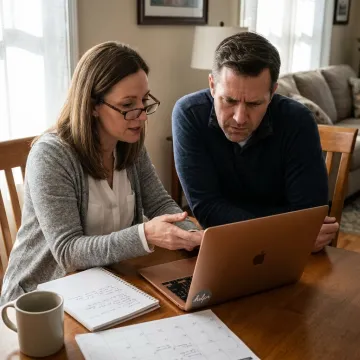
The components employees draw on when elder care coverage is designed properly.
1:1 support from a dedicated care consultant sourcing and vetting in-home support, respite, and longer-term arrangements, including in a location the employee does not live in.
Support with daily living, companionship, and post-discharge cover, funded from the employer allocation rather than the employee's savings.
Where a relative or trusted neighbour is already providing care, Helpr vets and pays that person directly at a $12-20 per hour average subsidy.
Helpr Network Care provides vetted professional cover at $45-50 per hour with a four-hour minimum so the family caregiver can work or rest.
Employer-funded care dollars covering elder care on the same basis as childcare, with allocations structured for continuous need.
Visibility into how much elder care your workforce is actually carrying, which for most employers is materially more than expected.
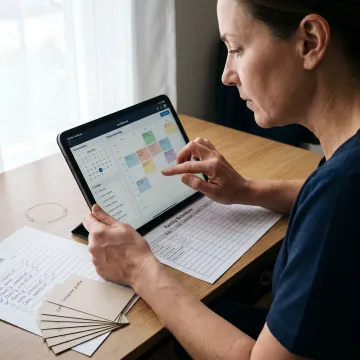
We read your existing dependent care definitions against elder care reality. Most exclude parents and parents-in-law by inheritance from a childcare program rather than by decision, so this is where coverage is usually won or lost.
What elder care coverage changes for the population most expensive to lose.
Dependent definitions inherited from childcare programs usually exclude parents and parents-in-law, which removes elder care from the benefit by accident.
Employees facing a parent's sudden decline do not know what good care looks like. A dedicated care consultant provides 1:1 support sourcing and vetting it.
Elder care usually has to be arranged where the parent lives, not where the employee works, which is exactly where local provider knowledge decides the outcome.
Elder care persists and escalates, so allocation design has to reflect recurring support rather than occasional backup cover.
Because eligibility definitions are inherited from childcare programs and written around children. Parents and parents-in-law fall outside them, so an employee managing a father's dementia is not eligible for the care benefit their employer funded. It is a drafting inheritance rather than a policy decision.
Send us your workforce age distribution and current dependent care policy.

Women-owned business enterprise certification
Elder care navigation for employees
Care arranged in the parent's own market
Send us your dependent care policy and workforce age distribution. We will show you who is currently excluded and what coverage would cost.
To help us assist you faster, please include the reason for your message so the relevant team can reach out as soon as possible.
To help us assist you faster, please include the reason for your message so the relevant team can reach out as soon as possible.