
Sarah isn't unusual. She's a primary caregiver, and there are millions like her.
63 million U.S. adults, roughly 24% of the population, were family caregivers in 2025, according to AARP and the National Alliance for Caregiving. Most take on this role without training, a job title, or even much recognition.
This article covers what a primary caregiver actually is, their day-to-day responsibilities, how the role differs from secondary or paid care, how to prove your status when it matters, and what employers can do to help.
Key Takeaways
- One in four U.S. adults currently serves as a family caregiver, often while working full-time
- Primary caregivers handle personal care, medical coordination, finances, and emotional support
- Proving caregiver status depends on the purpose: FMLA, tax credits, and custody each use different tests
- Caregivers average 27 hours weekly on care duties, with nearly a quarter hitting 40+ hours
- Employer benefits like backup care measurably reduce absenteeism and turnover
What Is a Primary Caregiver?
A primary caregiver is the person who holds the main responsibility for meeting someone's daily physical, medical, and emotional needs when that person can't fully manage on their own. This isn't occasional help. It's the person whose phone rings first when something goes wrong.
Most primary caregivers are unpaid family members: a spouse, an adult child, a parent. That said, the term occasionally applies to paid professionals in specific legal or insurance contexts, though this is the exception rather than the rule.
The role shows up across every stage of life:
- Parents managing the round-the-clock needs of young children
- Adult children stepping in as their parents age
- Spouses caring for a partner through illness or recovery
AARP and the National Alliance for Caregiving (NAC) define family caregiving the same way: ongoing support for someone with a chronic, disabling, or serious health condition—not a one-time favor.
Who Qualifies as a Primary Caregiver?
There's no single national checklist, but researchers and practitioners generally look for a few markers:
- Consistent, hands-on involvement in daily care tasks, not occasional check-ins
- Proximity to the care recipient, often living with or very near them
- Duration, with one peer-reviewed study using six months as a threshold for "main caregiver" status (Gorostiaga et al., 2022)
Two quick examples:
- A working parent handling school drop-offs, meals, and homework help alongside a full-time job
- An employee whose spouse just had surgery, now managing wound care, medication schedules, and follow-up appointments on top of their own workload
Key Responsibilities and Duties of a Primary Caregiver
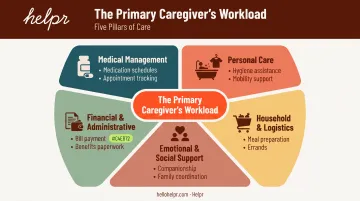
The job description varies widely depending on who needs care, but most primary caregivers juggle some combination of the following.
Personal care assistance:
- Bathing, dressing, and grooming support
- Mobility help, including transfers and fall prevention
- Toileting support and incontinence care when needed
Medical management:
- Administering medications on schedule
- Monitoring symptoms and flagging changes
- Coordinating appointments and talking directly with doctors
Household and logistical tasks:
- Meal prep and grocery runs
- Transportation to appointments, school, or errands
- Light housekeeping and laundry
Financial and administrative oversight:
- Paying bills and managing insurance paperwork
- Handling benefits applications on the recipient's behalf
- Tracking care-related expenses and records
Emotional and social support:
- Steady presence the care recipient can lean on
- Companionship when isolation is a real risk
- Encouragement to stay connected with family and friends
Caring for a newborn and caring for a parent with a progressive illness look nothing alike day-to-day, but both demand this same blend of physical, logistical, and emotional labor. The scope always scales with the recipient's needs, which means the job rarely stays the same for long.
Primary Caregiver vs. Secondary and Formal Caregivers
Not every caregiver holds the same level of responsibility, and the distinctions matter more than most people expect.
| Role | Definition | Typical Example |
|---|---|---|
| Primary caregiver | Bears majority of responsibility; main point of contact | Co-resident spouse providing daily care |
| Secondary caregiver | Occasional or backup support | Sibling who helps on weekends |
| Formal caregiver | Paid professional supplementing family care | Home health aide, nanny, nurse |
A secondary caregiver helps but isn't the main person responsible. In dementia care research, secondary caregivers were commonly adult children pitching in around a primary caregiver's schedule, not driving it (Gorostiaga et al., 2022).
A formal caregiver is a paid worker, such as a home health aide or nanny, tied to a service system rather than a personal relationship. Some paid providers can still be classified as "primary" if they hold main day-to-day responsibility, though this is context-dependent.
This distinction matters because FMLA eligibility, tax credit rules, and employer benefit design all hinge on relationship and responsibility, not a self-assigned label. Get the classification wrong, and you risk denied claims or missed benefits.
How to Prove You Are the Primary Caregiver
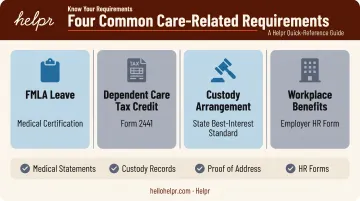
You'll typically need to prove caregiver status in one of four situations—and each has its own rules:
- FMLA leave requests
- Dependent care tax credits
- Custody arrangements
- Workplace benefits eligibility
FMLA leave requires medical certification confirming your family relationship and the care recipient's serious health condition. According to the U.S. Department of Labor, this certification is generally due within 15 calendar days and covers provider contact info, expected duration, and care needs. A diagnosis isn't required.
Dependent care tax credits require filing Form 2441 alongside your tax return. According to IRS Publication 503, you'll need to identify the qualifying person and the care provider by name and tax ID.
Custody arrangements don't have a federal checklist. States apply their own best-interest standards, so requirements shift by jurisdiction.
Workplace benefits (backup care, dependent care FSA access, or similar programs) usually rely on employer-specific forms. HR often asks for dependent information and a short description of your care responsibilities.
Documentation that helps across most of these situations:
- Medical provider statements
- Custody or dependency records
- Proof of shared address or financial support
- Employer HR forms
Because requirements vary by purpose, check with HR, a tax professional, or legal counsel before assuming one document covers every situation.
Common Challenges Faced by Primary Caregivers
Caregiving takes a toll that goes well beyond time management. The numbers back this up.
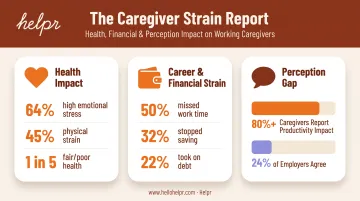
Health impact. Per AARP/NAC, 2025:
- 64% of caregivers reported high emotional stress
- 45% reported physical strain
- One in five described their own health as fair or poor
Without support, burnout becomes nearly inevitable.
Career and financial strain. Work and money take hits just as fast:
- Half of employed caregivers arrived late, left early, or took time off for care duties
- Nearly a third stopped saving altogether
- 22% took on additional debt just to keep up
A perception gap makes the workplace cost worse. Harvard Business School found that over 80% of caregiving employees said the role affected their productivity, but only 24% of employers believed it influenced performance (HBS, 2019). That gap is where a lot of unnecessary attrition happens.
Isolation. Between medical appointments, work deadlines, and household duties, personal time and social connection often disappear first. It's rarely named in exit interviews, but it's frequently the real reason someone quits.
How Employers Can Support Primary Caregivers in the Workplace
Companies are catching on that ignoring employee caregiving responsibilities is expensive. Turnover, absenteeism, and disengagement all cost more than most benefit programs designed to prevent them.
On-Demand Backup Care as a Practical Fix
When regular childcare or elder care arrangements fall apart, on-demand backup care fills the gap without forcing employees to burn PTO or call out entirely. Helpr's global backup care platform gives employers a ready way to cover those gaps.
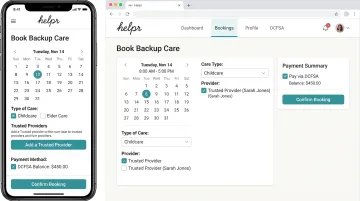
Helpr's patented My Choice technology lets employees:
- Add trusted family, friends, or neighbors as paid, in-home care providers through the app
- Access subsidized funds to compensate people already in their support network
- Use the same platform for both childcare and elder care needs
- Get coverage across 150+ countries, so remote and international employees aren't left out
For employees juggling caregiving with a full workload, Helpr also integrates directly with Dependent Care FSA (DCFSA) accounts. Employees can pay with a DCFSA debit card at booking or submit receipts for reimbursement, all without the burden of formally employing someone in their home.
Complementary Policies Worth Pairing
Backup care works best alongside:
- Flexible scheduling so caregivers can shift hours around appointments
- Caregiver leave policies for planned and last-minute needs
- Leave-of-absence support when care stretches beyond a few days
The Business Case
A Harvard Business School review of 21 months of data across 97 employer clients found employer-provided caregiving benefits linked to 1% to 7% lower turnover, 10% to 50% lower absenteeism, and ROI as high as 72% (HBS, 2024).
Helpr's use-based pricing model means employers pay only for care actually used, which keeps that ROI math straightforward.
Frequently Asked Questions
What is a primary caregiver?
A primary caregiver is the person who holds main responsibility for someone's daily physical, medical, and emotional needs when that person can't fully care for themselves. It's usually a family member, though not always.
How do I prove I'm the primary caregiver?
Proof depends on the purpose. FMLA requires medical certification, tax credits require IRS Form 2441 with provider details, and custody uses state-specific standards. Check with HR, a tax professional, or legal counsel for your specific situation.
What is the difference between a primary and secondary caregiver?
A primary caregiver bears majority responsibility for daily care. A secondary caregiver provides occasional or backup support without owning the main workload.
Can a paid caregiver be considered a primary caregiver?
Primary caregivers are usually unpaid family members, but a paid professional can be classified as primary if they hold main day-to-day responsibility. This depends on the specific legal or insurance context.
What workplace benefits are available to primary caregivers?
Options include FMLA leave, caregiver leave policies, and on-demand backup care benefits offered through platforms like Helpr. Many employers now bundle these with flexible scheduling.
How many hours a week do primary caregivers typically spend on caregiving?
Family caregivers average 27 hours weekly, according to AARP/NAC's 2025 data. Nearly a quarter provide 40 or more hours weekly, essentially a second full-time job.