
Introduction
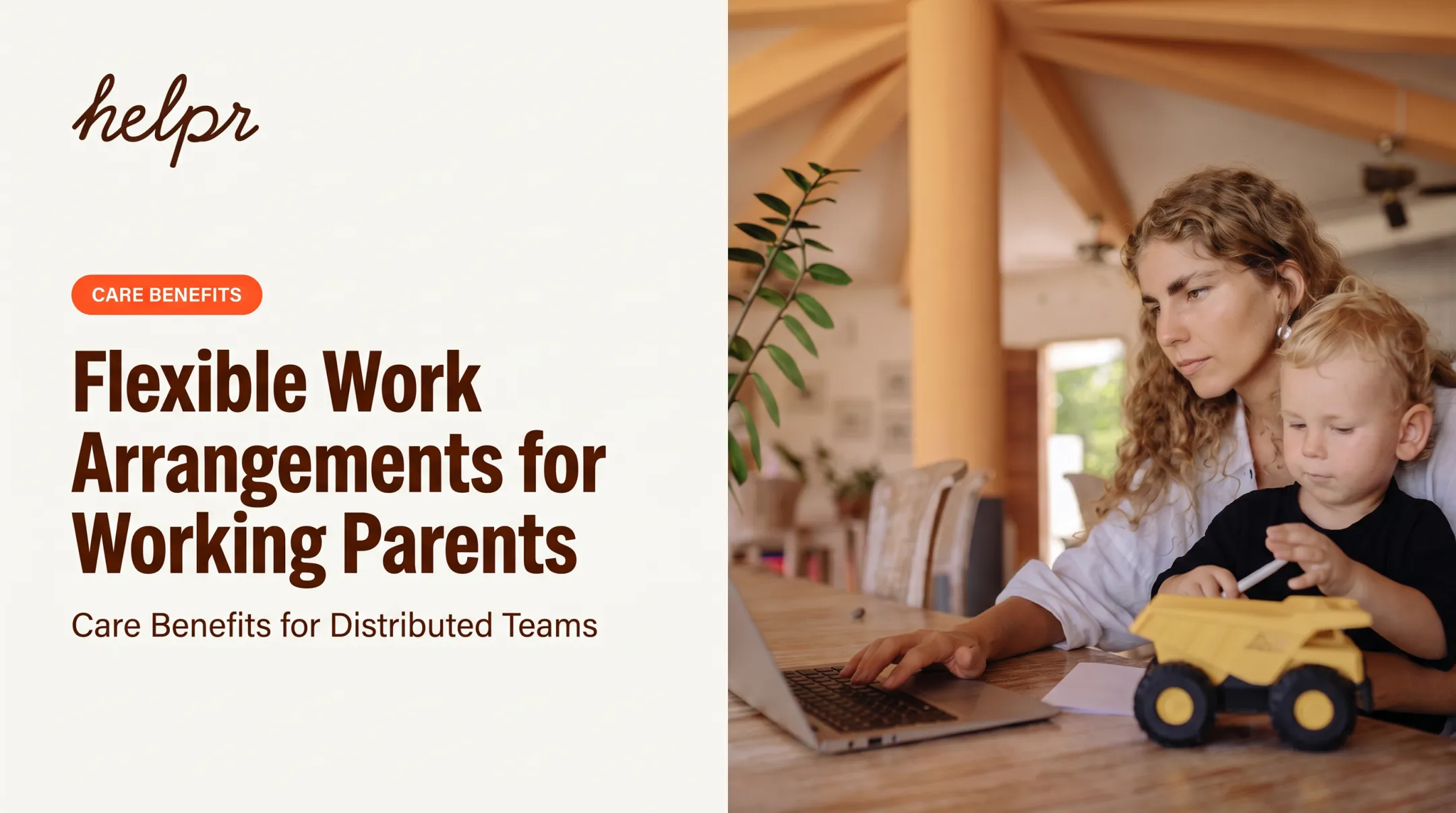
"Flexible work" often gets reduced to one idea: working from home. That undersells it. Flexibility can mean adjusting when employees work, where they work, or how their hours are structured, all while keeping business responsibilities and performance standards intact.
Employers weighing these arrangements face real tension. You need talent in a competitive labor market. You need to support employees juggling caregiving alongside their jobs, especially with nearly 60% of US families now having both parents in the workforce.
You also need to maintain coverage, collaboration, and fairness across roles that can't all work the same way. A remote-eligible marketing manager and a frontline retail associate won't access flexibility identically, but both deserve options that fit their jobs.
This guide takes a practical path through that tension: comparing arrangement types, assessing organizational fit, building a clear policy, flagging the US employment law issues that need legal review, and measuring whether your program actually works once it's live.
Key Takeaways
- Match each arrangement to the job—weigh employee needs, operations, and collaboration together.
- Document eligibility, core hours, performance standards, communication norms, and review dates before launch.
- Pair schedule flexibility with real caregiving support; a flexible calendar alone won't cover a sick kid or closed school.
Types of Flexible Work Arrangements
Flexible work arrangements are formal or informal agreements that give employees some control over their hours, location, schedule pattern, or workload, while keeping agreed responsibilities and service levels in place. The arrangement changes; the accountability doesn't.
The Main Categories Employers Can Use
Most programs draw from a handful of proven formats:
- Flextime - Set core hours (say, 10 a.m. to 3 p.m.) when everyone must be reachable, and let employees choose start and end times around that window.
- Hybrid and fully remote - Hybrid mixes office and remote days on a set or flexible pattern; fully remote rarely requires office presence. Both need clear rules on equipment, security, and coordination.
- Compressed workweeks - Employees complete full weekly hours in fewer days, such as four 10-hour days. Overtime, rest-period, and state-law rules vary, so get legal review before rollout.
- Part-time, job sharing, and reduced hours - Split roles, phased retirement ramps, or seasonal hour cuts reduce time commitment while keeping essential functions covered.
Match Arrangements to Operational Realities
Not every arrangement fits every job. Office and knowledge-work roles usually support the widest menu; field, customer-facing, and frontline roles need options that protect coverage—and scheduling input still counts as real flexibility.
| Role Type | Common Flexibility Options |
|---|---|
| Office-based / knowledge work | Flextime, hybrid, remote |
| Field-based | Compressed schedules, flexible start times |
| Customer-facing | Shift swaps, predictable scheduling |
| Shift-based / frontline | Advance notice, scheduling input, shift trades |
The key is transparent, job-related eligibility criteria such as coverage requirements or licensing, rather than leaving decisions to individual manager preference.
How Employers Should Design a Flexible Work Program
A durable flexible work program runs on clear criteria, documented processes, and a controlled rollout—not informal one-off deals. Work through the steps below before you lock the final policy.
Start With a Business and Workforce Assessment
Before writing a policy, look at the job itself: duties, customer coverage needs, collaboration requirements, licensing or security constraints, time zones, and peak periods. Then look at who's actually asking for flexibility.
Gather input through surveys, listening sessions, and manager feedback. Pull existing attendance, turnover, and recruiting data to see where friction already exists.
The demand is real and growing. In Q1 2024, 22.9% of employed people teleworked or worked from home for pay, up from 19.6% a year earlier, according to BLS data published in 2025. If your recruiting funnel is losing candidates to competitors offering flexibility, that's a workforce signal worth acting on.
Establish Eligibility and Scheduling Rules
Define who's eligible using objective, job-related criteria, not tenure alone or manager gut feeling. Cover:
- Which roles and performance levels qualify
- Who approves requests, and on what timeline
- Trial periods and required notice for changes
- Core hours, required meetings, and coverage minimums
- How to modify or end an arrangement
Vague "manager discretion" standards create inconsistency and legal exposure. Write your criteria down, apply them the same way across teams, and still leave room for reasonable case-by-case adjustments.
Set Expectations for Performance and Communication
Measure outcomes, not online status. Define success in terms of deliverables, service levels, response times, and attendance at required meetings, rather than tracking activity indicators.
Spell out the practical details too:
- Which channels to use for urgent versus routine matters
- Handoff and documentation expectations across shifts or time zones
- Shared collaboration windows for cross-team work
- Timekeeping, overtime approval, and after-hours boundaries
- Data security requirements for remote access
Build Compliance and Accommodation Checks Into the Process
US employers need to check federal, state, and local rules before finalizing any policy: wage and hour law, overtime, meal and rest periods, recordkeeping, leave entitlements, disability accommodations, and remote-work tax exposure where employees cross state lines.
A flexible work policy is not a substitute for evaluating a legally required accommodation or a protected leave request. Those follow their own process regardless of what your general policy says. Get legal review before launch, not after a complaint lands on your desk.
Pilot, Document, and Communicate the Program
Test one or two arrangements first, with defined success criteria, a set start and end date, manager training, and an employee FAQ. Build a documented process for exceptions or disputes from day one.

When you communicate the program, cover why you're offering it, who's eligible, how to apply, how decisions get made, and how you'll evaluate results. Skipping this step is how rumors fill the gap.
Benefits, Risks, and Equity Considerations
Potential Benefits for Employers and Employees
Flexibility creates concrete gains on both sides of the employment relationship:
- Improves work-life balance and cuts avoidable scheduling conflicts
- Widens your recruiting pool beyond commuting distance
- Helps employees stay productive while managing responsibilities outside work
Caregiving is where this shows up most. School schedules, elder care needs, and sudden care disruptions don't pause for the workday. Schedule flexibility helps employees rearrange when they work around a care gap, but it doesn't provide the care itself. Those are two different problems.
That's why many employers pair flexible schedules with dedicated family-care benefits. Helpr, for example, is a global backup care platform for childcare, elder care, and other dependent-care support, built on its patented "My Choice" technology. A use-based model means organizations pay for care employees actually use. Programs like this cover the gap a flexible schedule alone can't close: someone still has to watch the kids when school closes for a snow day.
Common Risks and How to Manage Them
Flexibility creates real tradeoffs, and pretending otherwise sets managers up to fail.
| Risk | Control |
|---|---|
| Reduced collaboration | Core overlap hours for meetings and syncs |
| Inconsistent availability | Documented handoffs and coverage schedules |
| Manager visibility concerns | Outcome-based metrics, not activity tracking |
| Cybersecurity exposure | Multifactor authentication and secured remote access |
| Isolation or burnout | Regular check-ins, workload reviews, after-hours boundaries |
Fully remote employees report higher engagement than hybrid workers, but they also report lower overall thriving along with more loneliness and stress, according to Gallup's 2025 global workplace data. Flexible doesn't automatically mean healthy. Build in the guardrails, or the risks surface later as attrition.

Make Flexibility Fair and Inclusive
Remote-eligible employees often get the most visible flexibility simply because their jobs allow it. Frontline, shift-based, and location-dependent employees need equivalent options:
- Predictable scheduling and shift swaps
- Compressed shifts and input into their own hours
- Paid leave or care support
The access gap is measurable. Among working caregivers, 58% of salaried employees report access to telecommuting, compared with just 23% of hourly employees, according to AARP and the National Alliance for Caregiving's 2025 report.
Track participation, approvals, workload, and turnover by role, department, and arrangement type where legally and ethically appropriate. Publish an escalation path for employees who believe eligibility decisions are inconsistent, and review the policy for disparate impact before expanding it.
Launching and Reviewing the Arrangement
Prepare Managers and Employees
Train managers to handle flexible arrangements with consistency and fairness:
- Evaluate requests against the same criteria every time
- Manage by outcomes, not desk time
- Protect availability boundaries
- Support caregivers without informal workarounds
- Document decisions and rationale
- Watch for proximity bias (rating in-office employees higher simply because they're visible)
Give employees a short checklist before they start:
- Confirm schedule commitments and core hours
- Know your communication windows and response expectations
- Set up equipment, workspace, and security requirements
- Understand timekeeping and coverage responsibilities
- Know who to notify when circumstances change
Encourage employees to raise concerns early and work toward a solution together. Staying silent while the work and the relationship quietly deteriorate rarely helps anyone.
Measure Effectiveness and Refine the Policy
Track indicators that show whether the program works:
- Retention and absenteeism
- Recruiting conversion
- Service levels and engagement
- Schedule coverage
- Usage by arrangement type
- Accommodation trends
Review quarterly during a pilot, then annually once the program is established.
Use a clear launch sequence so those measures have a baseline to beat:
- Assess roles and operational needs
- Consult employees and managers
- Draft eligibility rules and expectations
- Get legal review
- Pilot with defined success criteria
- Train managers
- Communicate clearly across the organization
- Measure outcomes and revise

Frequently Asked Questions
What are some flexible work arrangements?
Common options include flextime, hybrid or remote work, compressed workweeks, part-time schedules, job sharing, and predictable scheduling. Employers typically adapt the mix to each role's coverage and collaboration needs.
What is the purpose of flexible work arrangements?
Flexibility helps align work with employee needs while supporting recruitment, retention, productivity, and work-life balance. It only delivers these results when paired with clear expectations and consistent management.
Are employers required to provide flexible work arrangements?
There's no blanket legal right to flexible work in the US. It generally depends on employer policy, contract terms, and individual circumstances. Voluntary flexibility differs from protected leave or a reasonable accommodation, so check federal, state, and local requirements.
How should employers create a flexible work policy?
Start by assessing roles and operational needs, then set objective eligibility criteria, schedule and communication expectations, and get legal review before launch. Pilot the policy, train managers, and evaluate results on a regular cadence.
How can employers make flexible work fair for all employees?
Use transparent, job-related criteria rather than manager discretion, and offer equivalent alternatives, like predictable scheduling or shift swaps, for frontline and location-dependent roles. Monitor access and outcomes by role, and provide an escalation path for inconsistent decisions.