
Introduction
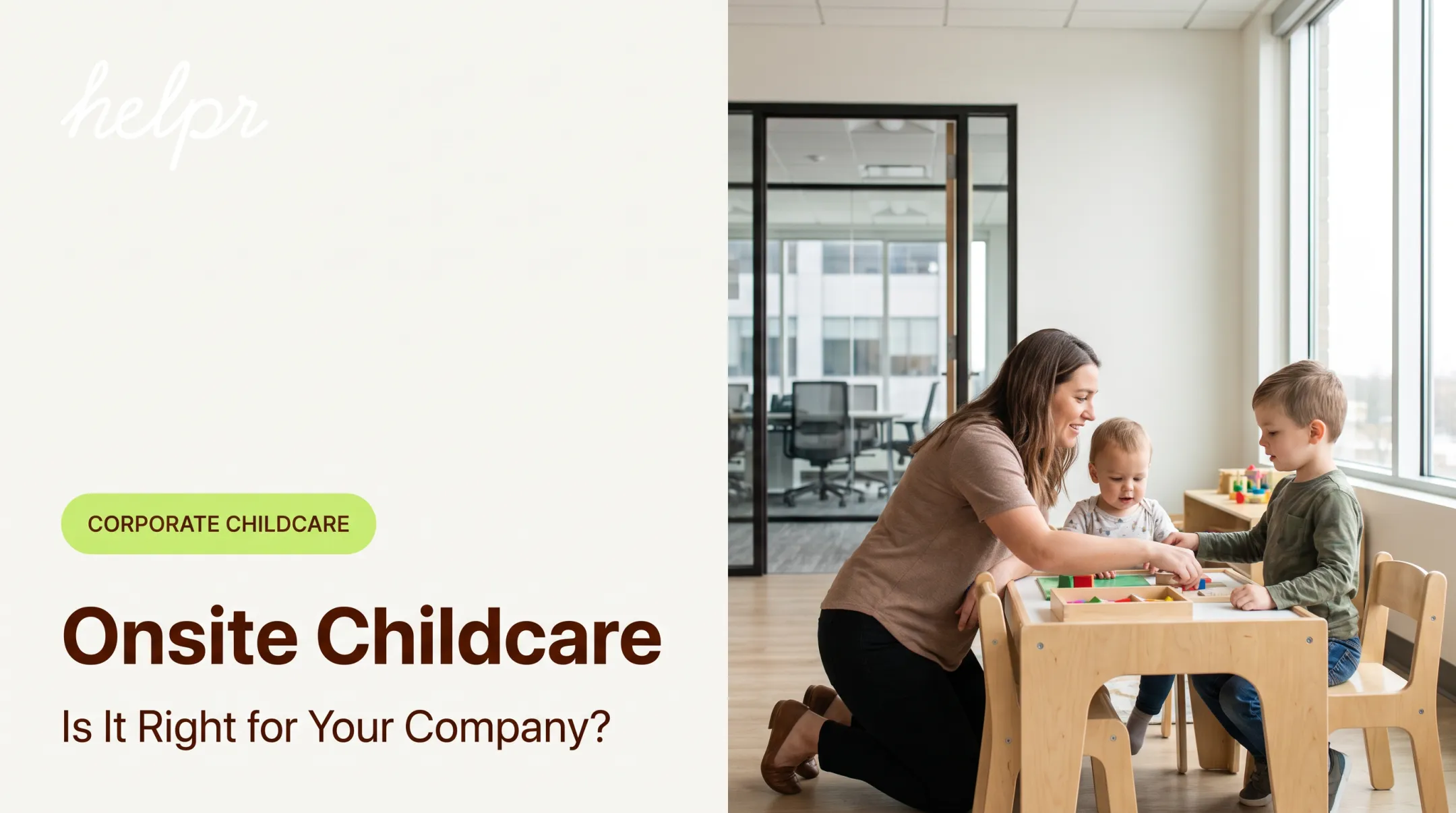
Onsite childcare is one of the most powerful benefits an employer can offer. It shows up in retention numbers, fewer sick-day scrambles, and recruiting pitches for hard-to-fill shifts.
The sticker price most employers budget for—a per-child tuition rate plus classroom furniture—is nowhere close to the real number. That gap is where cost planning usually breaks down.
Total cost hinges on several drivers:
- Facility format and build-out needs
- Number and ages of children served
- Location and state licensing rules
- Staffing model and hours of operation
- Share of cost the company covers
A center running two shifts for hospital staff costs nothing like a small program for 20 headquarters employees.
This article breaks down startup and construction expenses, recurring operating costs, the factors that drive those costs up or down, tax considerations, and lower-cost alternatives for employers that don't need (or can't justify) a dedicated facility.
Key Takeaways
- Employer costs span modest slot subsidies to multi-million-dollar builds for a dedicated center.
- Facility size, construction scope, staffing ratios, licensing, and hours drive cost variation.
- Provider partnerships, reserved slots, or backup care deliver similar benefits without capital outlay.
- A full center only pays off with sustained demand, a workable site, and hard-to-fill roles.
How Much Does Onsite Childcare Cost Employers?
There's no fixed national price tag for onsite childcare. Employers structure these programs too differently for one figure to apply.
Some fund a full childcare operation from the ground up. Others lease space to a third-party provider. Many simply subsidize tuition employees already pay elsewhere. Plenty combine two or three of these approaches at once.
Before pricing anything, separate your budget into three categories:
- Capital costs — design, construction or conversion, furniture, playgrounds, equipment, and technology.
- Recurring costs — staff wages, management, food, supplies, utilities, insurance, maintenance, and compliance.
- Employer subsidy costs — the portion of tuition, reserved capacity, or backup care the company pays on employees' behalf.
What the Numbers Actually Look Like
Reliable, audited national benchmarks for small onsite programs simply don't exist. If you're reusing a conference room or partnering with a nearby center for a limited employee group, that cost has to be built from the provider contract, fit-out needs, staffing hours, and expected enrollment. There's no shortcut.
For a standard center, the Employer Childcare Navigator reports initial startup costs of $1 million to $15 million and average annual employer contributions of $100,000 to $300,000 for a center serving 100 to 150 children.

That range doesn't specify whether it includes land, major construction, staffing benefits, or subsidy assumptions, so treat it as directional rather than a quote you can budget against directly.
For large or extended-hours centers built for campus-wide or shift-based workforces, no separate authoritative national range exists. Don't stretch that $15 million figure to represent a bigger facility; build a custom model instead.
A childcare center's parent-facing tuition rate is not your cost of providing care. Child Care Aware of America's 2025 report puts the national average family childcare price at $13,184 a year, up from $13,128 in 2024. That's what a family pays—not what it costs an employer to build, staff, and run a facility.
Key Factors That Affect Employer Onsite Childcare Costs
Pricing depends on a stack of facility, operational, regulatory, and workforce decisions, not square footage alone.
Facility Type, Size, and Location
Format choice sets the baseline cost profile:
- Ground-up construction
- Converting existing office space
- Leasing dedicated space
- Partnering with a near-site provider
Local variables then move the total up or down:
- Real estate prices and construction labor rates
- Permitting timelines
- Utilities and insurance premiums
Research your specific market before locking a format.
Capacity and Age Mix
Infant and toddler rooms cost more per child than preschool rooms. They need lower staff-to-child ratios, specialized equipment, and different room layouts.
Ratios matter more than most employers expect. NAEYC best practice calls for a 1:4 ratio for infants under 15 months and a 1:10 ratio for preschoolers aged 30 months to 5 years. State rules vary and can be stricter.

Space rules add another layer. New York, for example, requires at least 35 square feet per child in infant and toddler play areas, excluding hallways, bathrooms, and offices.
Planned enrollment versus actual utilization matters just as much. Building for peak demand means paying for empty seats most of the year.
Staffing and Operating Hours
Staffing is usually the single largest recurring line item. Budget for:
- Lead teachers and assistant teachers
- Center directors and administrative support
- Float staff and substitutes for callouts
- Payroll taxes, benefits, background checks, and continuing education
National wage data from the Bureau of Labor Statistics puts median pay roughly at:
- Childcare center directors: about $59,300 a year
- Preschool teachers: about $38,140 a year
- Childcare workers: about $16.82 an hour
Those are wage benchmarks, not fully loaded employer costs. Add taxes, benefits, and training, and the real number climbs well past the headline figure.
Early opening, late closing, weekend, or overnight coverage adds staffing complexity fast. You can't simply extend one shift—you need overlapping coverage that meets ratio requirements at every hour.
Licensing, Safety, and Quality Requirements
Every state sets its own rules for indoor and outdoor space, staff-to-child ratios, background checks, fire safety, sanitation, and food service. Texas, for instance, requires at least 30 square feet of indoor activity space per licensed child and a fenced outdoor area with two exits. Confirm your state and local requirements before finalizing a site or floor plan, not after.
Employer Subsidy and Eligibility Policy
Decide how much of the cost the company will carry:
- Fully employer-paid
- Employee copayments
- Income-adjusted pricing
- Reserved slots only
Eligibility rules by role, location, tenure, or dependent age directly affect participation rates and your financial exposure.
Technology, Administration, and Risk Management
Admin and tech stack items all carry vendor and maintenance cost:
- Enrollment and attendance tracking
- Billing systems
- Parent communication apps
- Incident reporting
- Data security
Build in a contingency allowance for enrollment swings, staff shortages, repairs, and regulatory changes. These "soft" costs get overlooked constantly and add up fast.
Cost Breakdown and Low-Cost vs High-Cost Onsite Childcare Models
A credible budget separates one-time, recurring, and periodic expenses instead of quoting one headline number.
| Category | Timing | Includes |
|---|---|---|
| Facility and setup | One-time | Design, feasibility studies, construction or conversion, permitting, furnishings, playgrounds, kitchen equipment, security systems |
| Staffing and launch | Pre-opening + recurring | Recruitment, background checks, onboarding, training, payroll before full enrollment |
| Operating costs | Recurring | Wages, benefits, payroll taxes, rent or space opportunity cost, utilities, food, cleaning, supplies, software |
| Maintenance, insurance, compliance | Recurring + periodic | Repairs, playground inspections, equipment replacement, liability coverage, workers' comp, audits, license renewals |
| Subsidy and utilization exposure | Recurring | Employee copays, tuition revenue, reserved-slot commitments, grants, employer subsidies |
Build contingency into each major line item. According to LISC guidance, pre-construction expenses like architecture and legal work can run 5% to 10% of total project cost, and construction contingency should sit at 10% or higher (LISC recommends 15% for renovations specifically).

Comparing the Three Approaches
| Model | Startup Investment | Employer Control | Speed to Launch | Utilization Risk |
|---|---|---|---|---|
| Lower-cost: Partner with a licensed provider, reserve slots, subsidize tuition | Low | Low | Fast | Low |
| Mid-range: Lease or convert space, contract a qualified operator | Moderate | Moderate | Medium | Moderate |
| Higher-cost: Build and operate a dedicated center | High | High | Slow | High |
The lower-cost model avoids land and construction costs entirely but gives you less control over hours, curriculum, and priority access. Mid-range setups share facility burden with a contracted operator, so you gain more program input without a full build. The higher-cost model gives you full control and a highly visible benefit, but it locks in years of fixed overhead regardless of enrollment swings.
That tradeoff is why many employers want subsidy flexibility without construction risk. Helpr's center-based care option, for example, gives employees priority access to a network of more than 1,000 partner centers, so a company can subsidize care without owning the facility or absorbing build costs.
How to Estimate the Right Budget and Avoid Common Cost Mistakes
Start with a workforce needs assessment, not a floor plan. You need to know:
- Where employees live and work relative to a potential site
- What schedules they work, including shift and weekend coverage needs
- How many dependents they have and at what ages
- Current care gaps they're already navigating
- Expected participation, including demand for extended hours
From there, build three separate budgets:
- Capital budget — site, construction or conversion, equipment, design, permitting, launch costs
- Annual operating budget — staffing, occupancy, food, supplies, insurance, technology, maintenance, administration
- Employer-benefit budget — employee contributions, subsidies, tax treatment, utilization assumptions, and sensitivity scenarios
Don't Skip the Tax Research
The Employer-Provided Child Care Credit (Section 45F) can offset qualifying costs, but the rules are changing:
- Before January 1, 2026: 25% of qualified facility expenditures plus 10% of resource-and-referral expenditures, capped at $150,000 a year
- After December 31, 2025: the IRS raises the credit to 40% (or 50% for eligible small businesses), with an annual cap of $500,000 (or $600,000)
Confirm current eligibility with the IRS and a qualified tax adviser before you build these numbers into your model.
Compare projected cost per participating employee and per occupied slot, not just your total annual spend. That single shift in framing catches a lot of budgeting mistakes early.

Common gaps employers miss:
- Low initial enrollment while fixed staffing costs continue
- Staff turnover and the cost of re-hiring and re-training
- Wage increases and substitute coverage for callouts
- Closure days, repairs, and insurance renewals
- The opportunity cost of using valuable workplace square footage
When demand is distributed across multiple locations, intermittent, or hard to predict, a flexible option like Helpr's backup-care platform can make more sense than a fixed facility. It's a use-based model, meaning employers aren't paying for empty seats during slow months, which sidesteps the utilization risk that sinks a lot of underused centers.
What Most Employers Miss When It Comes to Onsite Childcare Cost
Even well-intentioned budgets miss the same handful of items, over and over:
- Construction and monthly tuition get the spotlight while benefits, administration, insurance, maintenance, and compliance quietly eat the budget
- Not every eligible employee will enroll—model actual attendance, seasonality, and age mix instead of 100% utilization
- Tax credits, grants, and employee copays aren't guaranteed; eligibility rules, documentation, and timing vary by state
- Distributed or variable-schedule workforces get hit hardest when square footage comes before demand validation—a single-site center won't serve people who work elsewhere
- Lowest sticker price isn't the win if staffing stability, safety, and employee experience undermine long-term sustainability
Conclusion
Employer onsite childcare costs stretch across a wide spectrum, from a targeted subsidy or provider partnership on one end to a major facility and multi-year operating commitment on the other. The right fit depends on your headcount, site footprint, and how much utilization risk you can carry.
The right budget accounts for:
- Capital expenses
- Recurring operations
- Utilization risk
- Compliance
- Employee contributions
- Incentives you can document and claim
Before committing to a permanent facility, compare it against near-site partnerships, subsidies, backup care, and flexible family-care benefits. For many employers, especially those with distributed or shift-based teams, a flexible model covers more ground for less risk than a single fixed location ever could.
Frequently Asked Questions
What is the average annual cost of daycare in the US?
Families paid a national average of $13,184 a year for childcare in 2025, according to Child Care Aware of America. That's what parents pay, not what an employer spends running an onsite program, which also includes facility, staffing, compliance, and administrative costs.
How do you create a budget for a daycare center?
Build separate capital, pre-opening, and operating budgets covering construction, staffing, occupancy, compliance, maintenance, and contingency. Employer-operated centers need an additional workforce-benefit budget layered on top to account for subsidies and copays.
How much does it cost to build an onsite childcare center?
Costs vary widely by construction type, facility size, region, and licensing requirements. There's no childcare-specific national benchmark, so budget hard costs, soft costs, equipment, and contingency separately using current local construction bids.
Is onsite childcare tax deductible for employers?
Tax treatment depends on the specific expense, facility structure, and applicable federal and state rules. The Employer-Provided Child Care Credit offers a separate incentive with its own caps and eligibility requirements, so confirm details with the IRS and a tax adviser.
Is onsite childcare worth the cost for employers?
It's worth it when demand is sustained, employees are concentrated at one site, schedules are difficult, and retention is a priority. When demand is scattered or unpredictable, partnerships, subsidies, or backup care often deliver similar benefits at lower risk.