
But that's not the whole story. Separately billed before-school supervision, after-school programs, and other custodial care can qualify — even for a child enrolled in kindergarten.
This distinction matters because DCFSA eligibility hinges on why you're paying for a service, not just where the payment goes. The rules depend on the purpose of the expense, whether it enables you or your spouse to work, and what your employer's specific plan allows.
Below, we'll walk through how to read your invoice, spot potentially eligible care charges, document them properly, and know when to loop in your plan administrator or a tax professional.
Key Takeaways
- Standard kindergarten tuition and education-related fees are generally not reimbursable through a DCFSA.
- Separately billed before- or after-school custodial care may qualify when it lets a parent or spouse work.
- The child must be a qualifying dependent, and the expense must be allowed under your employer’s DCFSA plan.
- Keep itemized receipts and verify current IRS rules before you submit a claim.
Is Kindergarten Eligible for a Dependent Care FSA?
Here's the direct answer: according to IRS Publication 503, expenses to attend kindergarten or any higher grade are considered education expenses, not care expenses. That means they don't count as qualifying expenses for a DCFSA.
The "Primary Purpose" Test
The IRS applies a primary purpose test. An expense qualifies as care only when its main purpose is your child's well-being and protection while you work. Classroom instruction doesn't meet that bar, even though your child is supervised during school hours.
This is where a lot of confusion starts. Just because a child is being watched doesn't automatically make the charge care-related. The distinction is:
- Kindergarten tuition — pays for academic instruction. Not eligible.
- Before-school or after-school programs — pays for supervision outside instructional hours. Potentially eligible.
- Extended-day care — often billed separately from tuition, primarily custodial. Potentially eligible.
The school's name, your child's age, or the fact that a check goes to the same institution doesn't determine eligibility. What matters is what service was actually provided and how the invoice describes it.
Comparing Three Invoice Scenarios
Consider three hypothetical invoices:
- Tuition-only invoice — a flat charge for "Kindergarten Program, Fall Semester." This is education. Not reimbursable.
- Combined tuition-and-care invoice — one line item covering both instructional hours and extended supervision. Only the care portion may count, and only if it's separable.
- Separately billed after-school program — a distinct charge labeled "After-School Care, 3:00–6:00 PM." This is far more likely to qualify.

Your plan administrator ultimately determines whether a specific charge is reimbursable, so treat these as illustrations, not guarantees. When in doubt, ask before you pay.
Which Kindergarten-Related Costs May Qualify?
Eligible expenses must generally be for the care and protection of a qualifying child, and incurred so you (and your spouse, if applicable) can work or look for work. Here's how that plays out around a typical kindergarten schedule.
Potentially Eligible Arrangements
- Before-school supervision — qualifies when separately identifiable and primarily custodial, not instructional
- After-school or extended-day care — qualifies for the hours after the school day ends, when care is custodial
- Care during school closures — including eligible day camps or supervised programs during breaks
The typical school day ends between 2 and 3 p.m., leaving a one- to two-hour gap for working parents. A sitter, after-school program, or supervised break camp that fills that gap is generally claimable under a DCFSA.
Generally Ineligible Costs
- Kindergarten tuition, enrollment fees, and registration charges tied to education
- Tutoring, academic instruction, lessons, and enrichment activities billed as educational services
- Overnight camps, meals, supplies, and other costs not primarily for care

Bundled Invoices, Fees, and Transportation
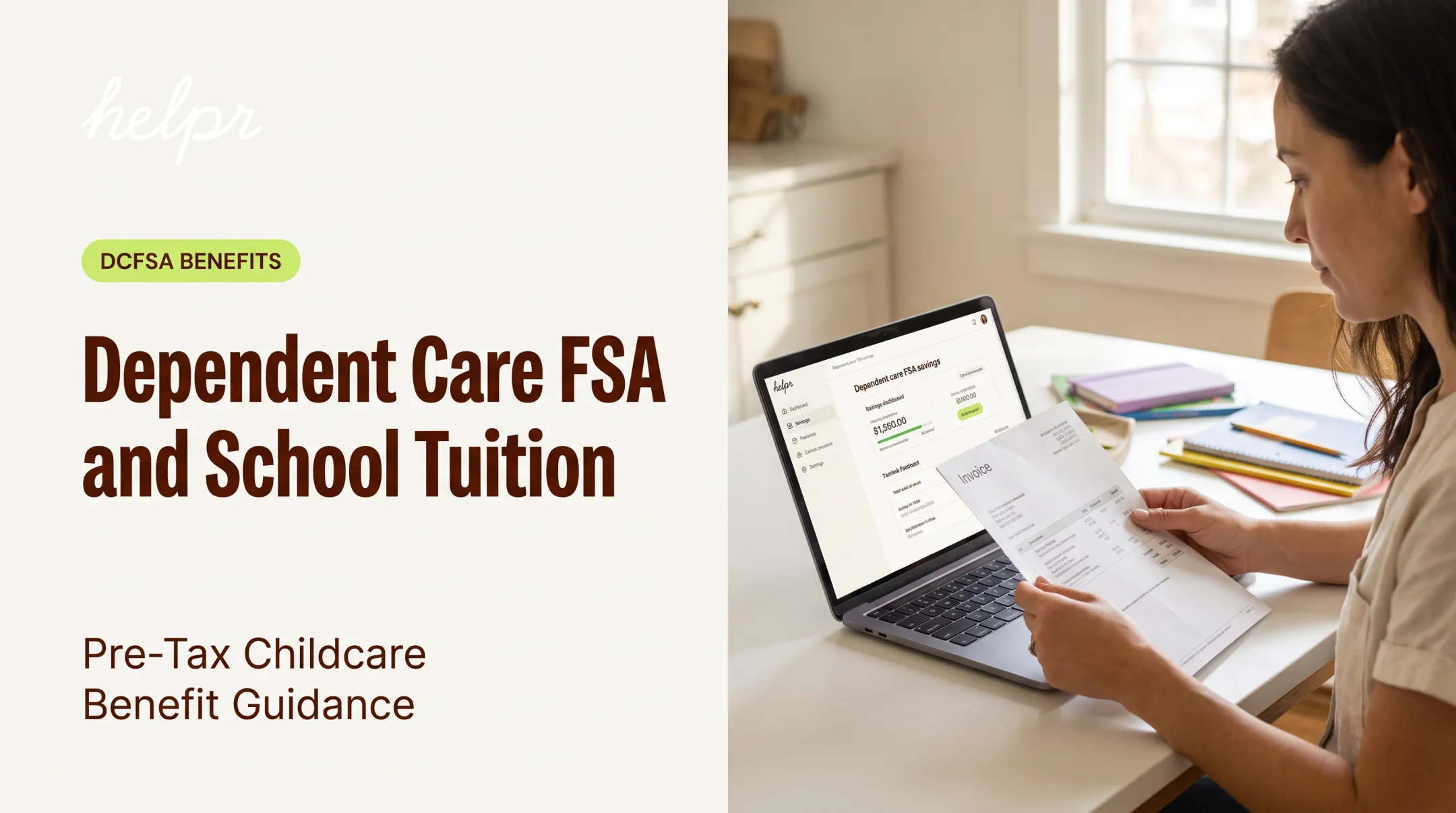
If your school sends one invoice covering tuition and care together, don't claim the full amount. Request an itemized statement that separates:
- Tuition and instructional charges
- Care or supervision charges
- Any incidental fees (materials, meals, activities)
Application fees and deposits are generally eligible when required to secure a spot in a care program. A forfeited deposit for care that never happened typically isn't.
Transportation counts when the care provider includes it as part of the care service. A separate bus, rideshare, or parent-arranged carpool generally does not. Late pickup fees vary by plan, so check your DCFSA documentation before submitting.
How to Determine Eligibility and Submit a Claim
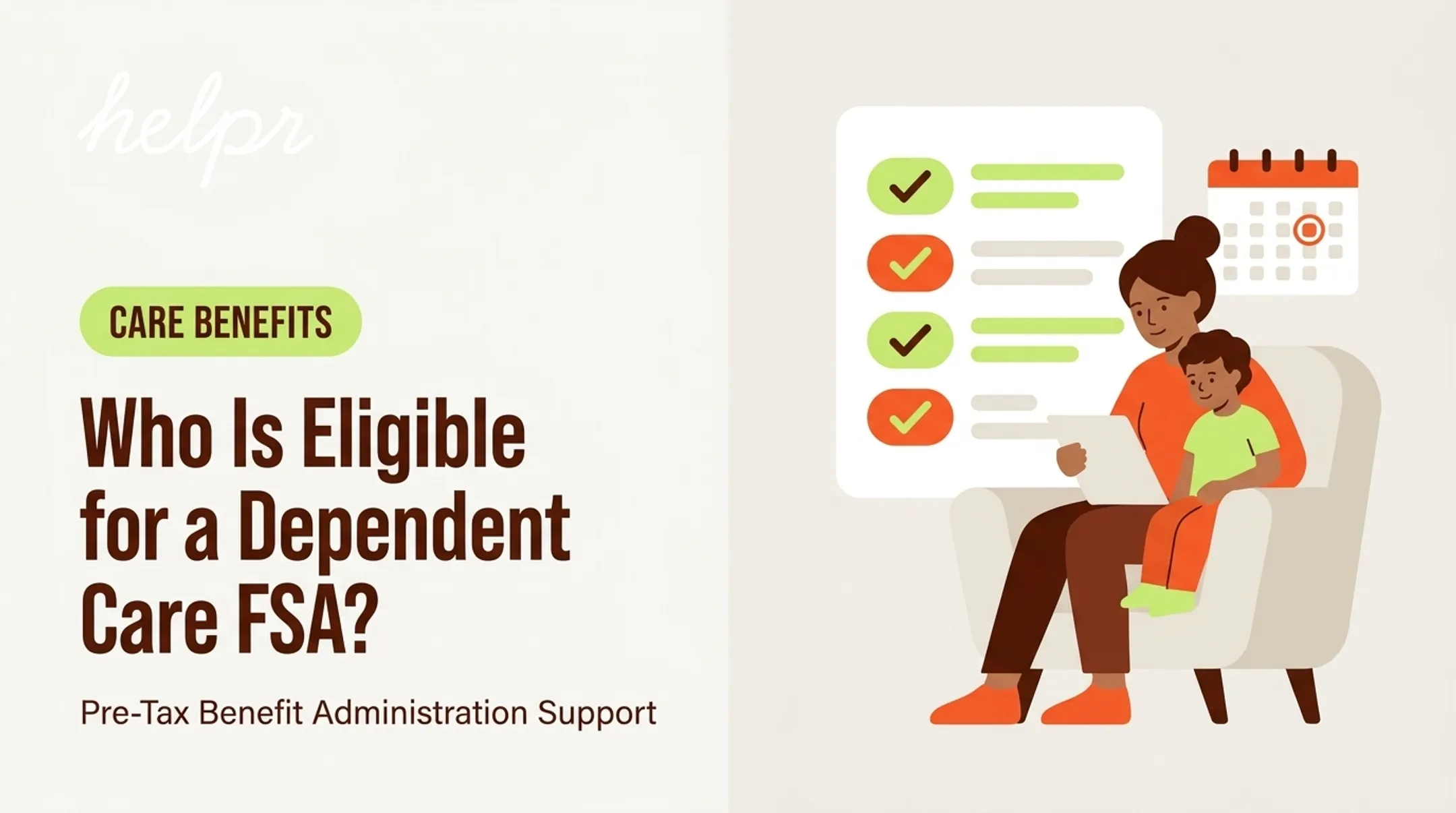
Before submitting anything, run through this checklist:
- Is the child a qualifying individual? Usually a dependent under age 13, judged on the date care is provided.
- Is the expense primarily for care, not education? Supervision qualifies; pure instruction does not.
- Did the care allow you or your spouse to work or look for work? This is the work-related test.
- Does your employer's written DCFSA plan permit it? Plans may add restrictions beyond IRS minimums.

Age and Dependency Rules
A qualifying child must generally be your dependent and under 13. If your child turns 13 mid-year, they only qualify for the portion of the year before that birthday, according to Instructions for Form 2441. A spouse or older dependent who's physically or mentally unable to care for themselves can also qualify, without the same age cutoff.
Special Employment Situations
- Self-employment counts as work, and net earnings count toward earned income
- Part-time work is figured by day—any day with at least one hour worked usually counts
- Job searching counts, but with no earned income for the year you can't use the exclusion
- Full-time student or unable-to-self-care spouse is treated as having earned income for eligibility
Documentation You'll Need
Keep these on hand for every claim:
- Child's name and provider's name and identifying information
- Dates of service
- Description of the care provided
- Amount paid, with proof of payment
- Provider tax ID information when required
Don't self-certify an expense without backup if your plan requires provider statements. Families using Helpr's app can pull DCFSA-ready receipts right after a booking.
Submit claims by your plan's deadlines. When an invoice mixes tuition and care with unclear language, ask your administrator before you pay—not after you submit.
What If Kindergarten Tuition Is Not Eligible?
Ineligibility for tuition doesn't make a DCFSA less valuable. You can still use it for qualifying care before school, after school, during breaks, or through eligible day camps. For many working families, that's where the real savings add up.
When choosing your payroll contribution amount, estimate only the predictable, qualifying care costs you expect to incur. For 2026, the annual DCFSA contribution limit is $7,500 (up from $5,000), or $3,750 if married filing separately, according to IRS Publication 15-B.
Watch your plan's grace period rules. Unused funds are typically forfeited once the grace period closes, so don't over-contribute based on tuition you can't actually claim.
DCFSA reimbursements and the federal Child and Dependent Care Credit operate under different rules, and you generally can't use the same expense for both. If your family situation involves multiple benefits or unusual employment circumstances, compare your options with a tax professional before assuming either program applies.
For the coverage gaps that remain, employer-sponsored backup care can help. Helpr's backup care benefit gives employees access to subsidized childcare for situations like school closures, unexpected schedule gaps, or the before/after-school window that regular tuition doesn't touch.
This is a separate benefit from DCFSA reimbursement, so confirm with your employer and plan administrator how the two work together.
If you're sorting through a kindergarten invoice right now, here's your action plan:
- Separate tuition from care on the invoice so only eligible charges go toward your DCFSA
- Request corrected or itemized billing if care and tuition are bundled
- Confirm your plan's specific rules with the administrator before submitting claims
- Retain all documentation for the full plan year and any grace period
- Seek professional advice for anything unusual in your family or employment situation
Frequently Asked Questions
What qualifies you for a dependent care FSA?
You need an employer-sponsored DCFSA plan, a qualifying dependent, and work-related care expenses that let you or your spouse work or look for work. Those expenses must also meet your plan's written terms.
At what age does dependent care FSA eligibility stop?
A qualifying child must be under 13 on the date care is provided. An exception applies for a dependent or spouse who is physically or mentally unable to care for themselves, regardless of age.
Is kindergarten tuition eligible for a dependent care FSA?
No. Ordinary kindergarten tuition is treated as an educational expense and isn't eligible. Separately stated before- or after-school care tied to the same enrollment may qualify.
Can I use a dependent care FSA for before- or after-school care?
Yes — if the charge is primarily for supervision rather than instruction, the care is work-related, properly documented, and allowed under your employer's plan.
What documentation do I need to claim kindergarten-related dependent care expenses?
You'll typically need an itemized provider statement, child and provider details, dates of care, amount paid, proof of payment, and any required provider tax information.