
Age alone doesn't establish eligibility. The IRS applies a specific, multi-part test to adult dependents, and an elderly parent has to clear every part of it, not just one.
This article walks through four checks: whether your parent counts as a "qualifying person," whether the care itself is work-related, which expenses actually qualify, and what documentation your plan will ask for.
DCFSA rules shift by tax year and vary by employer plan. Always confirm current details with the IRS, your plan administrator, or a tax professional before you rely on this account for a parent's care.
Key Takeaways
- A parent qualifies only when they meet IRS dependency, residency, self-care, and work-related tests—not relation alone.
- Adult day care and qualifying in-home care often count; medical treatment, most residential care, and living costs usually don't.
- DCFSAs are employer-sponsored only; your plan document sets deadlines and claim rules, not IRS guidance alone.
- Keep detailed provider records; unused funds typically forfeit after the plan year or grace period.
Who Qualifies for a Dependent Care FSA for Elderly Parents?
A DCFSA exists to reimburse care that lets you (and your spouse, if you're married) work, look for work, or attend school. That's the entire purpose. Care that doesn't serve this function generally isn't eligible, no matter how necessary it feels.
The Adult Qualifying-Person Test
For an elderly parent (or another adult dependent 13 or older), the IRS requires all of the following, per IRS Publication 503:
- Unable to self-care: Can't dress, bathe, or feed themselves due to a physical or mental condition, or needs constant supervision for safety
- Household residency: Lived with you more than half the year—or, if care is outside your home, still spends at least 8 hours a day in your household
- Dependency status: Is your tax dependent, or would be except for gross income over the IRS threshold, filing a joint return, or you (or your spouse) being claimable as someone else's dependent
Miss any one of these, and the account doesn't apply—even if your parent is 90 and clearly needs help. Being a parent, in-law, or grandparent is not enough on its own. The IRS applies the test above, not the family tree.

The Work Test
You (and your spouse, if filing jointly) generally need earned income. A spouse who's a full-time student or unable to self-care is treated as earning $250 a month (or $500 with two or more qualifying persons), per IRS guidance.
Quick checklist before you enroll:
- Your employer offers a DCFSA
- Your parent cannot self-care
- The residency test is met
- Dependency rules check out
- The care enables work, job search, or school
- Your provider can give name, address, TIN/SSN, dates, and amounts
Which Elder Care and Adult Care Expenses May Qualify?
Once your parent clears the qualifying-person test, the next question is whether the specific service counts as eligible "care." The IRS defines care as anything whose primary purpose is the qualifying person's well-being and protection while you're working.
Likely Eligible
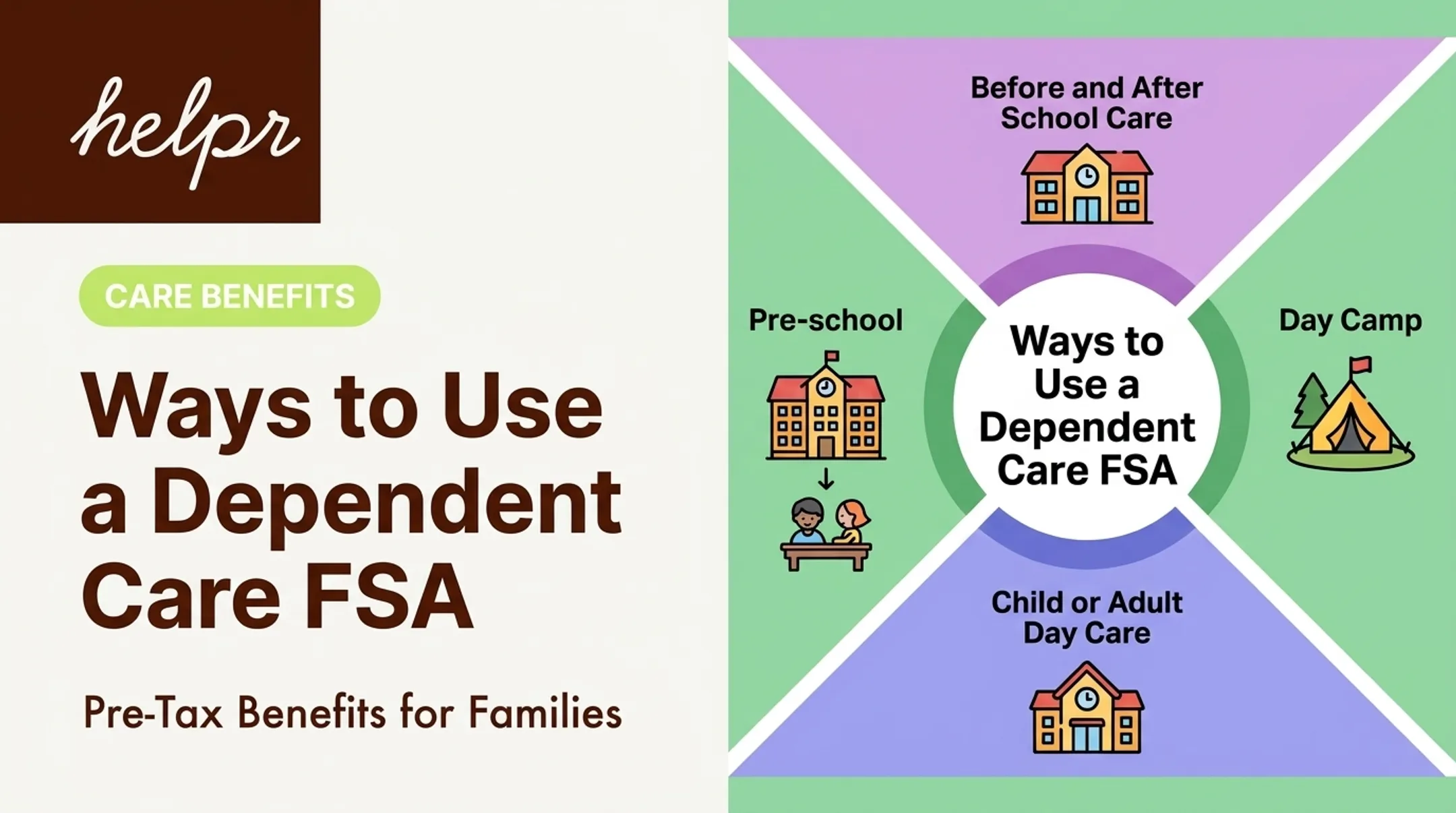
- Adult day care and senior day programs when the main purpose is supervision and care
- In-home caregiving, including bathing, dressing, feeding, medication reminders, and mobility help
- Household services at least partly for your parent's care (cooking or light housekeeping with caregiving generally qualifies)
A caregiver's actual duties matter more than their job title. Supervision and daily-living support count as care. Gardening or chauffeuring generally does not—unless it's a minor add-on to otherwise qualifying work.
Transportation and Gray Areas
Transportation to and from an eligible care location may qualify, but usually only when the care provider supplies it. If a family member drives your parent to adult day care, that's a separate question requiring documentation, not an automatic yes.
Commonly Ineligible Costs
| Expense Type | Typically Eligible? |
|---|---|
| Adult day care | Often yes |
| In-home caregiver duties | Often yes |
| Medical treatment or prescriptions | No |
| Meals, personal supplies | No |
| Long-term-care insurance premiums | No |
| Leisure or vacation companion care | No |
| Full assisted living or nursing home bill | Requires separation |
Assisted living and nursing homes need extra caution. These facilities bundle housing, meals, medical services, and custodial care into one invoice. Only a separately identifiable, qualifying care charge might be reimbursable, and that requires an itemized breakdown from the facility, not a lump-sum bill.
Before you pay, run this test:
- Is the expense primarily for care?
- Does it happen while you're working?
- Does it concern a qualifying person?
- Can it be separated from non-care charges?

If any answer is no, hold off and confirm with your plan administrator first.
How to Plan Contributions and Understand the Tax Rules
DCFSA contributions come out of your paycheck before taxes, which lowers your taxable income and, in most cases, your payroll taxes too. Actual savings depend on your income bracket and filing status, so treat this as a general benefit, not a fixed dollar figure.
Contribution Limits
Limits change year to year and by tax year classification:
| Tax Year | Maximum Contribution | Married Filing Separately |
|---|---|---|
| 2025 | $5,000 | $2,500 |
| 2026 | $7,500 | $3,750 |
The 2026 increase to $7,500 marks the first adjustment in years, giving families more room to set aside pre-tax dollars for elder care. Always confirm the figure for your specific plan year before electing.
Don't Overestimate Your Election
Don't max out contributions "just in case." Under IRS Notice 2005-42, plans may offer an optional grace period of up to 2½ months after the plan year ends. Anything left unspent after that window is forfeited entirely—no carryover.
Estimate realistic costs based on actual care hours and provider rates, not a worst-case scenario.
DCFSA vs. the Dependent Care Tax Credit
You can't use the same expense for both a DCFSA reimbursement and the Child and Dependent Care Tax Credit on Form 2441. Model both options:
- Pre-tax DCFSA savings often beat the credit for moderate-to-high earners
- Lower-income households sometimes come out ahead with the credit alone
- A tax professional can run the numbers for your situation
DCFSA Isn't a Healthcare FSA
These are two different accounts. A healthcare FSA covers medical expenses. A DCFSA covers work-related dependent care. Don't mix them up when planning your elections.
Where Backup Care Benefits Fit In
Contribution limits only help if you can actually book eligible care when you need it. An employer-sponsored backup care benefit can complement a DCFSA by helping employees find adult care providers quickly—whether for an emergency booking or ongoing in-home support.
Helpr connects care spending to an employee's DCFSA so eligible expenses can be paid and substantiated in one flow. Payment structure and IRS eligibility for any specific expense still need separate confirmation; access to a caregiver doesn't automatically make the cost reimbursable.
How to File a Claim and Avoid Common DCFSA Mistakes
Filing a claim correctly the first time saves you from rejected reimbursements and awkward resubmissions. Here's the practical process.
The Claim Process, Step by Step
- Confirm the service date matches your plan year and eligibility window
- Pay the provider according to your plan's rules (some require payment before submission, others reimburse after)
- Collect an itemized receipt showing dates, services, and amount
- Get provider identifying information: name, address, and SSN/ITIN for individuals or an EIN for agencies
- Submit before the deadline your plan document specifies

Records to Keep
- Dependent's name and relationship to you
- Provider's name, address, and tax ID
- Dates of care and description of services provided
- Amount paid and proof of payment
- Any plan-specific certification forms
If you book through Helpr, the app emails a receipt after every completed appointment and keeps DCFSA-ready booking receipts available for submission to your FSA vendor.
When Your Caregiver Is a Household Employee
Paying a caregiver directly, including a family member, may trigger household employer obligations. If you pay a parent for caregiving, FICA and FUTA taxes usually aren't required, but you may still need to issue a W-2 at year-end, and the parent must report that income. Confirm requirements with a tax professional before care begins, not after.
Mistakes That Get Claims Rejected
- Bundled facility invoices that mix rent, meals, and care won't pass substantiation—ask for an itemized breakdown that separates qualifying care from everything else.
- Self-certification isn't enough. IRS guidance requires post-expense, third-party substantiation, so you need independent documentation from the provider.
- Services that "seem reasonable" can still get rejected without proper documentation. When your situation is unusual, ask for a written eligibility determination before you spend the money.
Final Action Checklist
- Review your employer's plan document for deadlines and grace periods
- Confirm your parent meets the qualifying-person test
- Estimate realistic eligible care costs for the year
- Ask providers for itemized, compliant documentation
- Track plan-year and claim-submission deadlines closely
Frequently Asked Questions
Can I use a dependent care FSA for elderly parents or grandparents?
Yes—if they meet the qualifying person, residency, dependency, and self-care tests. Being a parent or grandparent, or being older, is not enough on its own.
Is there an age limit for dependents covered by a dependent care FSA?
The under-13 rule applies to children, not adults. For an elderly parent, eligibility depends on their inability to self-care and the other adult-dependent tests, not a specific age cutoff.
What elderly care expenses are eligible for a dependent care FSA?
Adult day care and qualifying in-home help (bathing, feeding, supervision) are commonly eligible. Medical care, separate transportation, and bundled facility charges usually need itemized proof before reimbursement.
Does my parent have to live with me to qualify for a dependent care FSA?
Generally, yes. Your parent must live with you more than half the year, or spend at least 8 hours daily in your home if care happens elsewhere. Some exceptions apply for births or deaths during the year.
Can I use a dependent care FSA for assisted living or nursing home costs?
Not automatically. Full residential and medical charges typically don't qualify. Only a separately itemized, qualifying care charge might be reimbursable, and that requires documentation from the facility.
What documentation do I need to submit for adult dependent care?
Submit the provider’s name and tax ID, the dependent’s name, service dates and description, amount paid, and proof of payment. Include any extra certification your plan requires.