Introduction
2026 is shaping up to be a breaking point for employee benefits. Healthcare costs are climbing at their fastest pace in over a decade, AI is rewriting how HR teams manage plans, and workers expect more from their employers than a generic PPO and a 401(k) match.
Many HR leaders struggle with a simple problem: benefit budgets are stretched thin, but employee expectations keep rising. Mercer projects a 6.7% average increase in employer health-benefit costs for 2026, following a 6.0% jump in 2025.
Benefits are no longer a cost line item buried in finance reports. They're a competitive differentiator.
This article breaks down the five trends reshaping benefits strategy in 2026, what's driving them, how they're hitting organizations, and what to watch for next.
Key Takeaways
- Cost increases are forcing structural plan redesign, not just higher deductibles
- Personalization and AI are replacing one-size-fits-all benefit packages
- Caregiving support is becoming a top retention lever for global, distributed teams
- Mental health access has shifted from perk to baseline expectation
- Early movers on these trends will out-compete peers on retention and talent attraction
Key Employee Benefits Trends Shaping 2026
Five interconnected trends are defining how employers are rebuilding their 2026 benefits strategy. Each one responds to a specific pressure point: cost, workforce diversity, caregiving gaps, mental health demand, or technology capability.
Trend 1: Strategic Cost Containment Amid Record Cost Increases
Employers are done just shifting costs onto employees through higher deductibles and copays. That approach only buys time. In 2026, the smarter move is structural: high-performance networks, reference-based pricing, and aggressive vendor renegotiation.
The numbers explain why urgency is high. The Business Group on Health projects a median 2026 healthcare trend of 9.0% before plan changes and 7.6% after, with pharmacy costs climbing 11-12%. Obesity-drug utilization alone is rising for 79% of employers surveyed.
Many mid-market employers are turning to level-funded and self-funded plans as an alternative to fully insured contracts, giving them more control over claims data and stop-loss protection.
Unmanaged specialty and GLP-1 drug spend doesn't just inflate the health plan line. It crowds out the budget employers would otherwise put toward caregiving, mental health, or flexible benefits. In 2026, cost containment is the prerequisite for benefits innovation.
Trend 2: Personalized, Flexible Benefits Replace One-Size-Fits-All Plans
A single benefits package can't serve a workforce spanning four generations, three time zones, and wildly different life stages. Employers know this, which is why cafeteria-style and lifestyle spending account (LSA) models are gaining ground fast.
LSAs let employees direct employer dollars toward what actually matters to them:
- Fertility treatment or family-building support
- Student loan repayment
- Wellness memberships or mental health apps
- Caregiving and dependent care costs
According to WTW data cited by SHRM, 7% of employers already offer an LSA, another 7% plan to launch one, and 31% are considering it, meaning nearly 4 in 10 employers are moving toward flexible spending models.
The logic is straightforward. A rigid package built for a 1990s workforce wastes spend on benefits half your employees never touch. Personalization fixes that mismatch by letting the dollars follow the need, not the org chart.
Trend 3: Caregiving and Family Care Benefits Take Center Stage
Childcare, eldercare, and backup care are no longer fringe perks. They're becoming core retention tools, and the data backs that up. Care.com's 2025 Future of Benefits Report found that 19% of benefits-eligible employees had already left a job because family-care support was missing, while 18% might leave for better childcare benefits and 20% for senior-care support.
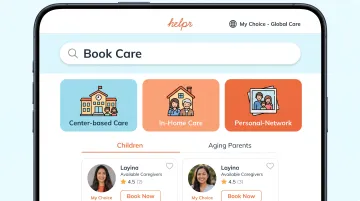
This is where Helpr operates directly. Its patented My Choice technology gives global enterprises a way to offer backup childcare and eldercare across 150+ countries without forcing every employee into the same rigid provider network. Employees can:
- Upload their own trusted caregivers, including family or neighbors, and pay them through the app
- Access center-based, in-home, or personal-network care for both kids and aging parents
- Use a use-based pricing model, billed in 15-minute increments, so employers only pay for care actually delivered
Why is this trend accelerating? Goldman Sachs Ayco found that 48% of surveyed employers now use specialized "suite providers" for benefits like family-building and caregiving.
Meanwhile, SHRM's 2025 survey found paid family-care leave actually dropped from 33% to 31% of employers year over year — an equity gap widening at exactly the moment demand is rising. Frontline and global staff, who've historically had the least access to caregiving support, are the ones with the most to gain.
Trend 4: Mental Health and Holistic Wellbeing Become Baseline Expectations
Behavioral health access has moved from "nice-to-have" to a top-three HR priority heading into 2026, particularly for Gen Z and millennial employees who came up expecting workplaces to acknowledge mental health openly.
Common adoption patterns for 2026 include:
- Digital-first therapy platforms with same-week appointment access
- Zero-copay telehealth mental health visits
- Manager training to recognize early signs of employee distress
The retention math is hard to ignore. SHRM reports that 61% of Gen Z workers would strongly consider leaving their current job for one offering significantly better mental health benefits. That figure is a direct attrition risk, and it explains why mental health investment keeps climbing even as overall benefit budgets tighten elsewhere.
Trend 5: AI and Data Analytics Transform Benefits Administration and Personalization
AI has become infrastructure in benefits administration, not just a pilot project. Mercer reports that 50% of employers now use AI somewhere in their benefits technology stack, covering:
- Claims forecasting and pharmacy spend prediction
- Personalized benefits recommendations during open enrollment
- Fraud detection across claims data
- Chatbot-driven enrollment support that cuts HR call volume
Predictive analytics is proving especially useful for flagging at-risk employee populations before costs spike, letting employers intervene with targeted preventive care rather than reacting after a claim lands.
But there's a governance gap worth watching. SHRM's 2026 State of AI in HR report found that among organizations using or piloting AI, only 49% have a formal workforce AI-use policy, and just 25% of those policies are considered clear and future-proof. Adoption is outpacing oversight, and that gap creates real compliance exposure heading into 2026.
What's Driving These Employee Benefits Trends
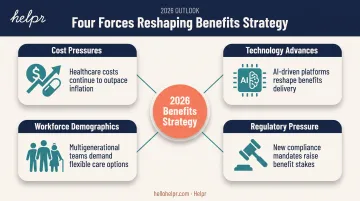
No single cause explains why benefits strategy is changing so fast. Four forces are converging at once:
- Cost pressures: Specialty drug and GLP-1 spend, hospital consolidation, and stop-loss volatility are pushing budgets past historical norms. The Bureau of Labor Statistics projects workers over 65 will make up 9.5% of the labor force by 2030, adding chronic and family-care costs many employers still underplan for.
- Technology advances: AI and mobile-first platforms now support personalized benefits delivery at a scale manual HR processes never could.
- Workforce demographics: Multigenerational teams, hybrid and global work, and rising demand for equity are redefining what "competitive benefits" means.
- Regulatory pressure: The FTC found the three largest PBMs generated over $7.3 billion above estimated acquisition cost on specialty generics between 2017 and 2022. That scrutiny is pushing employers to demand real pricing transparency instead of taking vendor quotes at face value.
How These Trends Are Impacting the Workforce and Employers
These shifts are producing measurable changes across three dimensions: how HR operates, how businesses allocate budget, and what talent expects.
Operational Impact
Benefits administration is moving from manual, reactive processes to AI-assisted, predictive workflows. Instead of HR teams fielding enrollment questions one by one, chatbots and self-service platforms handle routine queries.
That shift frees staff to focus on plan design and vendor negotiation.
Business Impact
Organizations are reallocating budget away from generic, underused perks toward targeted investments with clearer ROI:
- Preventive care
- Mental health access
- Caregiving support
Use-based pricing models such as Helpr's let enterprises fund backup care without paying for capacity nobody uses. Care.com's research found employees with access to care benefits reported 40% lower absenteeism, tying benefit design directly to fewer lost workdays.
Workforce Impact
Expectations for equity, flexibility, and global access are reshaping what talent looks for. Frontline, distributed, and international employees feel this most.
These groups have historically been underserved by benefits built for salaried, office-based staff on a 9-to-5 schedule. Platforms designed for use-based, location-independent access are closing that gap.
Future Signals for Employee Benefits Beyond 2026
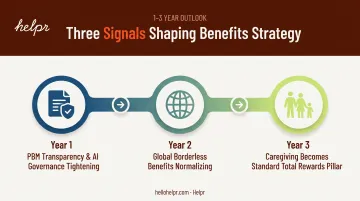
Employers should track these signals over the next one to three years as 2026 trends mature:
- PBM transparency and AI governance rules will tighten. Expect faster movement from bills like the Pharmacy Benefit Manager Transparency Act and state AI employment laws, including Illinois' Public Act 103-0804 (effective January 2026).
- Global, borderless benefits programs will normalize. WTW found roughly 70% of multinationals already use global minimum benefit standards and expects that figure to top 90% as remote and distributed hiring expands.
- Caregiving benefits will move from supplemental to standard. Childcare, eldercare, and dependent care support are on track to become a core pillar of total rewards.
Conclusion
Cost containment, personalization, caregiving support, mental health access, and AI-driven administration are reshaping what counts as a competitive benefits package in 2026. None of these trends stand alone. They compound.
Employers who treat this as a structural rebuild, not an annual tweak, will gain a measurable edge in retention and talent attraction. Those who wait to react will spend more to catch up later.
The employers who win will redesign benefits around these forces now—before the cost of catching up climbs higher.
Frequently Asked Questions
What are the biggest employee benefits trends for 2026?
The top trends are strategic cost containment, personalized and flexible benefits, caregiving and family care support, mental health access, and AI-driven benefits administration. Together, they're replacing static, one-size-fits-all plans.
Why are employee benefits costs rising so sharply in 2026?
Specialty drug and GLP-1 spend, hospital consolidation, and rising utilization are driving costs to their steepest increase in over a decade. Mercer projects 6.7% growth in employer health costs for 2026 alone.
How is AI transforming employee benefits administration?
AI now powers claims forecasting, personalized benefit recommendations, and chatbot-driven enrollment support. Adoption is strong, but formal governance policies are lagging behind, creating compliance risk.
What caregiving and family care benefits should employers prioritize in 2026?
Backup childcare, eldercare, and equitable global access top the list. Platforms like Helpr use flexible, use-based pricing models that make these benefits accessible to hourly and global workers, not just office staff.
Will employers continue covering GLP-1 medications in 2026?
Most employers aren't dropping coverage, but many are adding stricter eligibility rules like prior authorization or BMI thresholds. Roughly 90% of covering employers now require prior authorization before approving these drugs.
How can companies afford to expand benefits amid rising costs?
Use-based, subsidized, and tiered benefit models let employers pay only for care or services actually used. This avoids the waste of flat-fee contracts while still expanding meaningful coverage to more employees.