
Introduction
Many employees leave the office and start a second full day: driving kids to practice, calling a parent's doctor, coordinating medications, then answering one more work email before bed. This isn't a personal scheduling problem.
It's a structural workplace issue affecting millions of U.S. employees, and it deserves a real business response.
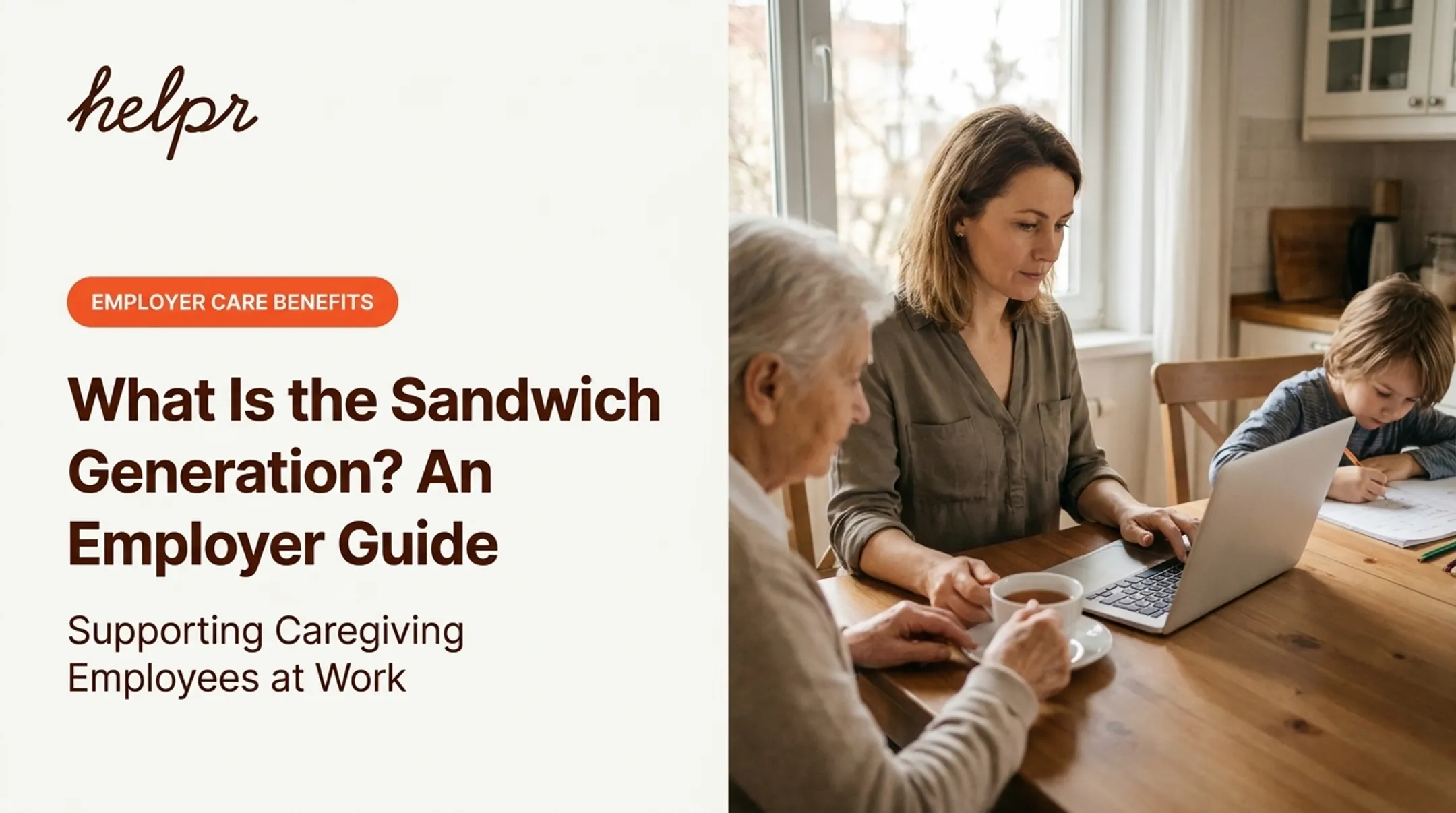
Sandwich generation employees are workers simultaneously raising children and supporting aging parents, in-laws, or other dependent relatives. Their days are shaped by unpredictable care needs, financial strain, emotional exhaustion, and scheduling conflicts that don't respect meeting calendars.
Many also quietly worry that admitting they're stretched thin will stall their career.
This article covers who belongs to the sandwich generation and why unsupported caregiving costs employers more than they realize. It also shows how to build practical support through benefits, manager training, flexibility, and care-navigation resources employees actually use.
Key Takeaways
- Sandwich-generation care hits attendance, focus, well-being, and retention—treat it as a workforce priority, not a private matter.
- Effective support blends flexible schedules, leave options, child and elder care, mental health resources, and clear manager expectations.
- Benefits only work when employees in every role, schedule, and location can actually find and use them.
- Track awareness, utilization, and workforce outcomes regularly while protecting employee privacy.
Why Sandwich Generation Employees Need Workplace Support
Sandwich generation employees care for kids and aging relatives at the same time. Without workplace support, that dual load shows up in attendance, focus, and retention long before anyone resigns.
Who's Carrying the Load
Caregiving intensity varies widely. Some employees run occasional errands for a parent; others provide daily, hands-on support while also raising kids. A single day might involve a school drop-off, a pharmacy run, a doctor's appointment for mom, and a budget conversation about paying for both.
These overlapping demands rarely announce themselves in advance, which is what makes them disruptive at work. Common sandwich-generation situations include:
- Parents managing school pickups and homework while coordinating a parent's medical care
- Adult children supporting aging in-laws, not just biological parents
- Employees caring for a spouse recovering from illness or surgery
- Workers supporting an adult child with a disability alongside an aging relative
What Happens When Support Is Missing
Unsupported caregiving shows up as missed meetings, reduced focus, and quiet burnout long before it shows up as a resignation letter. According to AARP and the National Alliance for Caregiving's 2025 report, 56% of caregivers go in late, leave early, or take time off because of caregiving duties. Nearly one in five reduce their hours, and 8% turn down a promotion outright.

That same report found a stark access gap: salaried caregivers had far greater access to telecommuting, paid family leave, and paid sick leave than hourly caregivers did. Only about half of caregivers said their supervisor even knew they had caregiving responsibilities.
Why Equity Matters
Support shouldn't assume a traditional 9-to-5 office job or a caregiver who lives with the person they support. A fair strategy accounts for:
- Hourly and shift-based workers, not just salaried staff
- Remote, hybrid, and field employees across different time zones
- Varied family structures, cultures, and disability considerations
- Employees relying on informal networks of family and friends for care
What Effective Employer Support Should Include
A single perk rarely moves the needle. Real support stacks flexibility, leave and workload policy, backup care access, emotional support, and manager capability—then checks that the whole package is equitable. The Harvard Business School Caring Company study found that over 80% of employees with caregiving responsibilities said it affected their productivity, while only 24% of employers agreed. That perception gap is exactly why a coordinated approach matters more than any one benefit.

Flexible Work That Actually Helps
Flexibility isn't the same as being available around the clock. Useful options include:
- Predictable scheduling and advance notice of shifts
- Shift swaps and adjusted start or end times
- Compressed workweeks where feasible
- Remote or hybrid arrangements for eligible roles
Leave and Workload Adjustments
Time off and temporary load changes give sandwich-generation employees room to handle a crisis without risking their job:
- Paid caregiver leave
- Sick leave and emergency time off
- Short-term workload or deadline adjustments
- Clear handoff plans so coverage does not fall on one teammate
Verify current federal and state leave requirements before publishing policy—rules vary significantly by state.
Backup Care for the Unexpected
Backup care fills the gap when regular arrangements fall apart—a canceled sitter, closed school, sudden fall, or hospital discharge. It's not meant to replace ongoing primary care, but a short booking can prevent a full missed workday.
This is where a platform like Helpr fits a broader strategy: employees book vetted childcare, elder care, or dependent care when plans fall through, and employers fund a set allowance of subsidized, use-based care days—paying only for care actually used.
Emotional Support Employees Will Use
Care crises are logistical and emotional. Pair practical benefits with supports people can reach quickly:
- EAP or counseling access with caregiving-related sessions
- Peer groups or caregiver resource networks
- Clear, stigma-free paths to ask for help without career penalty
Manager Capability
Policies fail when managers improvise. Train people leaders to spot caregiving strain, apply leave and flexibility consistently, and focus on outcomes over presenteeism. Give them a simple playbook for coverage planning and follow-up after a care emergency.
Making Benefits Equitable
Even strong benefits miss sandwich-generation workers if only some roles or locations can use them. Before rolling anything out, check:
- Eligibility rules and any employee cost-share
- Geographic availability, especially for distributed or global teams
- Language and digital accessibility
- Whether the program works for nontraditional and shift-based schedules
How to Build and Improve a Caregiver-Support Strategy
A caregiver-support strategy works when it matches how sandwich-generation employees actually juggle work and care. Build it from evidence, clear ownership, and a rollout path people can use under pressure.
Start with Discovery
Anonymous surveys, listening sessions, and benefits-utilization data reveal friction points without forcing employees to disclose private medical details. Exit-interview themes and manager feedback add useful context too.
Map the Moments That Matter
Have HR and people managers test policies against real scenarios: a school closure, a parent's fall, a canceled care provider, or a string of medical appointments. If a policy fails in one of these moments, revise it before employees have to work around the gap.
Assign Ownership and Build a Clear Journey
Caregiving support shouldn't live in one disconnected corner of HR. Coordinate across HR, benefits, legal, payroll, and people managers so employees have one clear path: where to find resources, who to contact, and what happens after they ask for help.
A well-designed employee journey removes guesswork. For example, Helpr's app lets employees schedule care in a few taps, while its Care Finder pairs employees with consultants who source and vet care for more complex needs.
Roll It Out in Phases
- Assess needs using survey and utilization data
- Select or improve resources based on findings
- Train managers on policy and referral pathways
- Pilot with a representative group of employees
- Gather feedback and refine before a full rollout
Practical Ways Managers Can Support Sandwich Generation Employees
Managers sit closest to the day-to-day impact of caregiving strain, which makes their role critical. It is also the easiest place for inconsistency to creep in.
Support shouldn't depend on whether an employee happens to have an understanding manager. Nine times out of ten, employees would rather raise a concern and work out a solution than stay silent and let their work quietly slip.
Spot the Signs Without Diagnosing
Fatigue, irritability, missed deadlines, or repeated scheduling difficulty can signal caregiver strain. Managers shouldn't guess at causes or ask about family details; they should focus on work impact.
Ask the Right Questions
Useful conversation starters include:
- What would help you meet your essential responsibilities this week?
- Which deadlines have flexibility, and which don't?
- Would it help to connect with HR or our benefits team?
Plan Workloads Proactively
Consistent planning protects both the employee and the team:
- Cross-train backup coverage in advance
- Document handoffs clearly
- Set realistic deadlines with buffer time
- Schedule non-urgent work further ahead
Know the Boundaries
Managers should protect confidentiality, never pressure employees for medical details, and refer clinical, legal, or financial questions to qualified professionals.
Consistency matters: flexibility offered to one employee should be available to others facing similar circumstances.
Communicating and Measuring the Programme
Communicating and Measuring the Program
Message It Right
Caregiving benefits should be framed as a normal part of employee well-being, not a special accommodation. Messaging should make clear that support covers childcare, elder care, disability-related care, and chosen family, not just biological parents and children.
Track What Matters
Two categories of measures matter:
Awareness and access:
- Benefit awareness and resource-page engagement
- Enrollment and utilization rates
- Participation across roles, locations, and schedules
Workforce and experience outcomes:
- Employee-reported stress and confidence managing care
- Unplanned absence and leave patterns
- Retention and engagement trends
Correlation isn't causation. A drop in absenteeism after a new benefit launches is encouraging, but it shouldn't be presented as proven cause and effect without more rigorous data.
Pair metrics with qualitative feedback—anonymous comments, focus groups, and manager observations—to learn whether support feels timely, trustworthy, and easy to use. Review the program quarterly or twice a year, checking utilization, equity, and evolving care needs each time.

Frequently Asked Questions
I'm losing my temper with my elderly parent. What should I do?
Frustration is a common, understandable response to caregiving stress, not a personal failure. Step away safely if you can, ask a trusted person to take over, and consider support from a mental-health or caregiving professional. If anyone is at risk of harm, seek emergency help immediately.
What are the symptoms of caregiver depression?
Symptoms can include persistent sadness, irritability, loss of interest, changes in sleep or appetite, exhaustion, and guilt. CDC research from 2024 found caregivers report lifetime depression at notably higher rates than non-caregivers. These symptoms require professional evaluation, and anyone in crisis should call or text 988.
What can employers do to support sandwich generation employees?
Effective support combines flexible scheduling, leave options, backup childcare and elder care, mental health resources, financial guidance, and trained managers. Benefits also need to be easy to find and available across all roles and schedules.
What benefits help employees caring for children and aging parents?
Useful benefits include dependent-care assistance, backup care, caregiver leave, flexible scheduling, employee assistance programs, and care navigation support. Availability and eligibility vary by employer, so check your specific plan details.
How can managers support employees with caregiving responsibilities?
Managers should have private, empathetic conversations, set clear priorities, and offer predictable scheduling and workload flexibility. They should apply policies consistently and refer employees to HR or benefits resources without requesting unnecessary personal details.