
DCFSA eligibility doesn't depend on whether an activity is beneficial or happens during work hours. It depends on whether the expense pays for custodial care that lets you work, versus instruction that happens to be scheduled during the day. A private swim class and a day camp with a pool get treated very differently.
This article walks through when swimming-related expenses can be reimbursed, when they can't, and what documentation to keep either way.
DCFSA rules come from federal tax law, but your specific plan can layer on its own requirements. When you're unsure, check with your plan administrator or a tax professional before you submit a claim.
Key Takeaways
- Standalone swimming lessons are usually ineligible because they're instructional, not custodial care.
- A qualifying day camp that includes swimming as one activity may still be eligible.
- Eligibility depends on the dependent, work-related purpose, timing, and documentation together.
- A provider accepting your FSA card doesn't mean the expense is actually eligible.
Can I Use a Dependent Care FSA for Swimming Lessons?
Short answer: usually not, if it's a standalone class. IRS rules treat swimming instruction as education or enrichment, not custodial dependent care, even though it builds an important safety skill.
Custodial Care vs. Instruction
The IRS draws a firm line between the two.
- Custodial care supervises a qualifying dependent so you (and your spouse, if married) can work, look for work, or attend school.
- Instruction teaches a skill and runs on its own schedule, whether or not you're clocked in that day.
A private swim class fits the second category. That's why Publication 503 excludes education and entertainment from qualifying care expenses, unless a small, inseparable amount is merely incidental to actual custodial care.

What Doesn't Determine Eligibility
Location and timing don't settle the question. None of these make an expense eligible on their own:
- Happening during normal work hours
- Taking place at a licensed childcare facility
- Being marketed as good for a child's development
- Being something your child genuinely needs or enjoys
What Actually Matters
Two things decide eligibility: the dependent and the purpose.
- The dependent must qualify: generally a child under 13 claimed as your dependent, or an older dependent unable to care for themselves.
- The expense must be work-related: it has to enable you (and your spouse) to work, look for work, or attend school.
| Scenario | Likely DCFSA Treatment |
|---|---|
| Weekly private swim class for skill-building | Generally ineligible |
| Childcare program supervising your child while you work | Often eligible, pending separate review |
| Day camp with swimming as one of several activities | Requires closer look — see below |
That last scenario deserves its own explanation, since it's rarely a flat yes or no.
When Swimming-Related Care May Qualify
Day camps get a specific carve-out under IRS rules that solo swim lessons don't.
The Day Camp Exception
The IRS gives a direct example involving a child at a summer day camp offering computer activities, arts and crafts, and recreational swimming. The full camp cost may count as care in that situation, because the camp's primary function is supervision, and swimming is just one recreational piece within it.
A camp doesn't lose eligibility for specializing in a single activity either. Soccer camps and computer camps can qualify the same way.
What Has to Line Up
A camp expense still needs several conditions met before you claim it:
- Qualifying dependent enrolled in the program
- Daytime care only, with no overnight stays
- Work-related need driving the enrollment
- Service dates falling within your plan year
- No separately billed instructional charge beyond what's incidental to care
Bundled vs. Itemized Charges
This is where families get tripped up. A camp's overall fee can qualify, but a separately sold swim lesson bolted onto that camp usually can't.
Say a camp charges $400 a week for full-day supervision that happens to include pool time, plus a separate $75 for private stroke coaching. The $400 likely qualifies. The $75 probably doesn't, since it's a distinct instructional charge rather than something bundled into the care fee.

Before submitting that kind of claim:
- Ask the provider for an itemized statement, not a lump total
- Separate custodial-care line items from instructional ones
- Flag anything ambiguous for your plan administrator
Get written confirmation from your plan administrator before you submit anything bundled or unusual. Some administrators apply documentation standards beyond the federal rules, and a quick email can prevent a denied claim later.
Overnight Camps Are a Hard No
No matter how many daytime activities an overnight camp offers, including swimming, it still doesn't qualify. Overnight camp costs aren't treated as work-related care, and splitting out a daytime-only portion doesn't change that.
What Else Can You Use a Dependent Care FSA For?
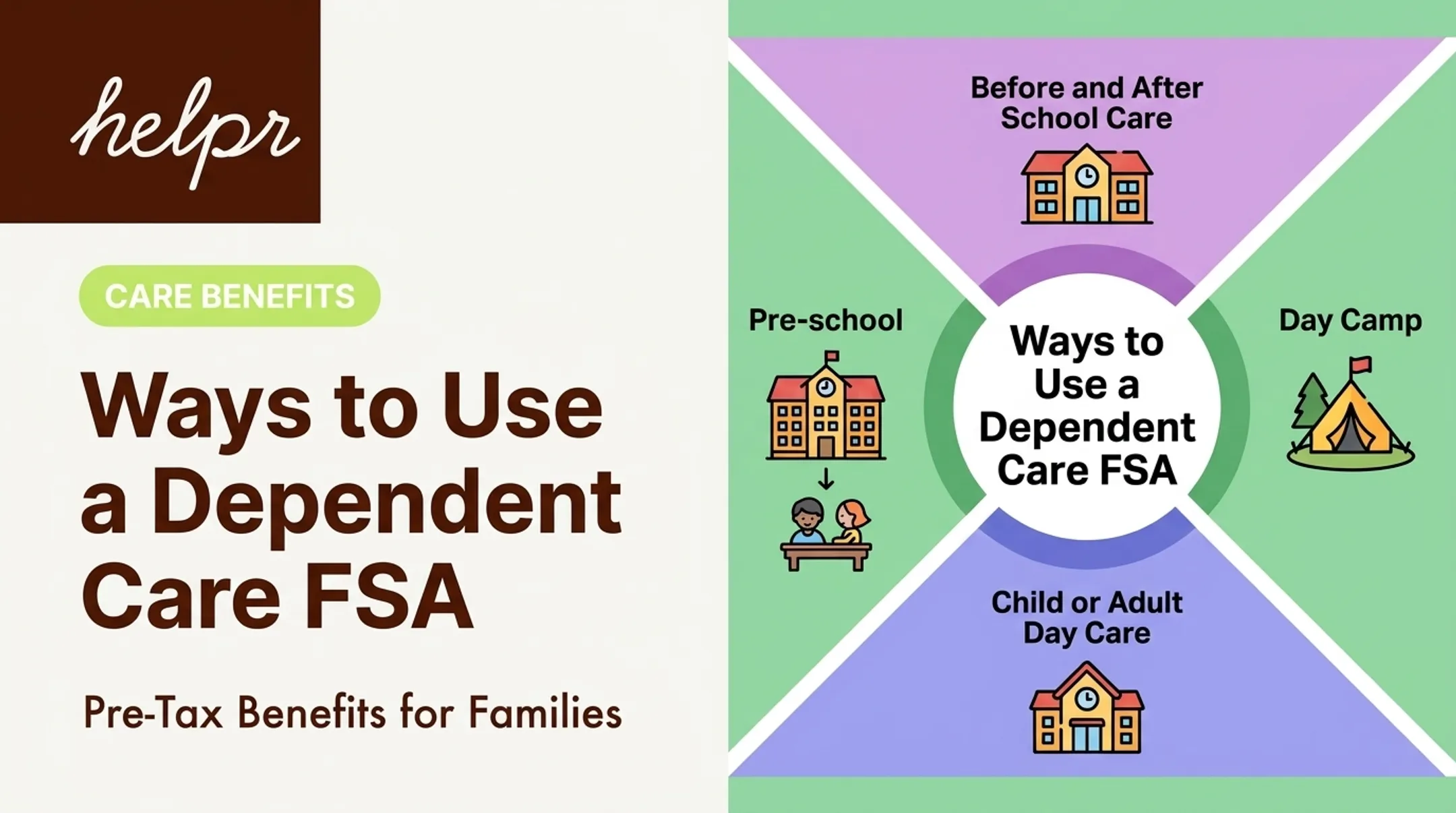
Swimming lessons aside, a DCFSA covers plenty of everyday care costs — as long as the "care that enables work" test is met.
Generally eligible:
- Daycare and licensed childcare centers
- Preschool and nursery school
- Before- and after-school programs, even for kids in kindergarten or above
- Qualifying in-home babysitting or nanny care
- Adult or senior day care for a dependent who can't self-care
- Day camps providing custodial supervision during your workday
Commonly confused as eligible, but usually not:
- School tuition (kindergarten and up)
- Tutoring and summer school
- Music, dance, or sports lessons purchased separately
- Overnight camps
- Babysitting for date nights or weekend errands unrelated to work
Eligible expenses must supervise a qualifying dependent and enable you to work, look for work, or attend school. A Saturday sitter, however nice, doesn't check that second box.
When an enrichment expense like a swim class doesn't qualify, you may still need care during that time. Employer-sponsored backup care, like the subsidized care Helpr provides through corporate benefit programs, can fill in when regular arrangements fall through. Helpr and other care providers can't determine the tax treatment of any specific expense; your plan's rules govern that.
How to Verify and Claim a DCFSA Expense
Before submitting any swimming-related or camp expense, run through a quick check.
Pre-Submission Checklist
- Identify the dependent — confirm they meet the qualifying-person definition
- Confirm the work-related need — the care must enable you (and your spouse) to work, look for work, or attend school
- Review the service dates — dates must fall in your plan year, and care must already have occurred
- Determine care vs. instruction — custodial supervision or a skill-building lesson?
- Check provider eligibility under your specific plan
Documentation to Request
Ask your provider for a statement including:
- Provider's name and identifying information (SSN/ITIN or EIN)
- Dependent's name
- Dates of service
- Description of the type of care provided
- Amount paid
- Itemization separating custodial care from any instructional charge
FSAFEDS lists these same core fields as the standard for a reimbursable receipt, and most employer plans follow a similar format.
Timing Matters
You can only get reimbursed for care that's already happened. A deposit or advance registration fee for a future camp usually isn't reimbursable until the care actually occurs.

Submitting and Handling Denials
- Submit through your plan's required process — app upload, portal, or paper form
- Keep receipts, invoices, provider statements, and approval emails on file
- If denied, ask your administrator which specific component or document failed
- Request a review with a corrected, itemized invoice if the original was too vague
A denial on a bundled camp invoice doesn't always mean the whole expense is ineligible — sometimes the paperwork just wasn't specific enough.
Double-dipping rule: You can't claim the same expense for both DCFSA reimbursement and the Child and Dependent Care Tax Credit. Check current IRS coordination rules or a tax professional if you're weighing both, since details can change year to year.
Frequently Asked Questions
What else can I use my dependent care FSA for?
Common eligible expenses include:
- Daycare and preschool
- Before- and after-school care
- Qualifying babysitting and adult day care
- Eligible day camps
Each still needs to meet the work-related and qualifying-dependent rules.
Are swimming lessons eligible for a dependent care FSA?
Standalone swimming lessons are generally treated as education or enrichment, so they're usually ineligible. The specifics depend on your plan and how the provider documents the charge.
Can I use a dependent care FSA for a day camp that includes swimming?
Often yes. A qualifying daytime custodial camp can be eligible even if swimming is one of its activities, as long as the camp's main function is care that enables you to work.
Are overnight swimming camps eligible for a dependent care FSA?
No. Overnight camp costs generally don't qualify as work-related dependent care, regardless of daytime activities offered. Ask your administrator about any separately documented daytime-only charge.
What documentation do I need to submit for dependent care FSA reimbursement?
Submit documentation that includes:
- Dependent's name and provider information
- Dates of care and a service description
- Amount paid, plus itemization separating care from instruction
Can I claim the same swimming or childcare expense for both a DCFSA and a tax credit?
No. The same expense generally can't be used for both benefits. Review current IRS rules or talk to a tax professional to confirm how this applies to your situation.