
Here's where it gets messy. Preschool bills rarely list one clean number. You'll often see tuition, registration fees, meals, transportation, late-pickup charges, and "enrichment" activities all bundled into a single invoice. Whether each line item qualifies depends on both IRS rules and your employer's specific plan design.
This article walks through how to evaluate preschool eligibility, estimate your contribution, pay for care, document everything correctly, and stay current on 2026 rule changes. It's not individualized tax advice, so verify specifics with your plan administrator or a tax professional before you enroll or file a claim.
Key Takeaways
- Preschool below kindergarten often qualifies when care enables work; mixed invoices need administrator review
- Confirm dependent status, work-related rules, provider details, and plan deadlines first
- Base contributions on expected eligible care costs, not the full preschool bill
- Keep itemized invoices, payment proof, and provider records for FSA and Child and Dependent Care Tax Credit decisions
When Should You Use a Dependent Care FSA for Preschool?
The core test is straightforward: the expense must be for the care of a qualifying dependent, and that care must let you or your spouse work or look for work. Preschool tuition can meet this test, but only when the primary purpose is supervision and care, not academics.
According to IRS Publication 503, the agency treats nursery school, preschool, or similar programs for a child below kindergarten as care expenses. Tuition for kindergarten or higher grades doesn't count as care for this purpose, even though before- or after-school programs for older kids often still qualify.
A three-year-old's "school" is treated very differently than a five-year-old's kindergarten tuition, even if the buildings look identical.
Watch for mixed invoices
Preschool billing statements frequently combine several types of charges:
- Tuition or care fees (typically eligible)
- Educational program fees (often ineligible)
- Meals and snacks (usually bundled with care)
- Transportation (varies by plan)
- Late-pickup charges (generally ineligible)
- Application fees or deposits (generally ineligible)
Only the qualifying care-related portion should be submitted for reimbursement. Enrichment add-ons like music or language classes are often ineligible too. If your invoice lumps everything together, ask the preschool for an itemized statement before you file a claim.

Eligibility has clear boundaries beyond the invoice. A DCFSA is not a general education savings account, and it only covers care that enables you or your spouse to work or look for work. You also can't claim the same dollars through a DCFSA and another tax benefit, such as the Child and Dependent Care Tax Credit — double-dipping isn't allowed.
What You Need Before Using a Dependent Care FSA for Preschool
Before you elect a contribution amount, gather a few pieces of information. Skipping this step is the most common reason parents run into reimbursement headaches later.
Confirm your employer's plan details
Not every employer offers this benefit. About 39% of private-sector employers and 63% of state and local government employers provide Dependent Care FSA access, so check your benefits portal first. If your employer does offer one, find out:
- The plan year and enrollment window
- Qualifying-life-event rules for mid-year changes
- The claim-submission deadline
- Whether a grace period or other spending extension applies
Verify dependent eligibility
Per the 2025 Instructions for Form 2441, a qualifying child generally must be your dependent and under age 13. A child who turns 13 during the plan year only qualifies for the months before that birthday.
There's also a disability exception. A person of any age can qualify if they're physically or mentally unable to care for themselves and lived with you for more than half the year. Examples include needing help dressing, feeding, or requiring constant supervision to prevent injury.
If you're married, two more rules apply:
- The care must enable you or your spouse to work or look for work
- A spouse who is a full-time student or unable to care for themselves is treated as earning at least $250 per month ($500 with two or more qualifying persons)
Collect provider information
You'll need the preschool's:
- Legal name and address
- Taxpayer identification number (or a completed Form W-10)
- Service dates and itemized charges
- Payment records
Incomplete provider information can delay or disqualify your claim, so request this paperwork at enrollment rather than scrambling for it in April.
How to Use a Dependent Care FSA for Preschool
Using a DCFSA correctly follows a fixed sequence:
- Verify eligibility
- Estimate only eligible costs
- Enroll through your employer
- Pay for care
- Submit claims with documentation
- Reconcile before deadlines

Skip a step or reverse the order, and you risk denials, delays, or forfeited funds.
Enrollment and Contribution Planning
Review your employer's plan materials and elect an amount based on expected eligible preschool care costs, not your full annual preschool bill. If half your invoice is tuition-only academic programming, don't include that portion in your estimate.
For 2026, IRS Publication 15-B sets the federal exclusion limit at $7,500 for most filers, up from $5,000, or $3,750 for married taxpayers filing separately. Your employer's plan may set a lower cap, so confirm the actual election maximum on your benefits portal.
Before finalizing your election, compare it against the Child and Dependent Care Tax Credit. You generally can't use the same dollars for both benefits, and the better option depends on your household's income and tax bracket. A tax professional can help you run the comparison.
Paying for Eligible Preschool Care
Plans typically offer a few payment paths:
- Pay out of pocket, then request reimbursement — the traditional route, requiring submitted documentation
- Use a benefits debit card where the provider accepts it
- Set up an approved recurring or direct-payment process through your plan administrator
Helpr's platform supports this by letting families use a DCFSA debit card directly when booking care, or pull booking receipts from the app to submit to their FSA vendor for reimbursement.
Timing matters here too. An expense is only "incurred" when the care is actually provided, not when you pay in advance. A refundable deposit or a cancelled enrollment doesn't count as an incurred care expense, even if money changed hands.
Filing a Reimbursement Claim
Most plans require this information with each claim:
- Child's name
- Provider's name and identifying information
- Dates of care
- Description of service
- Amount charged and amount paid
- Proof of payment
If your invoice mixes eligible care with ineligible education or optional charges, request an itemized statement from the preschool. Submit only the portion that's supported by your plan rules and current IRS guidance. Guessing at a split—or submitting the full invoice and hoping it clears—usually means delays or denials.
Monitoring Contributions and Deadlines
Check in on your account a few times during the plan year. Compare:
- Paycheck deductions against your election
- Available account funds
- Preschool invoices and reimbursed amounts
- Remaining eligible expenses
Miss your plan's run-out deadline and unused funds can be forfeited.
Job changes, switching preschools mid-year, or a shift in your work situation are different: they can change eligibility retroactively. Confirm the exact policy with HR before assuming prior contributions are still valid.
Where a Dependent Care FSA Is Commonly Used in Practice
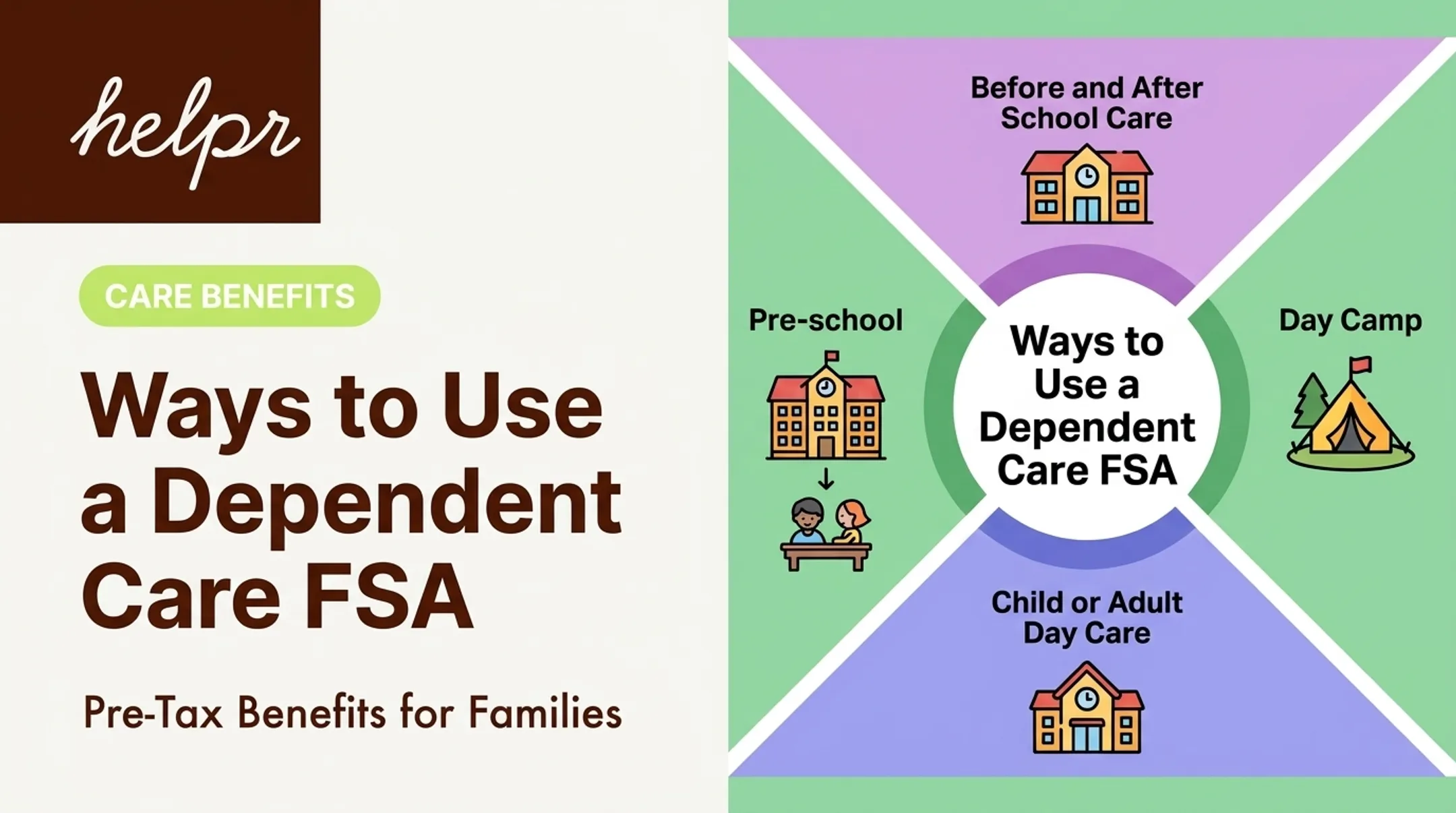
The most common use case is recurring weekday preschool, nursery school, or pre-kindergarten care that supports a parent's work schedule. Think Monday-through-Friday drop-off before a workday, not occasional Saturday morning classes.
A DCFSA also differs from other employer-provided care benefits. In practice, the split looks like this:
- DCFSA: Reimburses qualifying preschool and dependent care expenses under IRS and plan rules
- Backup care (such as Helpr): Covers gaps when regular care falls through—sick days, daycare closures, or school holidays
Using a backup-care benefit like Helpr does not automatically make those same expenses DCFSA-eligible. The benefits follow separate rules, and mixing them up can create problems at tax time. If your employer offers both, run recurring preschool tuition through the DCFSA and emergency care days through the backup-care benefit.

Best Practices for Using a Dependent Care FSA Effectively
A little upfront diligence saves a lot of reimbursement headaches later.
Before you enroll, reconcile the preschool's billing structure:
- Which charges are for supervision and care versus academics?
- Are any deposits refundable?
- What documentation can the provider supply on request?
Throughout the year, maintain a dedicated record (digital and physical) with:
- Enrollment confirmation and plan documents
- Invoices, receipts, and payment confirmations
- Provider information
- Submitted claims and reimbursement notices
- Correspondence about any disputed charges
Mid-year and before year-end, review your account for:
- Remaining eligible expenses and unused funds
- Grace-period or run-out rules
- Job-change implications
A Dependent Care FSA generally can't carry over funds the way a Health Care FSA sometimes can, so unused money at year-end is often forfeited. Don't assume rollover protection that isn't in your plan.
Conclusion
Using a Dependent Care FSA for preschool comes down to satisfying the work-related care test, confirming your child and provider meet the requirements, and separating genuine care charges from education, meals, or optional add-ons that don't qualify. The word "preschool" on an invoice doesn't automatically make an expense reimbursable.
Contribution limits, deadlines, and reimbursement rules change by year and by plan. Check current IRS guidance and your employer's plan documents before you enroll or file—then claim only the care portion your documentation supports.
Frequently Asked Questions
Can a dependent care FSA be used for preschool?
Yes—when the preschool is primarily care (not academic tuition) and the arrangement supports your work or job search. It must also meet your plan’s dependent, provider, and documentation rules.
What are eligible expenses for a dependent care FSA?
Childcare and preschool costs that let you work generally qualify. Separate pure education or optional add-ons from care charges, and confirm current IRS rules plus your plan’s terms.
At what age does a dependent care FSA stop?
The general cutoff is age 13, with eligibility ending at that birthday. A disability exception allows a qualifying person of any age if they're unable to care for themselves and meet residency requirements.
What are the new rules for dependent care FSAs in 2026?
The federal exclusion limit rose to $7,500 (or $3,750 for married filing separately) for 2026. Confirm your employer’s plan deadlines, grace-period rules, and current IRS guidance.