A Dependent Care FSA (DCFSA) gives employers a way to ease that burden. It's a pre-tax benefit that lets employees set aside part of their paycheck, before taxes, to cover eligible child or adult dependent care. For employers, it's also a retention tool: fewer scrambling parents means fewer missed shifts and less turnover.
This guide breaks down how DCFSAs work, the 2026 contribution limits, which expenses qualify, and how enterprises can pair this benefit with flexible care solutions like Helpr.
Key Takeaways
- Employees can set aside up to $7,500 pre-tax in 2026 for eligible dependent care
- Funds follow "use it or lose it," though some employers add a grace period
- You can't claim the same expenses under a DCFSA and the Dependent Care Tax Credit
- Combining a DCFSA with backup care benefits cuts absenteeism and boosts retention
What Is a Dependent Care FSA (DCFSA)?
A DCFSA is an IRS-sanctioned benefit offered through a Section 125 cafeteria plan. It lets employees pay for qualifying dependent care using pre-tax payroll deductions. Some employers call it a child care FSA or simply a dependent FSA, but the account covers more than daycare. It applies to both childcare and care for adult or elderly dependents.
The purpose is specific: the IRS designed this benefit to help employees, and their spouse if married, work, look for work, or attend school full-time. Care costs that make that possible are what the account is built to cover.
DCFSA vs. Healthcare FSA
These two accounts often get confused, but they serve different needs:
| Feature | Dependent Care FSA | Healthcare FSA |
|---|---|---|
| Covers | Child/elder care to enable work | Medical, dental, vision expenses |
| Funding | Post-funded (paycheck by paycheck) | Often fully available at plan start |
| Rollover | No dollar carryover; grace period only | Up to $660 (2026 limit) can carry over |
| 2026 limit | $7,500 (joint/single) | Separate IRS limit, set annually |
Beyond these funding and rollover differences, access itself sets the two apart: a DCFSA is employer-sponsored and entirely voluntary, meaning it has to be actively offered during open enrollment. If it's not part of the benefits package, employees simply can't access it, which is why HR teams play such a large role in whether families ever hear about this option.
How Does a Dependent Care FSA Work?
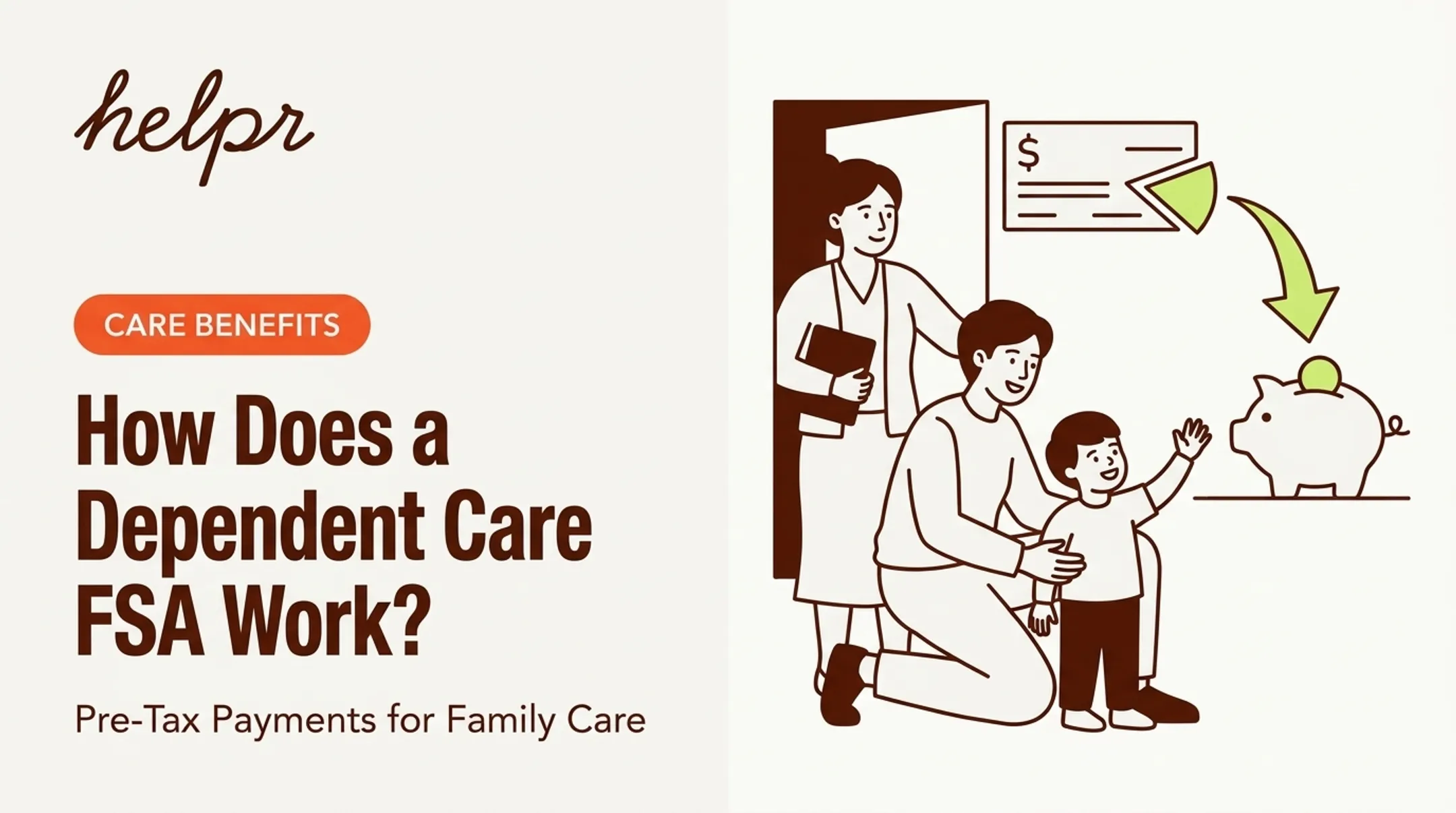
The mechanics start with a simple election. Employees choose an annual contribution amount, and that total gets withheld evenly from each paycheck, pre-tax, throughout the plan year.
Here's the part that trips people up: DCFSAs are post-funded. Unlike a Healthcare FSA, where the full annual amount is often available on day one, a dependent care account only reimburses what's already been deducted from your paycheck.
Say you've contributed $600 so far this year. That's the most you can claim, even if your annual election is $7,500.
Filing a Reimbursement Claim
The process runs in a specific order:
- Pay the provider out-of-pocket first. The DCFSA reimburses you after the fact; it doesn't pay providers directly in most standard setups.
- Gather documentation. You'll need the provider's name, service dates, the amount charged, and the dependent's name.
- Submit the claim through your plan administrator's portal or paper form.
- Receive reimbursement, typically within a few business days once approved.
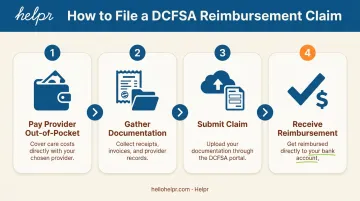
Platforms with built-in DCFSA integration, like Helpr, can simplify this workflow by handling eligible payments and documentation within the platform itself.
The Use-It-or-Lose-It Rule
Any balance left unused at the end of the plan year is forfeited. Some employers soften this by adding an optional 2.5-month grace period, giving employees extra time to incur eligible expenses using the prior year's leftover balance.
A separate "run-out period" may also apply, giving employees more time to submit paperwork for expenses already incurred, though it doesn't extend when care can happen.
Life doesn't always follow the plan year, though. The IRS allows mid-year contribution changes after qualifying life events, including:
- Marriage or divorce
- Birth or adoption of a child
- Change in employment status
- A dependent losing eligibility (turning 13, for instance)
Contribution limits apply on both sides of the equation, too. Employers can also contribute to employee DCFSAs, but combined employer and employee contributions still can't exceed the IRS annual limit.
Dependent Care FSA Eligible and Ineligible Expenses
Not every care-related cost qualifies. According to IRS Publication 503, the IRS defines a qualifying individual as a dependent under age 13. This also includes a spouse or dependent who's physically or mentally unable to care for themselves and lives with the employee at least half the year.
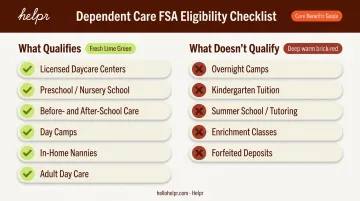
What Typically Qualifies
- Licensed daycare centers and dependent care facilities
- Preschool and nursery school (below kindergarten)
- Before- and after-school care programs
- Day camps, including specialty camps like sports or computer camps
- In-home nannies and babysitters
- Adult day care for elder dependents who need supervision
What Doesn't Qualify
- Overnight or sleepaway camps
- Kindergarten and higher-grade tuition
- Summer school or academic tutoring
- Enrichment classes like music lessons or sports coaching, when they're standalone instruction rather than care
- Forfeited deposits when a provider cancels
A note on relative caregivers: paying a grandparent or aunt to watch your kids can qualify. The caregiver just can't be your spouse, the child's other parent, someone you claim as a tax dependent, or your own child under 19.
Whether you use a relative or a licensed center, documentation matters just as much. Reimbursement approval requires receipts showing the provider's name, service dates, type of care, and cost. Platforms like Helpr's DCFSA-integrated payment system can track these details automatically, reducing the chance of a rejected claim.
Dependent Care FSA Contribution Limits and Tax Credit Comparison (2026)
Starting in 2026, the IRS raised the DCFSA exclusion limit to $7,500 for single filers and married couples filing jointly, or $3,750 for married filing separately, according to IRS Publication 15-B. That's a combined household cap, not per spouse, so a married couple filing jointly still tops out at $7,500 total between them.
DCFSA vs. the Child and Dependent Care Tax Credit
The Child and Dependent Care Tax Credit is the main alternative. It lets taxpayers claim a credit on up to $3,000 of expenses for one qualifying person, or $6,000 for two or more.
Here's the catch: you cannot double-dip. Any amount already excluded through a DCFSA reduces the expense ceiling you can use for the credit, dollar for dollar.
| Factor | DCFSA | Tax Credit |
|---|---|---|
| Best suited for | Moderate-to-higher earners | Lower-income taxpayers |
| Tax benefit type | Pre-tax payroll exclusion | Nonrefundable credit |
| 2026 max benefit | $7,500 excluded from taxes | Up to 35% of $3,000/$6,000 in expenses |
| Combine with credit? | Only on non-overlapping expenses | Same restriction applies |
Generally, employees in higher tax brackets see more savings through a DCFSA because it reduces taxable income across federal, state, and payroll taxes simultaneously. Lower-income employees, meanwhile, may benefit more from the credit's percentage-based structure. Every household's math looks different, so recommend that employees run the numbers with a tax advisor before locking in an election.
Maximizing Your DCFSA Benefit as an Employer
Offering a DCFSA is a strong start, but it doesn't solve everything. Standard daycare enrollment doesn't help when a school closes unexpectedly, a nanny calls in sick, or an employee travels for work and needs coverage on the road. That's the gap flexible backup care fills.
Many flexible care services can qualify as DCFSA-eligible expenses, including:
- In-home sitters for last-minute coverage
- Emergency nanny services when a regular caregiver falls through
- Adult day care for eldercare needs
This means employees don't have to choose between pre-tax savings and last-minute flexibility. They can stack both.
Helpr's global backup care platform is built to complement a DCFSA offering. Instead of leaving employees to scramble for a sitter during a snow day or a canceled adult day program, employees get access to a vetted network of care providers they can book on demand.
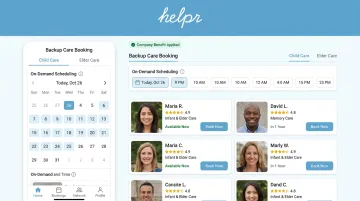
Helpr's app also supports DCFSA-integrated payments: employees can pay directly at booking using a DCFSA debit card, or retrieve booking receipts within the app to submit for reimbursement through their FSA vendor.
This flexibility matters beyond individual bookings. For HR teams building open enrollment materials, pairing DCFSA education with broader family care benefits sends a clear signal that supporting working parents matters beyond just the tax paperwork.
Helpr's use-based pricing model, where organizations pay only for care that's actually delivered, gives employers a lower-risk way to expand this kind of support without committing to flat, unpredictable costs.
Frequently Asked Questions
What is a dependent care FSA?
A DCFSA is a pre-tax, employer-sponsored account that lets employees pay for eligible child or adult dependent care. It exists to help employees work, look for work, or attend school without losing income to care costs.
What is the FSA limit for dependent care in 2026?
The 2026 IRS limit is $7,500 for single filers and married couples filing jointly, or $3,750 for married filing separately. This is a combined cap across employer and employee contributions.
Can I claim both an FSA and the child care tax credit?
You can have both, but you can't claim the same expenses under each. Any amount excluded through your DCFSA reduces the expense total you can use to calculate the tax credit.
What is covered under a Flexible Spending Account?
A Dependent Care FSA covers daycare, elder care, and day camps that enable work. A Healthcare FSA, by contrast, covers medical, dental, and vision expenses. They're separate accounts with different rules, and platforms like Helpr let families pay vetted caregivers directly through their DCFSA balance.
Who qualifies as an eligible dependent for a DCFSA?
Children under 13 qualify. Spouses or dependents who are physically or mentally unable to care for themselves and live with the employee at least half the year also qualify.
Does unused dependent care FSA money roll over to the next year?
No. DCFSAs follow a "use it or lose it" rule, meaning unused funds are forfeited at year-end. Some employers offer an optional 2.5-month grace period to spend remaining balances.