Nearly 1 in 5 married women ages 15-49 with no prior births can't get pregnant after a year of trying, according to the CDC. Add in same-sex couples, single parents by choice, and adoptive families, and the group needing support is much larger than most benefits plans account for.
Employers often treat family-building benefits as a "nice to have." But the real impact shows up in retention numbers, healthcare cost trends, and how employees actually experience their jobs during one of the most stressful chapters of their lives.
This guide breaks down what these benefits are, why they matter for employers and families, and how to get the most value from them.
Key Takeaways
- Family-building benefits span fertility treatment, adoption, surrogacy, preservation, and backup care
- Employers gain stronger retention, less absenteeism, and manageable healthcare costs
- Many employees say they'd switch jobs for better family-building coverage
- Inclusive plan design matters as much as coverage breadth
- The strongest programs pair treatment support with ongoing care solutions
What Are Family-Building Benefits?
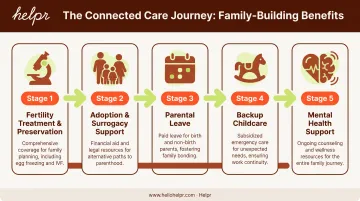
Family-building benefits are employer-sponsored programs that provide clinical, financial, and emotional support for employees trying to grow their families. Common offerings include:
- Fertility treatment and preservation (egg or sperm freezing)
- Adoption assistance
- Surrogacy support
These benefits typically live inside a broader total rewards package. They sit alongside parental leave, backup childcare, and mental health resources, not as a standalone perk buried in a benefits guide nobody reads.
The goal is practical: help employees get through a stressful, often expensive life transition without losing engagement at work. Done well, family-building support becomes one piece of a connected care strategy that carries employees from "we're trying to conceive" all the way through to "we just brought our kid home from daycare drop-off."
Key Advantages of Offering Family-Building Benefits
The advantages below aren't goodwill talking points. Each one ties to a KPI you can track and report on to justify continued investment in the benefit.
Stronger Talent Attraction and Retention
Family-building benefits have become a deciding factor for candidates, especially millennial and Gen Z employees comparing job offers. Offering fertility, adoption, and surrogacy coverage signals a family-friendly employer brand in a hiring market where that reputation is hard to fake.
Why this matters:
- Maven reports that 68% of employees would consider switching jobs for better fertility benefits
- Progyny found 73% of employees feel more loyal to employers that offer fertility and family-building coverage
- Unmet benefit expectations drive turnover, and turnover is expensive to backfill through recruiting, onboarding, and lost productivity
KPIs impacted:
- Voluntary turnover rate
- Offer-acceptance rate
- Employee Net Promoter Score (eNPS)
- Time-to-fill for open roles
This advantage hits hardest in competitive talent markets, industries with younger workforces, and companies going head-to-head against larger competitors with richer benefits packages.
Long-Term Healthcare Cost Containment
Well-designed family-building benefits reduce downstream medical costs tied to high-risk pregnancies, multiple births, and NICU stays. Care coordination and guided treatment paths prevent unnecessary procedures and claims that unmanaged trial-and-error fertility treatment often creates.
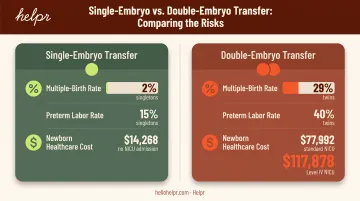
The numbers back this up. A meta-analysis cited by the American Society for Reproductive Medicine found single-embryo transfer produces a 2% multiple-birth rate, compared to 29% with double-embryo transfer. That distinction matters because twin pregnancies carry a 40% preterm labor rate versus 15% for singletons.
Those complications carry a real price tag. Average healthcare spending in the first 18-24 months after a newborn NICU admission runs $77,992, and jumps to $117,878 for a Level IV NICU stay, according to Peterson-KFF Health System Tracker data.
Compare that to just $14,268 for newborns without a NICU admission.
Here's the part that surprises most finance teams: 97% of employers who added infertility coverage reported no significant increase in overall medical plan costs, per a Mercer survey of 459 employers. Guided treatment paths simply cost less than the complications unmanaged treatment tends to produce.
KPIs impacted:
- Per-employee healthcare spend
- High-risk maternity claims volume
- Overall medical loss ratio
Self-insured employers and larger workforces see the clearest cost impact here, since claims data flows directly into their premium trends.
Improved Employee Wellbeing, Productivity, and Inclusion
Infertility and family-building journeys take a real psychological toll. Research published in the Journal of Psychosomatic Obstetrics and Gynaecology found infertility patients report psychological distress comparable to patients managing cancer or cardiac rehabilitation. That distress shows up at work in focus, attendance, and engagement.
Access to guided medical, financial, and mental health support reduces that stress load. Maven's employer research found 78% of employers say their family-building benefits improve productivity, retention, and morale, while 60% believe the benefit reduces absenteeism.
Inclusive design compounds the effect. Carrot's LGBTQ+ fertility survey found 91% of LGBTQ+ adults surveyed wanted at least one child, yet 72% felt their community faces greater family-building barriers than others.
Covering LGBTQ+ employees, single parents, and adoptive families isn't a side benefit—it's core to whether the program actually works for your workforce.
KPIs impacted:
- Absenteeism and lost workdays
- Employee engagement scores
- DEI survey sentiment
This advantage amplifies in distributed, global, or highly diverse workforces, where a one-size-fits-all benefit design leaves large segments of employees underserved.
What Happens When Family-Building Benefits Are Missing
Skipping these benefits doesn't just mean a gap in your benefits guide. It shows up in real business consequences:
- Delayed treatment: Employees postpone fertility treatment, adoption, or surrogacy, which extends stress and disengagement
- Unplanned absenteeism: Unsupported treatment cycles drive more sick days and lost workdays
- Voluntary turnover: Employees who feel unsupported look elsewhere; Progyny research finds most people facing infertility consider leaving over inadequate benefits
- Rising healthcare costs: Unmanaged, higher-risk pregnancies and complications drive claims up over time
- Weaker talent brand: Once competitors are known as family-friendly, catch-up costs more than building that reputation early
Carrot also found that 65% of employees spend work time researching fertility treatments and benefits on their own. That time stays productive when the information is already in onboarding and benefits communication.
How to Get the Most Value from Family-Building Benefits
Comprehensive coverage, clear communication, and complementary support turn family-building benefits from a line item into a program employees actually use.
Build coverage that spans the full journey:
- Fertility testing and diagnostics
- Assisted reproductive technology (IVF, IUI)
- Egg and sperm freezing
- Adoption and surrogacy assistance
- Mental health support throughout treatment
Design matters as much as breadth. Coverage should work regardless of marital status, sexual orientation, gender identity, or location, not just for employees who fit a traditional infertility diagnosis.
SHRM reports 42% of U.S. employers now offer fertility benefits, with 20% covering adoption assistance and 16% covering egg freezing. Equitable design is quickly becoming table stakes, not a differentiator.
Don't stop at treatment. Once an employee welcomes a child through birth, adoption, or surrogacy, the need for support doesn't disappear. It shifts. Backup childcare becomes essential for a smooth return to work.
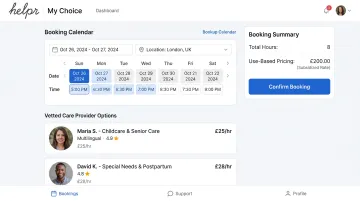
Helpr's global backup care runs on patented My Choice technology, giving employees on-demand access to vetted care across 150+ countries. Families aren't left scrambling the moment a new child arrives home. Use-based pricing means employers only pay for care actually booked, and employees can layer in DCFSA dollars to stretch every dollar further.
Review and refine regularly. Sit down with your benefits partner to review utilization and outcomes data on a recurring basis. Treating family-building benefits as "set and forget" is how good programs quietly become outdated ones.
Conclusion
Family-building benefits matter because they address a deeply personal, high-stress life stage that directly affects retention, healthcare costs, and day-to-day productivity. The advantages compound over time. Comprehensive, well-communicated benefits build long-term loyalty and reduce downstream costs that unmanaged treatment journeys create.
The strongest programs connect family-building support to the rest of the employee journey—not as a one-time policy add-on, but as ongoing care. That support extends into benefits like backup childcare, so it doesn't end the moment treatment succeeds.
Frequently Asked Questions
What are family building benefits?
Family-building benefits are employer-sponsored programs that provide clinical, financial, and emotional support for employees pursuing parenthood through fertility treatment, adoption, surrogacy, or fertility preservation.
Will IVF be covered by insurance in 2026?
Coverage varies by state and employer, with no universal federal mandate. Check your own plan, since self-funded employer plans are generally exempt from state mandates.
What's typically included in a family-building benefits package?
Most packages include fertility testing, IVF and IUI, egg or sperm freezing, adoption and surrogacy assistance, and mental health support.
Do family-building benefits cost employers a lot to offer?
Most employers report minimal impact on overall medical plan costs. Guided treatment paths often offset added coverage by reducing high-risk multiple pregnancies.
Are family-building benefits required by law in the US?
There's no federal mandate. Some states require limited fertility coverage for fully insured plans, but offering these benefits remains largely an employer decision.
How do family-building benefits differ from standard parental leave?
Parental leave covers time off after a child arrives. Family-building benefits support trying to conceive, adopt, or grow a family before that point, including treatment, preservation, and legal costs.