
Employer-sponsored family-care benefits have become a bigger part of how working families manage costs, but a DCFSA only pays off if you use it correctly. This guide walks through the real-world mechanics: confirming eligibility, choosing a contribution, paying your provider, filing a claim, and avoiding forfeited funds. IRS rules and plan terms change, so verify current details with your plan documents and, when needed, a tax professional.
Key Takeaways
- Use funds only for work-related care of a qualifying child or adult, not household or parenting costs.
- Confirm eligibility first: dependent, provider, expense type, and documentation before you claim.
- Pay providers, keep records, and file claims per your plan's process and deadlines.
- Monitor your balance regularly; unused funds may forfeit—or hit a grace period or run-out deadline.
- Compare a DCFSA against the Child and Dependent Care Credit; ask a tax pro if they overlap.
When Should You Use a Dependent Care FSA? And What You Need Before Using It
A DCFSA covers care that lets you—and your spouse, if you're married—work, actively look for work, or attend school full time. This is the work-related test, and it's the foundation of every eligibility question that follows. Check IRS Publication 503 for the current standard, since the agency updates specifics periodically.
Don't confuse this with a healthcare FSA. A DCFSA reimburses dependent-care services, not medical treatment, prescriptions, or health products. Mixing the two up is one of the most common enrollment mistakes.
Who Counts as a Qualifying Dependent
- A qualifying child is generally your tax dependent under age 13 at the time care was provided.
- A qualifying adult (including a spouse) who cannot care for themselves and lived with you more than half the year may also qualify.
Confirm residency, relationship, and tax-dependent status before you assume eligibility. These details are precise and unforgiving on audit.

When a DCFSA Fits, and When It Doesn't
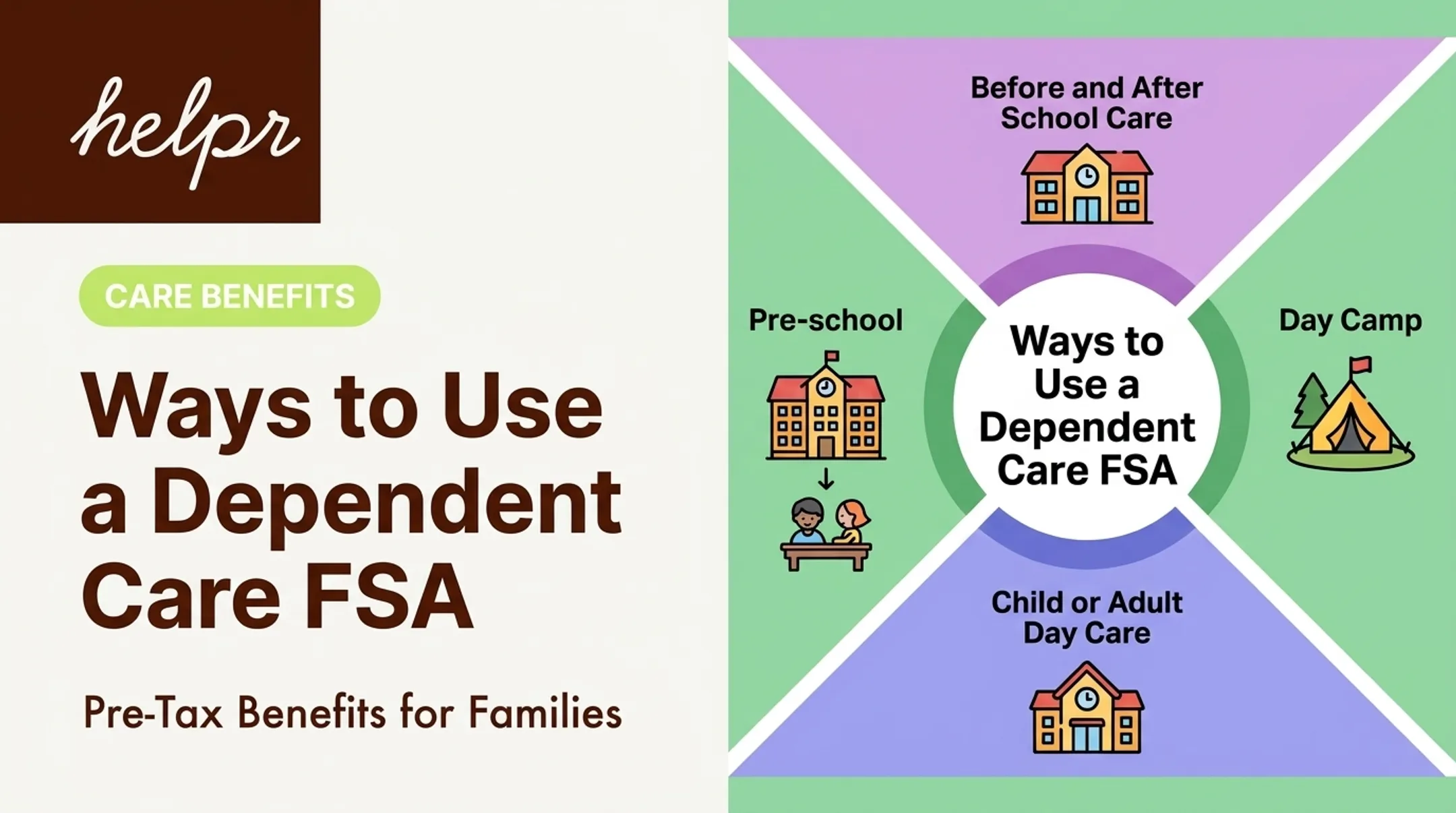
Common eligible situations include:
- Recurring daycare or preschool-level care
- Before- or after-school programs
- Summer day camps (not overnight)
- Adult daycare or in-home dependent care
Situations that usually don't qualify:
- Ordinary school tuition (kindergarten and up)
- Overnight camps
- Care that doesn't support work, job searching, or school
If your care situation fits those rules, line up the account details before you enroll or submit claims.
Before You Enroll or Use the Account
- Confirm your employer offers a DCFSA and that your enrollment is active with an election amount matching your realistic expenses.
- Review IRS limits and plan rules, including claim deadlines, any grace period your plan offers, and midyear election-change conditions.
- Gather provider details: legal name, address, taxpayer ID (SSN, ITIN, or EIN), service dates, amount paid, and a short description of care.
- Verify the provider isn't disqualified. You generally can't pay your spouse, the dependent receiving care, or (for a child under 13) that child's other parent.
How to Use a Dependent Care FSA (Step-by-Step)
Using a DCFSA correctly follows a defined sequence: confirm eligibility, estimate expenses, receive care, pay the provider, file the claim, then track reimbursement and deadlines. Skip a documentation step and you risk a delayed or denied claim.

Setup and Preparation
Estimate your contribution based on realistic, expected care costs, not the maximum allowed. Overcontributing sets you up for forfeited funds if care needs change.
Common setup mistakes include:
- Ignoring a spouse's employment or school status when calculating eligibility
- Overlooking a mid-year change in care arrangements
- Skipping the fine print on your employer's plan-year rules and deadlines
Build a simple recordkeeping habit from day one: a folder (digital or physical) for provider invoices, receipts, payment confirmations, service dates, and copies of submitted claims. This alone prevents most year-end scrambles.
Initiating Use
Funds typically flow through payroll contributions, then become available through your plan's reimbursement or debit-card process. The exact mechanism depends on your administrator. Signs your account is properly active:
- Payroll deductions appear on your paystub
- Claims instructions are accessible in your plan portal
- Provider or expense type confirmed eligible before you pay
Operating the Account Correctly
When it's time to pay and file:
- Pay the eligible provider for care already rendered.
- Submit a claim with the provider's name, dates of service, dependent's name, amount, and proof of payment if required.
- Wait for processing, knowing reimbursement is usually limited to funds contributed and available at claim time.
Some plans reimburse after each payroll contribution; others use a different schedule. Verify yours. And don't assume a deposit, tuition prepayment, or future service is reimbursable; the expense generally has to relate to care already provided.
Platforms like Helpr let families pay with a DCFSA debit card when booking care in the app. You can also upload booking receipts for FSA reimbursement, which cuts down on manual tracking.
Monitoring During Use
Check monthly (at minimum):
- Remaining account balance
- Upcoming eligible care expenses
- Claim status and any rejections
- Provider tax information on file
- Your plan's submission deadline
Warning signs of trouble:
- Repeated claim denials
- Missing provider tax IDs
- A balance that keeps growing untouched
- Care that no longer supports work
- A dependent aging out of eligibility
Shutting Down or Completing Use
At plan-year end:
- Submit final eligible claims before your deadline
- Retain all records even after reimbursement
- Reconcile what you contributed against what you were reimbursed
- Check whether a grace period or run-out period applies to you
Improper closeout means forfeiting unused funds or missing a final submission window. Job loss, a leave of absence, or a change in care needs can affect your remaining balance and future access. Check your plan's terms if any of these apply.
Where a Dependent Care FSA Is Commonly Used in Practice
DCFSA funds show up most often in familiar care arrangements:
- Daycare centers
- Preschool-level programs
- Before- and after-school care
- Babysitters
- Summer day camps
- Adult daycare
After-school programming qualifies when it runs until your workday ends. Date-night or weekend babysitting doesn't count since it isn't tied to work.
Elder Care Applications
Adult daycare and in-home support for a qualifying adult can be reimbursable when the care allows you to work.
A housekeeper who cooks and supervises a dependent while you work may qualify. The same worker doing only gardening or driving, with little care involved, generally does not.
Situations That Need Extra Care
- Remote work: eligibility still hinges on the work-related test, not your work location.
- Job searching: care during an active search can qualify, but confirm your plan's documentation requirements.
- Divorced or separated parents: the custodial parent (generally whoever the child lived with more nights) is usually the one who can claim the qualifying person.
- Relative caregivers: grandparents, aunts, and uncles can be paid with DCFSA funds, but not your spouse, your child under 19, or (for a child under 13) that child's other parent.
- Overnight camps and private school tuition: typically excluded regardless of how the provider labels the service.
A quick example: A parent enrolls their 7-year-old in an after-school program that runs until 6 p.m., matching their work schedule. They pay the provider monthly, upload the receipt through their care app, and submit a claim with service dates and amount.
Reimbursement posts within a few business days. The parent logs the claim in a simple spreadsheet to track against their annual election. That's the entire loop.
Best Practices for Using a Dependent Care FSA Effectively
- Review monthly. Compare your balance against upcoming care costs so contributions stay aligned with what you'll actually spend.
- Keep contemporaneous records. Request complete receipts or provider statements as you go, not a reconstructed pile in December.
- Verify questionable expenses before paying. Call your plan administrator if you're unsure whether a service qualifies.
- Consider backup care for gaps. Employer-sponsored backup care can cover disruptions when regular care falls through. Helpr, for example, offers on-demand childcare and eldercare with DCFSA payment integration.
- Weigh the Child and Dependent Care Credit before you file. DCFSA reimbursements can't also be claimed for the credit, and they reduce the credit's expense caps. A tax professional can model your household's best mix.
In 2018, roughly 11.8% of all taxpayers claimed the Child and Dependent Care Credit, so overlap questions come up often.
Roughly half of all FSA participants forfeit some funds each year, according to EBRI's 2024 analysis of 3.2 million flexible spending accounts, with an average forfeiture of $441. That figure covers FSAs broadly, not DCFSAs alone—but the takeaway still holds: submit claims as you go, and you lower the odds of losing money already set aside.

Conclusion
Using a DCFSA well means matching eligible care to actual work-related needs, keeping clean documentation, and following your plan's process in order. Skip a step and you risk delays or denials that are avoidable.
Make it a habit to check your balance, upcoming deadlines, and provider records throughout the year, not just in the final weeks before your plan year closes. When IRS rules or your plan's fine print get complicated, ask your plan administrator or a qualified tax professional.
Frequently Asked Questions
Is it worth it to use a Dependent Care FSA?
It depends on your eligible care expenses, tax bracket, contribution limits, and whether you can use the funds before deadlines. Compare it against the Child and Dependent Care Credit, since you can't claim both for the same expenses.
How do I get reimbursed from a Dependent Care FSA?
Pay your eligible provider first, then submit a claim with required documentation (provider info, dates, amount) through your plan administrator. Reimbursement depends on your available balance and your plan’s processing schedule.
What expenses are eligible for a dependent care FSA?
Common eligible expenses include daycare, before/after-school care, summer day camps, and adult daycare, provided they're work-related. Eligibility ultimately depends on the dependent, provider, and current IRS and plan rules.
Who qualifies as a dependent for a dependent care FSA?
A qualifying child is generally your tax dependent under age 13. A qualifying adult must be unable to care for themselves and have lived with you more than half the year. Verify current residency and relationship requirements with the IRS.
Can I use a dependent care FSA for summer camp or preschool?
Day camps often qualify, even specialty ones like sports or computer camps, while overnight camps generally do not. Preschool-level care typically qualifies, but confirm the specific program with your plan administrator.
What happens if I do not use all my dependent care FSA money?
Unused funds may be forfeited, or your plan may offer a grace period or run-out period to submit remaining claims. Check your specific plan deadline and submit eligible claims well before it closes.