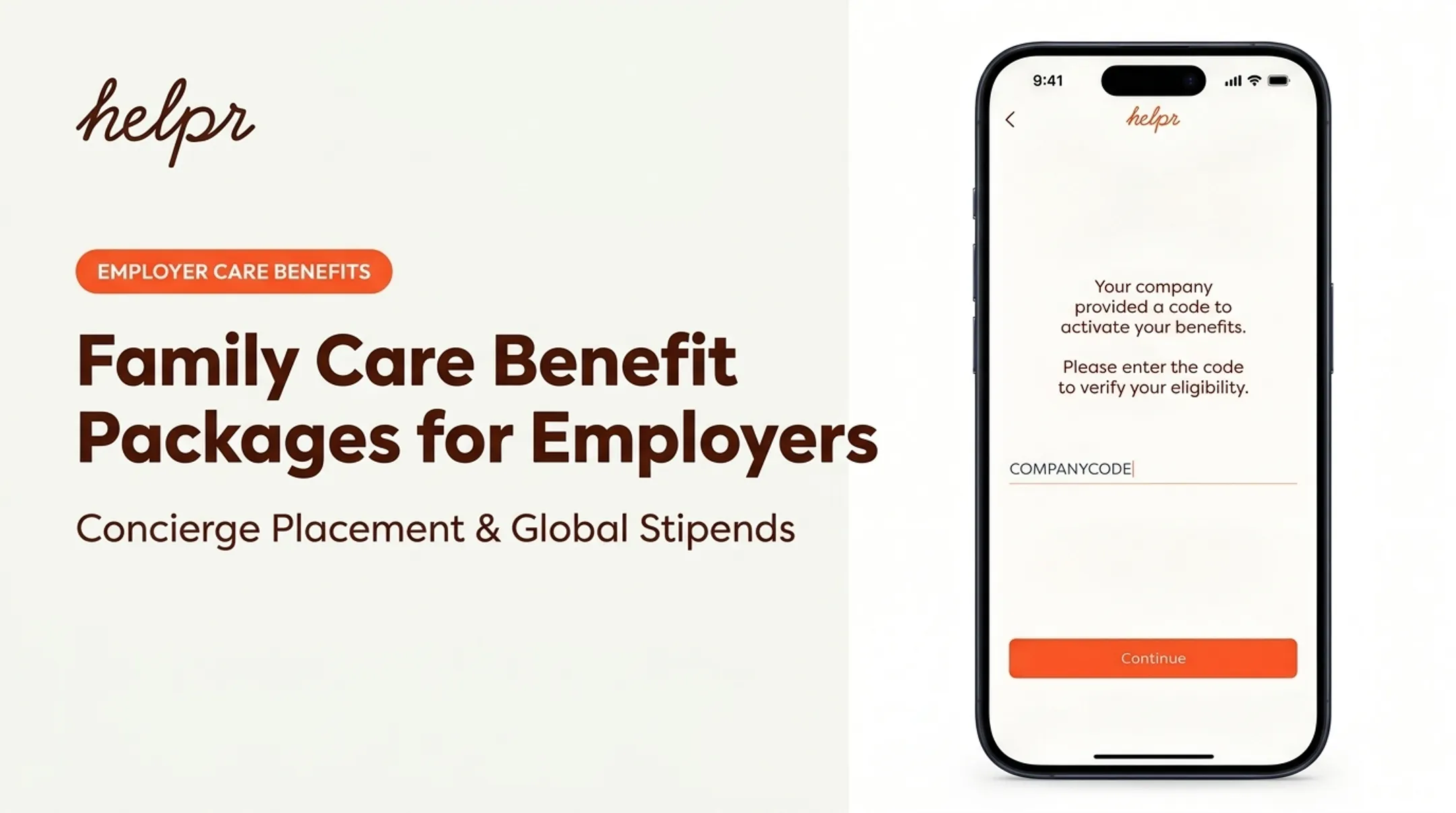

Employers are trying to solve real problems: unpredictable care disruptions, rigid schedules, caregiver burnout, career penalties for using leave, chronic absenteeism, and benefits that only reach salaried office staff.
This guide walks through five steps: assess what employees actually need, strengthen your policies, build manager practices that support caregivers, connect people to practical care resources, and measure whether any of it works.
Key Takeaways
- Family-friendly workplaces blend formal benefits with everyday flexibility and realistic workloads
- Support must extend beyond parents to eldercare, disability care, and other dependent-care situations
- Benefits need to work for remote, hybrid, frontline, and shift-based employees equally
- Track both usage and outcomes: retention, absenteeism, advancement, and equity
- Confirm current federal, state, and local leave requirements before updating any policy
Why Family-Friendly Workplaces Matter
A family-friendly workplace embeds policies, benefits, and cultural norms that let employees meet both work and caregiving responsibilities without unnecessary career or financial damage. That means predictable scheduling, accessible leave, and a culture where using a benefit doesn't quietly cost someone a promotion.
The scale of this issue is bigger than most HR teams assume. Seven in ten family caregivers in the US are employed, and AARP estimates 18 million hourly wage workers currently lack supportive benefits altogether (AARP/NAC, Caregiving in the US 2025).
The business case isn't theoretical either. Nearly 70% of family caregivers report difficulty balancing career and caregiving responsibilities, according to a 2024 AARP/S&P Global survey. That same research found:
- 27% of caregivers cut hours or shifted to part-time work
- 16% turned down a promotion
- 13% changed employers entirely
There's also a striking perception gap. Harvard Business School's caregiving research found 80% of workers say caregiving affects their productivity, while only 25% of employers agree (HBS, 2024). That gap is exactly why so many family-care programs underdeliver: employers design for the caregiving they can see, not the caregiving actually happening.

A real family-friendly strategy covers more ground than parental leave. It needs to address childcare, eldercare, pregnancy and postpartum recovery, lactation support, and the 2 a.m. text that says daycare is closed tomorrow.
Start With an Employee Needs Assessment
You can't fix what you haven't measured. Before changing a single policy, find out where the gaps actually are.
Gather Both Numbers and Stories
Combine quantitative and qualitative input:
- Anonymous surveys on caregiving responsibilities and pain points
- Listening sessions or focus groups
- Benefits utilization data (who's actually using what)
- Exit interview themes
- Manager feedback on team scheduling friction
SHRM's 2025 Caregiving Imperative report found that 51% of working caregivers weren't fully familiar with the support their employer already offered.
Utilization told a similar story: flexible work saw 42% uptake and leave programs 40%, but formal family-care benefits sat at just 8%. Awareness is often the real problem, not lack of policy.
Segment the Data
Break results down by role, work arrangement, shift pattern, location, and tenure. A benefit that works great for salaried remote staff might be functionally invisible to a warehouse shift worker.
Ask specifically:
- What's your most disruptive care challenge right now?
- What kind of support would actually help?
- What's stopped you from using existing benefits?
- When do you need flexibility most (mornings, school breaks, medical appointments)?
Protect privacy while you're at it. Collect only what you need to improve support—not sensitive family medical details. The EEOC requires disability-related information stay confidential, and GINA restricts using family medical history in employment decisions. Keep disclosure voluntary and report only aggregate results.
Then turn the findings into a prioritized action plan:
- Quick, low-cost fixes you can ship soon
- Longer-term investments in leave, scheduling systems, or backup care
Build the Right Family-Friendly Policies
Policies are the backbone. If they're inconsistent or only available through informal manager favors, employees learn fast that they can't rely on them.
Flexible Work Options
Design flexibility that fits your operations, not just your office roles:
- Adjusted or predictable start and end times
- Remote or hybrid arrangements where the job allows it
- Shift-swapping systems for frontline teams
- Compressed schedules
- Protected time for care-related appointments
Parental and Family Leave
Under the FMLA, eligible employees generally get up to 12 weeks of job-protected leave for birth, adoption, foster placement, or caring for a family member with a serious health condition (DOL Fact Sheet 28). Eligibility usually requires 1,250 hours worked over the prior year at a location with 50 or more employees within 75 miles.
State programs often go further. New York's 2025 paid family leave provides up to 12 weeks at 67% of average weekly wage. California's Paid Family Leave offers up to 8 weeks of wage replacement, though it doesn't include job protection on its own. Requirements vary by state, so verify current rules before drafting policy language.

Childcare and Backup Care
This is where disruptions hit hardest: a sick kid, a closed daycare, an early-release school day. Effective support includes:
- Care referral and navigation services
- Emergency backup care for last-minute gaps
- Subsidies or reimbursement structures
- Clear, simple instructions for accessing benefits
Platforms like Helpr fit here by connecting employees to vetted backup childcare on short notice, including same-day requests, with care billed in 15-minute increments so families and employers only pay for time actually used.
Eldercare and Dependent Care
Eldercare gets far less attention than childcare, but the need is just as real, especially for employees coordinating long-distance care for aging parents.
Useful support includes:
- Care navigation and provider referrals
- Counseling for family caregivers
- Guidance on Dependent Care FSAs
The IRS allows a 2026 exclusion of up to $7,500 for dependent care assistance (IRS Publication 15-B).
Pregnancy, Postpartum, and Lactation
Legal minimums matter here:
- PUMP Act: Reasonable break time and a private, non-bathroom space for nursing employees for one year after birth, including remote workers
- Pregnant Workers Fairness Act: Reasonable accommodations for pregnancy-related limitations unless they create undue hardship
Employers can go beyond the legal floor with phased return-to-work plans and manager training on these transitions.
Write policy language that's specific and consistent. If access depends on which manager you happen to have, it's not a policy.
Create a Culture That Supports Caregivers
Good policies fail quietly when employees fear judgment for using them. That fear is measurable: caregivers who felt penalized cited real consequences, not just discomfort.
Remote workers report this stigma more than most. Nearly half (49%) of remote caregivers said they felt penalized or discriminated against for caregiving, compared to 29% of in-office or hybrid employees (AARP/S&P Global, 2024).
The same research found companies were notably more understanding of childcare than adult-care responsibilities.
Manager training closes a lot of this gap. SHRM found only 36% of organizations equip managers with caregiving resources, but where they do, caregiver retention ratings jump from 44% to 74% "good or very good." Train managers on:
- Empathetic, direct communication about schedule needs
- Workload planning that doesn't quietly punish flexibility
- Confidentiality around care disclosures
- Avoiding assumptions about who has caregiving duties
Leaders should model this too. Taking their own leave, respecting off-hours, and judging performance by outcomes rather than face time sends a stronger message than any policy memo.

Culture only holds if it reaches every worker type—not just salaried teams with flexible schedules. Care-cost subsidies, for instance, tend to matter most for hourly and frontline employees who have the least flexibility to begin with.
Protect advancement as carefully as you protect leave:
- Build caregiver inclusion into promotion and performance reviews
- Keep high-visibility work open to people who use flexibility
- Give employees a safe way to raise concerns without retaliation or unnecessary disclosure
Implement and Improve the Program
Rolling out a family-care program works better as a phased project than a single announcement.
- Appoint an executive sponsor and form a cross-functional working group
- Audit current policies against employee needs assessment findings
- Prioritize gaps, separating quick wins from longer-term investments
- Define budget and ownership for each initiative
- Publish a clear timeline so employees know what's coming and when
Map out a simple employee pathway covering:
- Where to find information
- How to request leave or flexibility
- Where to access care resources
- Who to contact for urgent situations
Employees shouldn't have to hunt across five systems to figure out what they're eligible for.
Communicate through onboarding, benefits portals, manager toolkits, and open enrollment. Time reminders to common caregiving transitions, such as a new parent's return-to-work date.
SHRM recommends piloting changes with representative teams before a full rollout, especially for scheduling changes or backup care. Gather feedback from both users and nonusers.
A platform like Helpr can sit inside that broader strategy as the accessible layer connecting employees to care when existing benefits fall short. Helpr's model lets employees add trusted family or friends as paid caregivers through the same app, which helps close gaps for people who rely on informal care networks.
Review policies on a regular schedule for:
- Utilization and employee feedback
- Legal changes
- Unintended inequities
Document what changed and tell employees why.
Measure What Is Working
Set a baseline before you launch anything: current retention, absenteeism, leave usage, and benefit enrollment rates.
Leading indicators tell you whether people know about and can access what you built:
- Awareness and application completion rates
- Response times for care requests
- Manager participation in training
- Employee confidence that using benefits won't hurt their careers
Outcome indicators tell you whether it's actually working:
- Retention among caregiving employees
- Unplanned absence trends
- Return-to-work continuity after leave
- Advancement patterns among benefit users versus nonusers
Harvard Business School's 21-month analysis of 97 employer clients found absenteeism dropped 10% to 50% and turnover fell 1% to 7% after introducing caregiving benefits (HBS, 2024). Treat that as a directional benchmark from their client base, not a guaranteed outcome for every organization.

Break results down by employee group (hourly versus salaried, remote versus onsite) to check whether benefits are reaching everyone equitably.
Pair the numbers with anonymous comments and manager observations. The "why" behind low usage often matters more than the usage rate itself.
Set a recurring review cadence and decide in advance what evidence would justify expanding, redesigning, or cutting a program.
Conclusion
Building a family-friendly workplace takes ongoing practice, not a single benefits announcement. The work rests on five connected steps:
- Understand what employees actually need
- Build policies that cover the full range of caregiving situations
- Train managers to support rather than penalize
- Communicate access clearly
- Measure whether the program is working
Pick one immediate improvement you can make this quarter. Assign someone to own it. Then build the longer-term roadmap around equitable, evidence-based family-care support that reaches every worker, not just those with the flexibility to ask for it.