
Introduction
Your daycare waitlist finally cleared, except now it's three weeks past your return-to-work date. Or your longtime sitter just gave two weeks' notice, and Monday is non-negotiable.
Sound familiar? You're not alone. Nearly two-thirds of parents with infants or toddlers who hit child-care roadblocks end up late to work or leaving early, according to ReadyNation research on the infant-toddler care crisis.
When care is needed fast, the instinct is to skip steps. Don't. Speed and safety aren't opposites. They just require a tighter process.
This guide covers vetting a nanny under pressure and building a first-day checklist that actually works. You'll also get practical help settling your child in, budgeting realistically, and options for when "soon" isn't fast enough.
Key Takeaways
- Background checks, references, and a trial visit are non-negotiable, even on a tight timeline
- A written first-day checklist (contacts, safety, schedule) prevents day-one chaos
- Clinginess or testiness after a nanny starts is normal adjustment, not a red flag
- Compare nanny vs. daycare costs and check employer care benefits to lighten the load
Vetting and Preparing a New Nanny Fast
Urgency tempts parents to cut corners. Don't. A rushed hire without proper screening puts your child at risk regardless of how confident the candidate seems in an interview.
Non-Negotiable Screening Steps
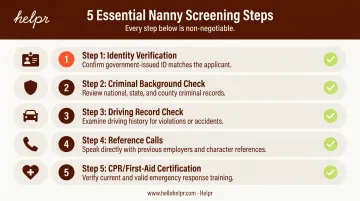
Before a new caregiver ever meets your child, confirm:
- Identity verification through a government-issued ID
- Criminal background checks covering federal, state, and county records, plus sex-offender and child-abuse registry searches
- Driving record checks if the nanny will transport your child
- Reference calls with at least two prior families
- Current CPR and first-aid certification
The International Nanny Association's background check guidance recommends running an SSN trace for prior addresses and aliases alongside these searches, since a clean name search alone can miss records tied to a previous address.
Talk to the Candidate Before You Introduce Your Child
Schedule a short phone or video call first, without your child present. This lets you ask direct questions about experience, availability, and discipline philosophy without worrying about how your child reacts in the moment.
Once that conversation feels right, set up a low-stress trial visit. Watch how the nanny reads your child's cues, adjusts energy, and responds to a meltdown. Body language tells you more than a resume ever will.
If your child is old enough, ask a simple preference question afterward, like "Did you like playing with them?" It's a small step, but it builds early buy-in.
Full DIY screening isn't always realistic when care is needed within days. In those cases, a platform like Helpr draws from a pre-screened caregiver network so background checks and basic vetting are already complete before you book.
New Nanny First-Day Checklist for Working Parents
A thorough first-day handoff sets the tone for everything that follows. Skipping this step, even when you're exhausted from the search itself, is where most early mix-ups happen.
Information and Access
Hand over these items in writing:
- Emergency contacts: parents, pediatrician, a trusted neighbor or relative
- Signed copies of the nanny contract
- House keys or access codes, plus appliance instructions
- Kitchen and food rules
- Expected visitors (maintenance, deliveries, relatives)
Safety and Health Basics
Cover allergies, medication locations, exact dosages, and any allergy action plan in detail. According to the American Academy of Pediatrics' babysitting checklist, children should never receive medicine or food beyond what parents have specifically instructed.
Walk through bath, potty, and naptime routines together, and note supervision expectations during active playtime.
Driving and Daily Structure
If the nanny will drive:
- Install the car seat yourself and walk through it together
- Confirm your auto insurance covers the caregiver
- Set gas reimbursement terms upfront
For daily structure, leave a written schedule for week one plus screen time guidelines so there's no guessing.
Also notify the school, daycare, or building front desk that the nanny is authorized to pick up your child. This one step gets forgotten constantly, and it causes real headaches.
Helping Your Child Adjust and Building a Lasting Nanny Relationship
Expect some pushback. It doesn't mean the hire was wrong.
Clinginess Is Normal, Not a Red Flag
Around 7 to 9 months, many babies cling and cry when a parent steps away, even briefly, according to ZERO TO THREE's research on separation anxiety. Older toddlers may test boundaries or regress with sleep or potty training. This is temperament and development at work, not evidence the nanny is a poor fit.
The Step-Back Method
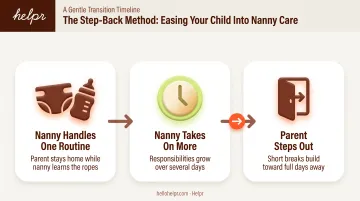
Rather than leaving on day one, phase yourself out gradually:
- Let the nanny handle one routine first, such as a meal or diaper change, while you're still home
- Add responsibilities over several days
- Step out for short periods before leaving for a full day
Your own tone matters here more than you'd think. A calm, confident parent signals safety. A visibly anxious one, even unintentionally, tells your child something's wrong.
Keep Familiar Rituals Alive
Same bedtime story. Same lunchtime routine. Small consistencies anchor a child through a bigger transition.
That same consistency should extend to how you work with your nanny. Build in ongoing communication: weekly check-ins, a shared calendar, or a quick daily text recap. Small friction points get fixed before they turn into real problems.
Adjustment isn't linear. Some kids bond within days; others take a few weeks of the same caregiver, same routine, before they relax. Consistency beats speed here, every time.
Nanny Costs: What Working Parents Should Budget For
Money questions come up fast once care is lined up. Here's what to actually expect.
What Nannies Typically Charge
The national average posted nanny rate is $20.68 per hour, or roughly $827 per week for 40 hours, per Care.com's 2025 Cost of Care survey. Rates vary sharply by city:
| City | Average Starting Rate |
|---|---|
| San Antonio, TX | $17.90/hr |
| Chicago, IL | $22.31/hr |
| Los Angeles, CA | $26.15/hr |
| San Francisco, CA | $29.00/hr |
Experience and education push rates higher too. A graduate degree correlates with roughly $2 more per hour than a high school diploma.
Nanny vs. Daycare: The Real Comparison
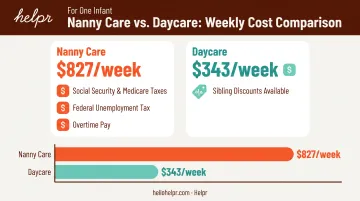
For one infant, that same Care.com data puts full-time nanny care at $827/week versus $343/week for daycare. But daycare pricing often ignores multi-child sibling discounts, and nanny costs come with hidden employer-side expenses:
- Social Security and Medicare taxes once wages hit $2,800/year
- Federal unemployment tax on the first $7,000 in wages
- Overtime pay after 40 hours per week
Ways to Offset the Cost
Check whether your employer offers a family care benefit. Use-based programs like Helpr's charge only for hours actually used, with no flat fee for unused coverage—that can narrow the gap between nanny care and daycare.
A Dependent Care FSA is another lever. Pre-tax contributions lower taxable income on eligible care expenses and stretch the same budget further.
When You Need Nanny Care Immediately
Sometimes there's no runway at all. Common triggers:
- A nanny's last-minute cancellation, no backup lined up
- A school or daycare closure with zero notice
- A return-to-work date that arrived before childcare did
These moments are exactly why on-demand backup care platforms exist. Helpr, for example, connects families to a pre-vetted caregiver network with bookings possible as little as 3 hours ahead. Matching works across the country and internationally when you need care fast.
Most parents simply don't know what care options are already available to them.
Check your employer's benefits page first. Many companies now offer subsidized backup care as a standard benefit. The "need care now" moment this guide addresses might already have a safety net waiting—one you just haven't used yet.
Frequently Asked Questions
How much does a nanny cost per hour?
Nanny rates average around $20.68 per hour nationally, though location, experience, and number of children heavily influence pay. In major cities, rates often range from roughly $18 to $29 per hour.
Is it cheaper to hire a nanny or daycare?
Daycare is usually cheaper for one child, averaging $343/week versus $827/week for a full-time nanny. The gap narrows with multiple children, since nannies often charge a smaller per-child increase than daycare's per-child fees.
How do I welcome a new nanny?
Give a warm, clear introduction: a written schedule, house rules, and a calm handoff to your child. Confidence in your tone helps your child feel safe with the new caregiver right away.
How long does it take for a child to adjust to a new nanny?
It varies by child and temperament. Some settle within days, others take a few weeks, but consistent routines and a steady departure ritual speed things along.
What should be included in a nanny's first-day checklist?
Emergency contacts, house rules, allergy and medication details, and a written daily schedule for the first week. Don't forget to authorize pickup with the school or daycare.
Can I find a vetted nanny quickly if I need care right away?
Yes. Backup care platforms with pre-screened caregiver networks, like Helpr, can shorten the time between an urgent request and trusted care actually showing up.