

This role reversal is disorienting. It's also common. An estimated 63 million U.S. adults, or roughly 1 in 4, currently serve as family caregivers, according to AARP and the National Alliance for Caregiving's 2025 report. Most are juggling jobs, kids, and now, aging parents too.
This guide walks through recognizing when help is needed, starting the conversation, handling legal and financial paperwork, exploring care options, and protecting your own well-being along the way.
Key Takeaways
- Watch for changes in daily task management, not just obvious health crises
- Approach parents with empathy and small steps, not ultimatums
- Secure legal and financial documents while your parent still has decision-making capacity
- Choose care options based on real need, budget, and safety—not guilt
- Protect your own health early so you can keep caregiving sustainable long-term
Recognizing the Signs Your Aging Parents Need Help
Professionals use a specific benchmark to flag declining independence: Instrumental Activities of Daily Living (IADLs). These are the complex tasks required to live independently, including managing finances, arranging transportation, housekeeping, preparing meals, and managing medications.
When a parent starts struggling with these, it's rarely random. It's usually the first visible crack.
Red Flags Worth Taking Seriously
Keep an eye out for:
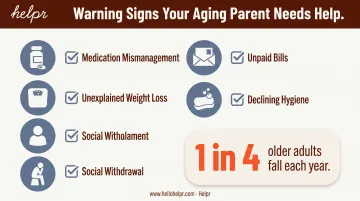
- Mismanaged medications (double doses, missed doses, expired prescriptions)
- Unopened mail or unpaid bills piling up
- Unexplained weight loss or spoiled food in the fridge
- Declining hygiene or unwashed clothing
- Withdrawal from hobbies, social invitations, or regular routines
Indirect signals count too. A neighbor mentioning that your dad seemed confused at the mailbox, or your mom finally admitting "I've been having trouble with the stairs" — take these at face value. Parents often downplay struggles out of pride, so when they do speak up, listen closely.
Check In Often, Not Just Once
Skip the formal sit-down assessment. Instead, build in regular, low-pressure check-ins. Try questions like:
- "How's driving been for you lately?"
- "Have you been keeping up with your appointments okay?"
- "What's been the hardest part of your week?"
These open doors without putting a parent on the defensive.
Those check-ins also catch safety risks early. More than 14 million older adults, or 1 in 4, report a fall each year, and falls remain the leading cause of injury-related emergency department visits in this age group, per CDC data.
Roughly 37% of those falls cause an injury serious enough to require treatment. Catching decline early protects your parent before a crisis forces the issue.
Starting the Conversation: How to Talk to Your Parents About Care
This conversation is loaded on both sides. Parents fear losing independence. Adult children often feel grief over a relationship that's quietly shifting shape. Both reactions are normal, and naming them out loud can defuse a lot of tension before it starts.
Try "I Wish, I Worry, I Wonder"
Instead of leading with concerns that sound accusatory, frame things around your own feelings:
- "I wish we talked more about how things are going with your medications."
- "I worry when I don't hear back from you for a few days."
- "I wonder if it might help to have someone check in on you during the week."
This keeps the tone collaborative rather than confrontational.
Start Small, Build Trust
Rather than jumping into moving or hiring help, ease in with low-stakes involvement:
- Offer to join a doctor's appointment
- Ask if you can help set up a pill organizer
- Suggest a simple weekly check-in call
Those small steps build trust before bigger decisions come up. Keep the dialogue going, too—needs shift over months and years, so revisit the conversation regularly instead of treating one hard chat as "done."
If a parent is resistant, or siblings can't agree on next steps, bring in a neutral third party. A social worker, geriatric case manager, or a structured family meeting helps everyone hear the same information—without old family dynamics derailing the discussion.
Getting Legal, Financial, and Practical Affairs in Order
Paperwork isn't glamorous, but it's the difference between a manageable transition and a legal scramble during a crisis. The earlier you tackle this, the better, ideally while your parent still has full decision-making capacity.
Essential Legal Documents
Three documents matter most:
- Durable power of attorney for healthcare (also called a healthcare proxy; often part of an advance directive) names someone to make medical decisions if your parent can't communicate them. It must be signed while they're still legally competent.
- Financial power of attorney is a separate document that authorizes someone to manage money matters, like paying bills or accessing accounts. It doesn't grant medical decision-making authority; the two serve different functions.
- HIPAA release or personal representative designation works as a bridge. If a full POA isn't finalized yet, this lets you access medical information in the interim, per HHS guidance on personal representatives.
Financial Planning & Assistance
Sit down together and review:
- Retirement accounts and pensions
- Insurance coverage (health, long-term care, life)
- Outstanding debts
- A running list of assets
Once you know what resources exist, look at what care will actually cost. Caregiving adds up in ways families don't always anticipate. A few programs can offset the burden:
- Medicaid self-directed care programs let eligible participants (or their representatives) manage and direct specific care services
- VA caregiver benefits support veterans who need at least six months of continuous personal care
For ongoing costs, Helpr's platform integrates directly with Dependent Care FSAs, and elder care is an eligible category. Families can pay for eldercare bookings with pre-tax DCFSA dollars in the app, or submit receipts for reimbursement.

Consult an elder law attorney early. They can help navigate estate planning and benefit eligibility before cognitive decline complicates the process.
Exploring Care Options: From In-Home Support to Assisted Living
Care isn't all-or-nothing. It exists on a spectrum, and the right fit depends on actual need, not guilt about "not doing enough."
Home Modifications and Support Services
For parents who can mostly manage on their own, small changes go a long way:
- Grab bars in bathrooms
- Medical alert systems
- Meal delivery services
- Occasional housekeeping help
According to CareScout's 2025 Cost of Care Survey, the national median rate for non-medical in-home caregiver services is $35 per hour, or roughly $80,080 annually at 44 hours a week. Build that figure into your care budget early.
The Middle Ground: On-Demand Backup Care
Not every family needs full-time help, but nearly every family hits gaps: a regular caregiver calls in sick, a parent needs a ride to a specialist, or someone's recovering after a hospital stay. On-demand platforms help cover those gaps without locking you into full-time care.
Helpr, for example, connects families with vetted caregivers for short-term or occasional elder care:
- Book with as little as three hours' notice, or schedule up to three months ahead
- Providers complete video interviews, background checks, reference checks, and CPR certification
- Care Finder concierge support is available when you need help with a longer-term hire
One Helpr user, Lacey A., said the platform helped her find a caregiver she trusted with her mother in a smaller city—coverage that was hard to source on her own.
When Home Care Isn't Enough Anymore
Some signs point toward needing a higher level of care:
- Incontinence that's difficult to manage safely at home
- Inability to prepare or eat meals without assistance
- Repeated safety risks (falls, wandering, leaving the stove on)
If you're evaluating assisted living or nursing facilities, tour in person, ask about staffing-to-resident ratios, and review licensing and inspection records before you commit. Matching the level of care to real need—not guilt—keeps everyone safer.
Coping with the Emotional Toll: Caregiver Burnout and Self-Care
Caregiver burnout is chronic physical and emotional exhaustion from sustained, often unpaid caregiving. That exhaustion is a predictable outcome of an unsustainable load, not a personal failing.
The numbers back this up. A 2026 National Alliance for Caregiving brief found that 64% of caregivers experience moderate-to-high emotional stress, and caregivers report an average of 7 poor mental-health days per month.
Grieving a Relationship That's Still Here
There's a particular kind of grief that comes with caregiving. Your parent is still alive, but the relationship you had is changing. Frustration, sadness, even resentment can surface, and none of that means you're a bad son or daughter. It means you're human.
Protecting Yourself While You Protect Them
Practical steps that help:
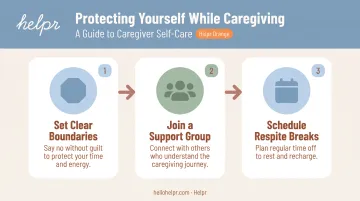
- Set clear boundaries around what you will and won't handle
- Join a caregiver support group, in person or online
- Schedule regular respite breaks, even short ones
Employer benefits matter here too. FMLA allows eligible employees up to 12 weeks of unpaid, job-protected leave to care for a parent with a serious health condition.
Backup care programs like Helpr can lighten the day-to-day load through on-demand booking or employer-sponsored stipends that subsidize eldercare costs. Less logistics means more energy for the emotional work caregiving requires.
Frequently Asked Questions
What should I do if my elderly parents can't take care of themselves?
Start by assessing their instrumental activities of daily living (IADLs)—medications, meals, and finances—then ask their doctor or a social worker for a professional evaluation. Match the level of need to home support services or a care facility.
What is caregiver burnout?
Caregiver burnout is chronic physical and emotional exhaustion from ongoing caregiving demands. Common symptoms include persistent fatigue, irritability, and feeling overwhelmed by daily responsibilities.
How do I cope emotionally with aging parents?
Acknowledge the grief that comes with a changing relationship rather than suppressing it. Seek out caregiver support groups and lean on respite or backup care resources to avoid carrying the load alone.
Can I get paid to take care of my elderly parent?
Yes, in some cases. Medicaid self-directed care programs and VA caregiver benefits may compensate family caregivers, though eligibility rules vary significantly by state and program.
When should I consider assisted living for my parent?
Consider it when a parent can't safely manage meals, hygiene, or medications at home, or when caregiving needs have grown beyond what family members can realistically provide.
What is a healthcare power of attorney?
A healthcare power of attorney is a legal document naming someone to make medical decisions on a parent's behalf once they can no longer communicate those decisions themselves. It must be signed while they still have full capacity.