
This guide is for you. We'll break down exactly what a companion caregiver does, how they differ from personal care aides, the immense benefits they provide, and how to find the right support. We'll also explore modern solutions, like using employer-sponsored benefits to secure reliable care for your loved ones.
Key Takeaways
- Companion caregivers offer non-medical, "hands-off" support focused on companionship, light household help, and safety checks.
- Federal guidelines specify that personal care tasks cannot exceed 20% of a companion's work time.
- Original Medicare does not cover companion care, though some Medicare Advantage plans may offer it as a supplemental benefit.
- Families can find vetted caregivers through agencies, online platforms, and employer-provided backup care benefits like Helpr.
What Is a Companion Caregiver?
A companion caregiver provides non-medical, social, and emotional support to people who live independently but need regular company and light help at home. The role is centered on "fellowship and protection," a term the U.S. Department of Labor uses for social engagement and safety monitoring.
This type of "hands-off" care is designed for seniors aging in place, veterans, or adults with disabilities who don't require medical assistance but benefit from consistent human interaction and light household help.
Legally, the distinction between a companion and a personal care aide is clear. Under the Fair Labor Standards Act (FLSA), if hands-on personal care tasks take up more than 20% of the caregiver's workweek, the role is no longer considered companionship. If your loved one needs frequent help with bathing, dressing, or mobility, you likely need personal care—not companionship alone.
Signs Your Loved One May Benefit from a Companion Caregiver
Watch for these practical signs:
- Increased social withdrawal: Turning down invitations or spending most days alone
- A neglected household: Mail piling up, clutter building, or spoiled food in the fridge
- Skipped meals or poor nutrition: Weight loss or heavy reliance on processed foods
- Missed appointments or errands: Forgetting prescriptions or doctor visits
- A noticeable decline in mood: Signs of depression, anxiety, or apathy
Social isolation is a serious health risk. According to the National Academies of Sciences, Engineering, and Medicine, approximately one-quarter of Americans age 65 and older are socially isolated, which raises the risk of depression, cognitive decline, and other health problems.
What Companion Caregivers Do (and Don't Do)
Knowing what a companion caregiver can and cannot do helps you set clear expectations and get your loved one the right kind of support.
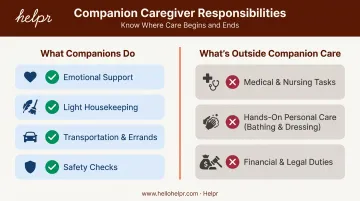
Typical Companion Caregiver Duties
A companion’s role is broad but strictly non-medical. Their work focuses on quality of life through support and engagement.
- Emotional and social support: Conversation, games, shared hobbies, walks, and a friendly, consistent presence that helps combat loneliness
- Light household help: Meal preparation, laundry, light tidying, watering plants, and pet care to keep the home running smoothly
- Transportation and errands: Rides to doctor's appointments, social events, or religious services, plus grocery and prescription runs
- Safety and well-being checks: Medication reminders (not administration), monitoring for changes in condition, and flagging concerns to the family
What Falls Outside Companion Care
Companion caregivers are not permitted to handle tasks that require clinical training or legal authority.
- No medical or skilled nursing tasks: Injections, wound care, IV management, or other duties reserved for a licensed nurse
- No hands-on personal care: Bathing, dressing, grooming, or toileting—these ADLs belong to a personal care aide or home health aide
- No financial or legal planning: Managing finances, paying bills, or making medical decisions (that falls to advisors or someone with power of attorney)
How Companion Care Improves Life for Seniors and Their Families
The impact of a great companion caregiver goes far beyond a clean kitchen or a ride to the store. It shows up in mental health, day-to-day safety, and less strain on the whole family.
Less Loneliness, More Independence for Seniors
For seniors, the biggest gain is less loneliness—and lower health risk that comes with it. Regular social engagement matters. A large-scale analysis from the National Institute on Aging found that loneliness was associated with a 31% higher risk of dementia.
A companion supplies consistent human connection. That support helps seniors:
- Stay mentally sharp and emotionally steady
- Keep daily routines and social habits intact
- Age in place longer, often delaying or avoiding a move to assisted living
Real Relief for Working Family Caregivers
For family caregivers, reliable help brings practical peace of mind. Balancing a job and an aging parent is a heavy load. According to a 2025 AARP report, seven in ten family caregivers are also employed, and 61% say caregiving affects their work life.
A companion caregiver adds a steady support system. Working adult children can focus at work with less daily stress, confident their loved one has company and eyes-on help at home.
Companion Care vs. Personal Care vs. Home Health Care
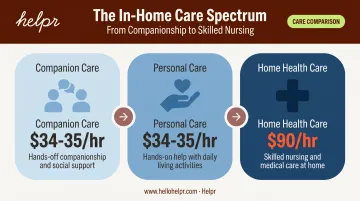
In-home care terms are often used interchangeably, but the services—and costs—differ a lot. Knowing what each type covers helps you pay only for the support your loved one actually needs.
Here’s how the three main options compare:
| Care Type | Scope of Duties | Typical U.S. Cost (Median) |
|---|---|---|
| Companion Care | Hands-off support: Companionship, errands, meal prep, light housekeeping, transportation, safety monitoring. | ~$34-$35/hour |
| Personal Care | Hands-on support: All companion duties plus help with bathing, dressing, grooming, toileting, and transfers. | ~$34-$35/hour |
| Home Health Care | Skilled medical care: Administered by a licensed nurse or therapist. Includes wound care, injections, physical therapy, etc. | ~$90/hour or $160/visit |
Note: Cost data is based on 2025-2026 national median figures from CareScout and A Place for Mom, which combine companion and personal care into a "non-medical caregiver" category. Costs vary significantly by location.
Care needs often evolve. Many families start with a companion a few hours a week, then add personal care when bathing, dressing, or transfers become harder. Starting at the right level means you’re not paying for hands-on or clinical services before they’re needed.
How to Find and Hire the Right Companion Caregiver
Finding someone you trust to care for a family member is a big decision. The process involves careful assessment, thorough vetting, and clear communication.
First Steps for Your Family
- Assess your loved one's needs: Make a detailed list of the tasks required. Do they need help with meals and errands, or is the primary need social engagement and conversation?
- Decide between an agency or an independent hire: Agencies handle vetting, payroll, and backup coverage at a higher cost; hiring independently gives you more control but makes you the employer for taxes and background checks.
- Verify credentials: Always conduct a thorough background check and call professional references.
When you're ready to interview, ask about:
- Experience with seniors and companion care
- How they handle emergencies
- Communication style with families
- Activities they enjoy that align with your parent's interests
If the DIY route feels overwhelming, employer care benefits can shorten the search.
Using Employer Benefits to Access Vetted Care
A growing number of companies now offer family care benefits to help employees manage these challenges. These programs help you find pre-vetted care without building the process from scratch.
Platforms like Helpr connect working families with companion and elder care specialists. If your employer offers Helpr, you can use the app to find support for aging parents. This can include:
- Book vetted caregivers who have already passed multi-step screening (virtual interview, CPR certification, reference checks, and a criminal background check)
- Pay a caregiver you already trust—such as a neighbor or family friend—with employer-subsidized funds through My Choice
- Use Care Finder concierge placement, where a specialist handles sourcing, screening, and interviews for more complex needs

That path can get care in place quickly—even on short notice—so you spend less time coordinating and fewer unpaid days away from work.
Frequently Asked Questions
What qualifications do you need to be a companion caregiver?
Formal certification isn't typically required. Most agencies look for a high school diploma, a valid driver's license, and strong interpersonal skills. However, all caregivers in the Helpr network must hold a current CPR certification.
Does Medicare pay for companion caregiver services?
Original Medicare (Parts A and B) does not cover companion care. Some private Medicare Advantage (Part C) plans may offer it as a supplemental benefit for chronically ill enrollees. Check your specific plan details.
How do I know if my loved one needs a companion caregiver?
Key signs include increasing loneliness, difficulty keeping up with household chores, missed meals or appointments, or a general decline in mood. If you live far away and can't check in regularly, a companion can provide peace of mind.
What's the difference between a companion caregiver and a home health aide?
A companion caregiver provides "hands-off" non-medical support like conversation and errands. A home health aide (HHA) is trained to provide "hands-on" personal care, such as help with bathing, dressing, and other activities of daily living.
How much does companion care typically cost?
The national median for non-medical in-home care is around $34-$35 per hour, but this varies widely based on your location, the number of hours needed, and whether you hire through an agency or independently.
Can a companion caregiver help someone with dementia?
Yes, especially in the early-to-moderate stages. Companions provide social engagement, supervision, and routine. As needs become more hands-on or specialized, families should move to a provider with advanced dementia training.